Building Customer-leads Operations
Rakesh Kumar
Vice President – Operations (India)
Cortland International
Building Customer-leads Operations
Rakesh Kumar
Vice President – Operations (India)
Cortland International
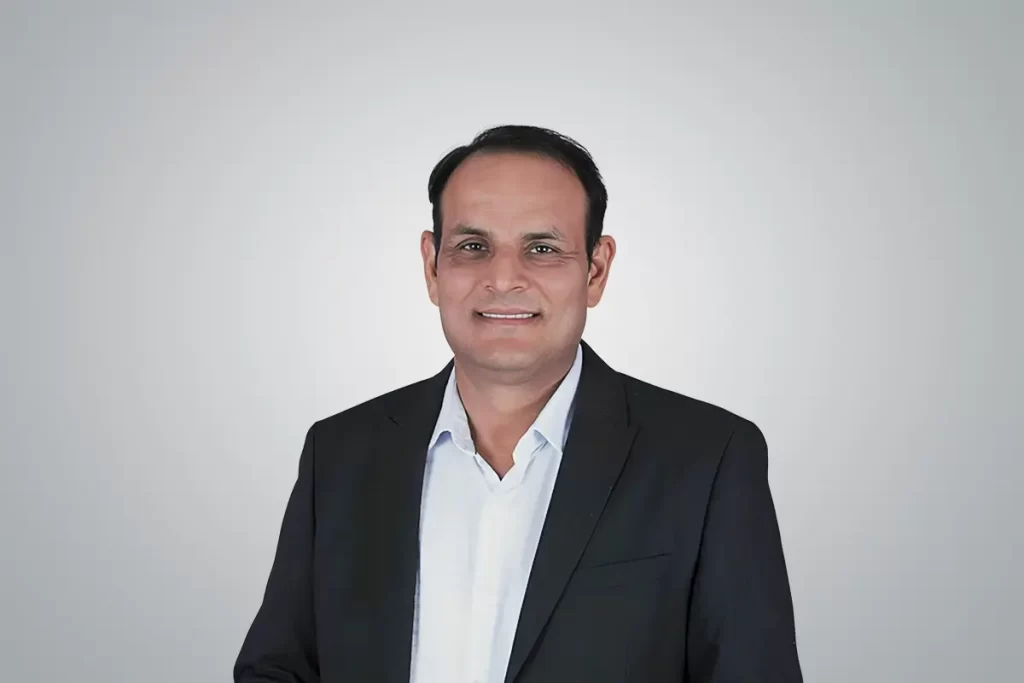
Industrial excellence begins with a simple but profound question: how deeply does a leader understand the business and the customer behind every process, metric, and machine? True operational mastery gains meaning only when it builds customer trust—a perspective that leaders who rise through the shop floor carry in its purest form. This philosophy defines Rakesh Kumar’s leadership journey. The combination of engineering rigor at BITS Pilani and management excellence at IIM Ahmedabad has shaped a well-rounded professional profile, enabling him to seamlessly bridge shop-floor realities with boardroom-level decision-making. With over two decades of cross-industry leadership experience, Rakesh has worked across diverse manufacturing processes, including high-pressure, sand & gravity die casting; stamping; extrusion; robotic fabrication; automotive glass; and NVH products for the automotive sector. His leadership philosophy is anchored in continuous improvement, customer centricity, and building highperforming teams. Over the course of his career, Rakesh has successfully led multiplant operations and driven complex business turnarounds, consistently delivering measurable improvements in productivity, defect reduction, and operational stability. His contributions have been recognized with prestigious awards, including the Indian Achiever Award, the JIPM TPM Excellence Award, and the IMEA Gold Award from Frost & Sullivan. Today, as Vice President – Operations (India) at Cortland International, Rakesh leads with the conviction that excellence is sustainable only when customers genuinely experience it. In conversation with Trade Flock, he reflects on a journey shaped by discipline, learning, and a deep commitment to building resilient, future-ready organizations.
How would you describe the journey that shaped your career?
I started my journey in 2002. Those early years taught me lessons -respect for quality, the power of discipline, and the importance of earning customer trust every single day. Working across different manufacturing environments exposed me to transformation initiatives, process rigor, and direct customer engagement, experiences that continue to influence my decisions. My role evolved from leading quality to overseeing operations across multiple manufacturing sites. Along the way, recognition from OEMs, Frost & Sullivan, CII, JIPM, and the Indian Achiever’s Award affirmed something I deeply believe: sustainable results come from consistency, data, and people working with purpose. Turning around underperforming units taught me a simple truth that guides me even today–
"Assets must work harder for progress, and people must grow for excellence."
What's one innovative strategy you've put in place, maybe using tech or new processes, that really boosted results?
In a manufacturing environment where precision and speed are critical, we introduced real-time dashboards and IoT-enabled monitoring and tracking systems. Sensors were installed on critical machines to capture real-time data on cycle times, changeovers, and process abnormalities, directly improving operational efficiency.
"Assets must work harder for progress, and people must grow for excellence."
This real-time data flowed into our Lean visual boards and later into TPM routines. More importantly, this integration fostered a proactive, ownership-driven culture. Shopfloor became more accountable for equipment health, supervisors made faster, data-backed decisions, and material flow became more stable and predictable. The convergence of Lean, TPM, and Industry 4.0 capabilities ultimately strengthened our control over quality, enhanced customer responsiveness, and, hence, improved profitability.
What guided your approach to building strong and empowered teams?
I have been privileged to work with exceptional leaders across manufacturing, whose values and leadership styles—from shop-floor rigor and quality discipline to strategic and people leadership—have shaped my professional approach. My leadership philosophy centres on the belief that performance improves when people understand how their decisions create customer value. Moving from quality to operations reinforced that improvement must extend beyond metrics to deliver tangible customer outcomes. I lead by enabling teams with clarity, data, and ownership. Empowering the shop floor through real-time IoT insights has strengthened accountability and trust, while multi-location leadership reinforced the importance of owning value rather than tasks. I believe confidence grows when individuals see the impact of their decisions, and capability grows when leaders create the right environment. My focus is on building teams that deliver sustainable results by owning customer trust and long-term business success.
Which cutting-edge technology excites you the most, and how are you planning to leverage it in your practices?
The technology that excites me most is Industrial IoT combined with real-time analytics—the ability to convert live machine data into actionable insights that transform manufacturing operations. More than efficiency or automation, this journey is about empowering people, strengthening customer confidence, and embedding a culture of continuous improvement. When applied with purpose, technology becomes a catalyst for sustainable growth.
How do you see Industry 5.0, technology, and future challenges evolving?
Industry 5.0 is about collaboration between humans and advanced technologies. While automation and AI handle repetitive tasks, humans focus on creativity, problemsolving, and innovation. Real-time data from IoT and digital twins will move from insight to autonomous action, enabling self-correcting, resilient operations. Sustainability and adaptability will define operational excellence, while challenges such as workforce upskilling, cybersecurity, and the integration of legacy systems will require careful management. Success will come to organisations that harmonise technology with human intelligence to drive precision, innovation, and resilience.
Featured Magazine -

All Magazines-