Leading at the Intersection of Risk and Trust
Senthil Kumar Iyyappan (SKI)
Chief Information Security Officer (CISO) & Head of IT (TechOps)
Ocrolus
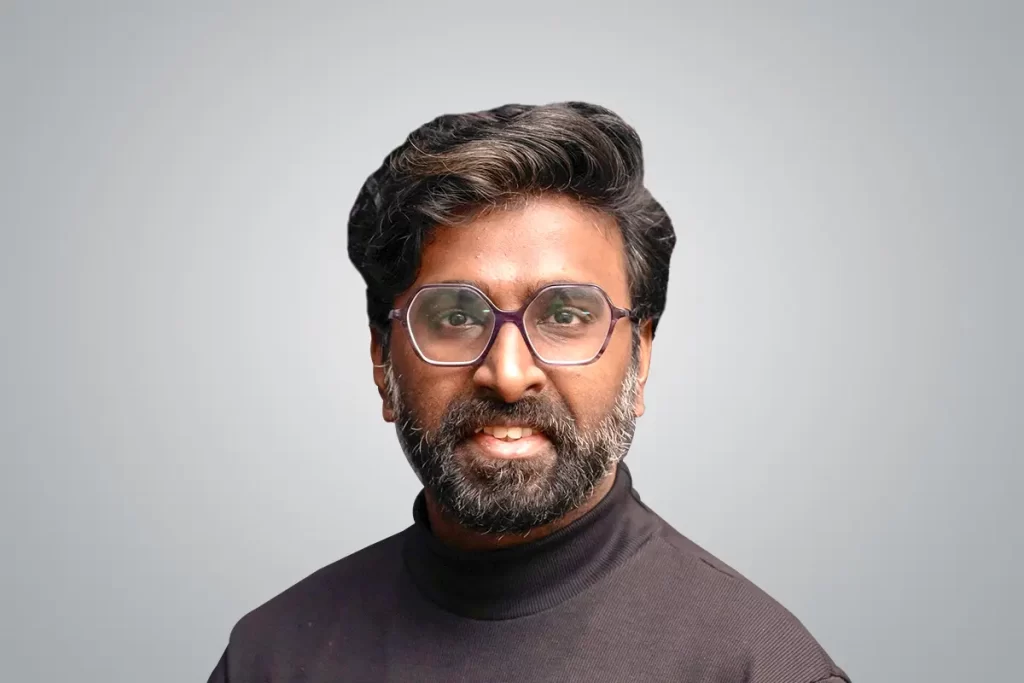
Leading at the Intersection of Risk and Trust
Senthil Kumar Iyyappan (SKI)
Chief Information Security Officer (CISO) & Head of IT (TechOps)
Ocrolus
Trust has quietly become one of the most decisive forces shaping how modern enterprises grow, innovate, and sustain credibility in a digital-first economy. At the intersection of security, privacy, and leadership stands Senthil Kumar Iyyappan, widely known as SKI, whose career reflects how deeply technology leadership now influences business outcomes. From building global information security programs at Tata Consultancy Services to serving as the first Deputy CISO at Freshworks, India’s first SaaS company listed on NASDAQ, his work has consistently focused on scaling trust alongside growth. Today, as Chief Information Security Officer and Head of IT at Ocrolus, he shapes how organisations embed security, privacy, and AI governance into their core operating fabric. In this conversation, TradeFlock speaks with SKI about leadership evolution, digital trust, and what it takes to build confidence in an increasingly intelligent world.
What shifted you from a cybersecurity practitioner to a strategic leader?
The most decisive shift in my career occurred when I stopped viewing cybersecurity as a back-office technology function and began to understand it as a driver of trust, growth, and business confidence. Early on, my work revolved around compliance, controls, audits, and governance. Those challenges were intellectually satisfying, yet over time, it became clear that security decisions were shaping far more than internal risk posture. They influenced how customers trusted the organisation and how investors assessed its maturity. That realisation took shape during my time at Freshworks, a period of rapid global expansion during which scale, innovation, and compliance unfolded simultaneously. The questions we faced were no longer about patching systems; they were about building resilience without slowing momentum. Leadership in cybersecurity demanded more than technical depth. It required communicating risk in business terms, earning trust across functions, and guiding decisions in uncertain situations. When I stepped into the role of Chief Information Security Officer and VP of IT at Ocrolus, that mindset fully crystallised. I was no longer running isolated security programs. I was shaping the trust fabric of an organisation handling highly sensitive financial data. Customers relied on us for accuracy, security, and transparency, values that cannot be negotiated. My focus shifted toward predictability, scalability, and assurance, positioning security as a competitive differentiator rather than a compliance obligation.
"The most impactful CISO is not the one who builds the strongest firewall, but the one who earns the CEO’s trust."
The philosophical shift mattered most, and leadership shifted from individual achievement to collective confidence. The transition ultimately came down to one mindset change: moving from protecting systems to enabling confidence. Technology keeps platforms running; leadership keeps trust alive.
Where is leadership attention most needed amid rising regulation?
The convergence of AI governance, privacy, and ethics demands sustained leadership focus. As standards like ISO 42001 mature, innovation must advance alongside responsibility. My preparation involves embedding transparency, data lineage, and model governance into enterprise risk frameworks so privacy, explainability, and security evolve together. Leadership here will be defined by how responsibly intelligence is managed, not merely how infrastructure is secured.
Which architectural decision delivered the most significant business impact?
One of the most transformative decisions at Ocrolus was adopting AI-driven automation to reimagine compliance, risk management, and customer trust. Traditionally, security programs have been reactive, policy-heavy, and people-dependent. We deliberately chose a different path by integrating automated compliance management, customer due diligence workflows, and trust transparency directly into operational systems. This was not a tooling exercise. It was an architectural and cultural shift from periodic assurance to continuous compliance. Controls, evidence collection, and alerts became part of everyday workflows rather than annual audit rituals. The results were tangible: a 60% reduction in manual compliance effort, real-time visibility across frameworks such as SOC 2 and ISO 27001, and zero audit downtime during renewals. Customer trust improved measurably. Prospects could securely access a real-time view of their compliance posture through SafeBase, reducing vendor assessment cycles by 40%. What once took months began taking days. Framing the initiative as a business accelerator rather than a security project made the difference. Architecture decisions, when aligned with transparency, do more than protect enterprises; they give businesses the confidence to scale.
What has mentoring taught you about leadership gaps today?
Mentoring more than 100 professionals globally has revealed that technical skill is no longer the differentiator. Perspective and communication are. Many emerging leaders are exceptional engineers but struggle to connect their work to organisational outcomes. They can describe controls, yet explaining consequences remains harder. The industry does not face a skills gap as much as a perspective gap. Overemphasis on tools often comes at the cost of strategic thinking. Risk is still framed as enforcement rather than enablement, and confidence sometimes outweighs clarity. I often remind mentees that the most impactful CISO is not the one who builds the strongest firewall, but the one who earns the CEO’s trust. Mentorship reinforces that leadership is a shared growth, not a hierarchical approach.
"Technology evolves fast, but empathy, trust, and clarity are what sustain transformation."
What advice would you give your younger self?
I would remind myself: “Master technology, but understand people even more.” Early on, excellence meant solving every technical challenge personally. Experience has taught me that impact comes from enabling others to make decisions, grow, and lead. In a technology-driven world, trust, clarity, and resilience sustain transformation long after tools change.
Featured Magazine -

All Magazines-