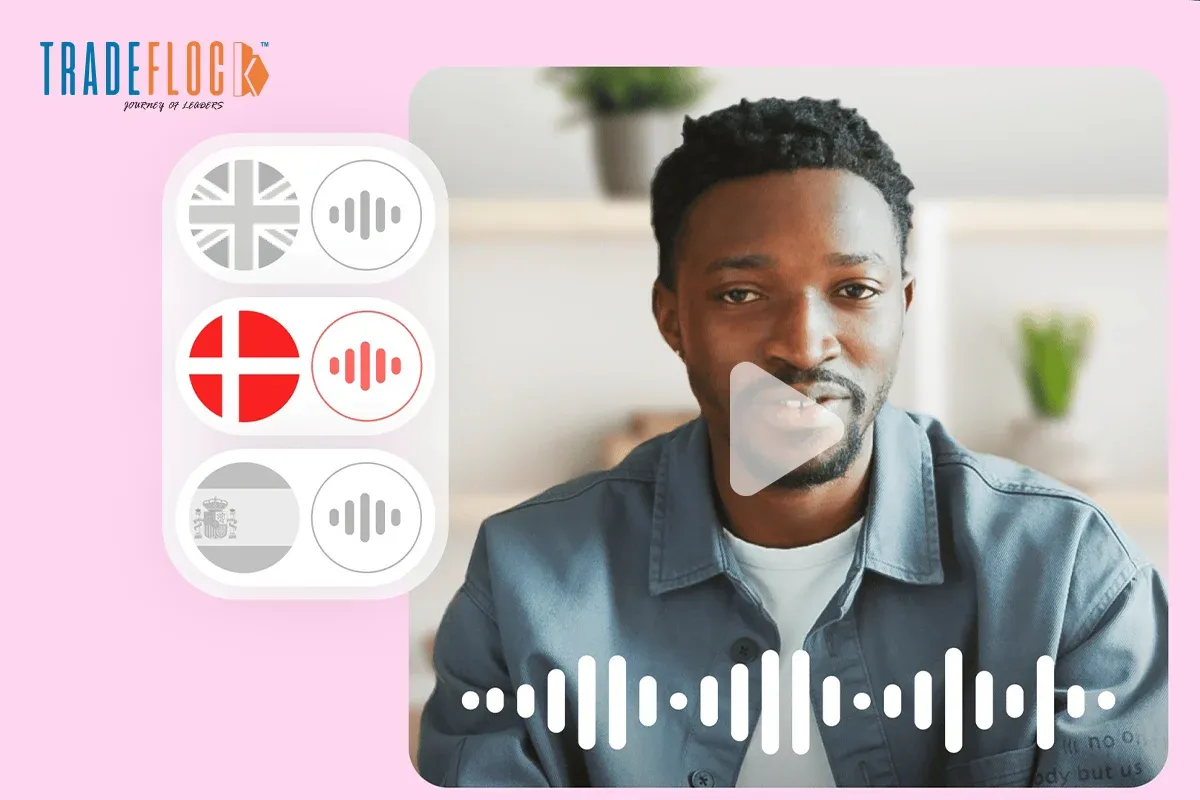
Language is now a major factor in growth, not only communication, as digital information reaches consumers all over the world. Viewers now demand material that feels natural in their own tongue; subtitles alone are insufficient.
This is made possible by AI-powered video dubbing. What used to require weeks of studio labor can now be finished in a matter of hours thanks to the automation of translation, voice synthesis, and syncing.
There is an obvious demand. Consumer behavior is greatly influenced by language, according to research. With a stunning percentage of 76, online shoppers prefer products and services with their native languages (info), and a comparable percentage are more likely to browse, interact, and make a purchase when content is presented in their native language rather than a foreign one like English. That comes from a global survey conducted by independent market research firm CSA Research.
You don’t need me to tell you the importance of localized content; the retention rate shows that up to 40% of consumers claim they would not make a purchase on a website unless it is available in their preferred language.
What did that lead to? AI dubbing is quickly evolving from a niche tool to a core part of modern content strategy. This article does all the jobs for you. Show you how it works, why it matters, and the leading tools driving its adoption.
Table of Contents
What Is AI Video Dubbing?
The automatic technique of substituting a translated voice track in a different language for the original speech in a video is known as AI video dubbing. A single, efficient procedure, which, in contrast to traditional dubbing (depends on voice performers and human editing), is created by AI.
At a basic level, it combines four key technologies:
- Automatic Speech Recognition (ASR): converts speech into text
- Machine Translation: translates the text into another language
- Text-to-Speech (TTS): generates a synthetic voice
- Lip-sync alignment: matches the new audio to the speaker’s mouth movements
Pulling together, these techniques show us a new world. Videos can be localized faster while still with a natural flow. Advances in two main parts (speech synthesis & massive language models) have also improved voice quality, making AI-generated dubbing more natural and contextual.
It is also vital to distinguish between dubbing and simply voiceovers. Voiceovers add translated audio to the original, whereas dubbing concentrates on synchronizing tone, tempo, and delivery, resulting in content that feels natural rather than translated.
Why AI Dubbing Matters for Businesses and Creators
The emergence of AI dubbing is a reflection of broader developments in the production, distribution, and consumption of content rather than only a technological development.
Expanding Global Reach
Based on past lessons, language limitations have stopped video from spreading to everywhere. AI dubbing, which allows creators to publish the same content in several languages without recreating it from scratch. especially great news for platforms such as YouTube, where worldwide audiences are the mainstay.
For enterprises, this means far less localization friction will be needed in the future.
Cost Efficiency
Traditional dubbing entails studios, professional voice performers, sound engineers, and several revision cycles. These methods are both time consuming and costly.
AI dubbing technologies drastically cut these costs by automating the majority of the procedure. While high-end productions may still require human supervision, the overall cost of multilingual content creation has decreased dramatically.
Speed and Scalability
One distinguishing advantage is speed. AI systems can produce multilingual dubbed versions of a video in a matter of hours, allowing for quick regional distribution.
In fast-paced fields like marketing, education, and digital media, where relevance is frequently determined by timing, this scalability is very helpful.
Content Repurposing
AI dubbing facilitates content reuse as well. The lifespan and return on investment of a single video can be increased by repurposing it into several localized versions.
For instance, a training video made in English can be modified without additional filming for teams in Asia, Europe, and Latin America.
Top 5 AI Dubbing Tools in 2026
The AI dubbing landscape is totally different now. Now the tool is for different levels of complexity—from beginner-friendly platforms to enterprise-grade solutions. Five notable tools are listed below for your reference.
1. VMEG AI
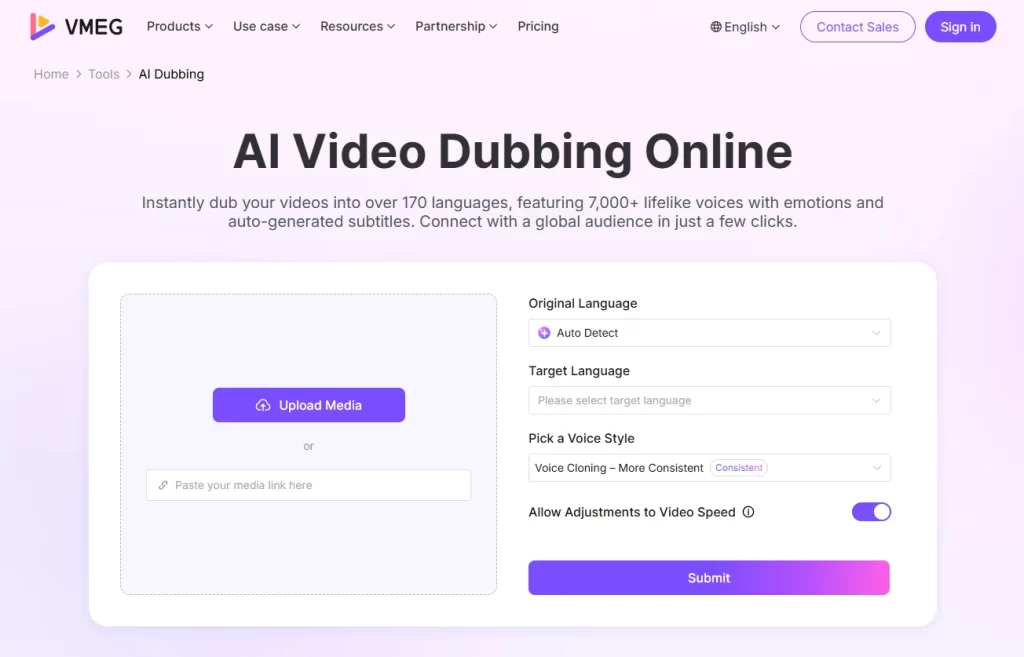
VMEG AI positions itself as an end-to-end video localization platform designed for scalable multilingual content production.
Key Features
- Support for 170+ languages and thousands of AI voices
- Automated subtitle generation and synchronization
- AI-powered dubbing with lip-sync alignment
- Context-aware translation to improve naturalness
- Integrated workflow for editing and exporting
Strengths
VMEG AI stands out for its extensive language support and consistent workflow. No need for any different programs; it integrates transcription, translation, dubbing, and subtitle production into a single interface. Cool, right?
This makes it especially valuable for enterprises, for whom big volumes of content across multiple geographies are their pain point. Its context-aware translation also helps to eliminate frequent difficulties (literal phrasing and inappropriate tone).
Limitations
Similar to most AI systems, output quality can change based on the content’s complexity and the original audio’s clarity. Manual refinement may still be necessary for technical or extremely subtle content.
Furthermore, even while the platform streamlines the process, consumers who want more precise control over voice performance could encounter limits when compared to professional studio equipment.
Best Use Case
Organizations and producers who want to effectively grow multilingual video production without handling intricate procedures will find VMEG AI to be a good fit.
2. Deepdub
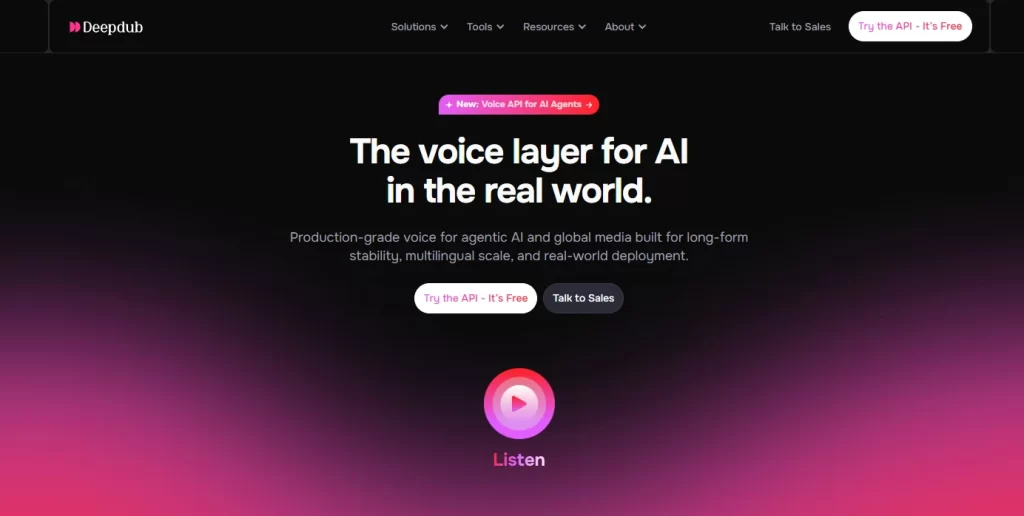
Deepdub focuses on high-quality dubbing for the media and entertainment industry.
Key Features
- Emotion-aware voice synthesis
- Studio-grade audio processing
- Dialogue separation from background music
- Support for cinematic dubbing workflows
Strengths
Deepdub excels in voice realism and emotional delivery. Its technology is designed to preserve the intent and tone of the original performance, making it suitable for films, TV shows, and narrative content.
The platform also integrates advanced audio processing capabilities, enabling cleaner separation of dialogue and background elements.
Limitations
The platform is more suited to business and professional users. As a result, small teams or solitary creators can find it less accessible. In comparison to more versatile solutions, pricing and workflow complexity may also be higher.
Best Use Case
Deepdub is ideal for high-end productions where voice quality and emotional fidelity are critical.
3. Kapwing
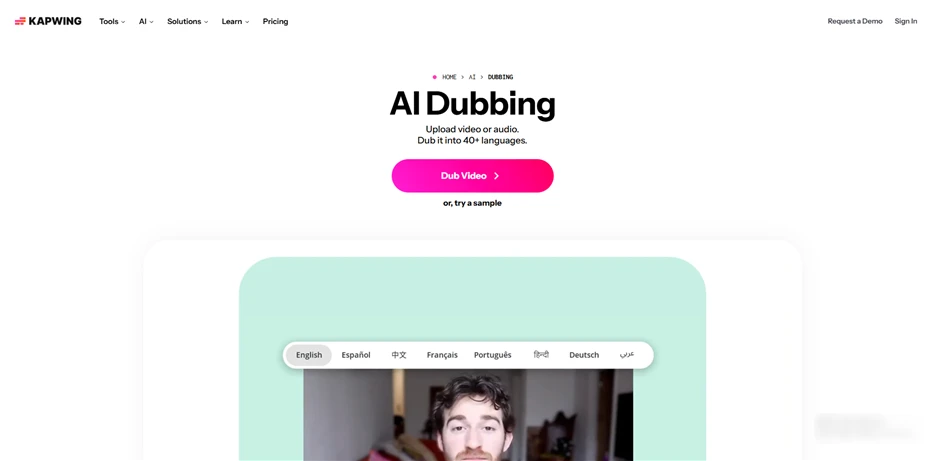
Kapwing is a browser-based platform that combines video editing with AI dubbing capabilities.
Key Features
- AI dubbing in 40+ languages
- Voice cloning through integrations
- Multi-speaker detection
- Built-in subtitle editor
- Collaborative editing environment
Strengths
Kapwing’s biggest advantage is usability. Its intuitive interface makes it accessible to non-technical users, while its integrated editing tools allow for quick adjustments.
The platform is particularly effective for social media teams and content creators who need to produce and localize content rapidly.
Limitations
The free version includes limitations such as watermarks, and more advanced features may require a paid plan.
Additionally, while it performs well for general use, it may not match the precision of specialized dubbing platforms in terms of lip-sync accuracy.
Best Use Case
Kapwing is best suited for content creators and marketing teams looking for an all-in-one, easy-to-use solution.
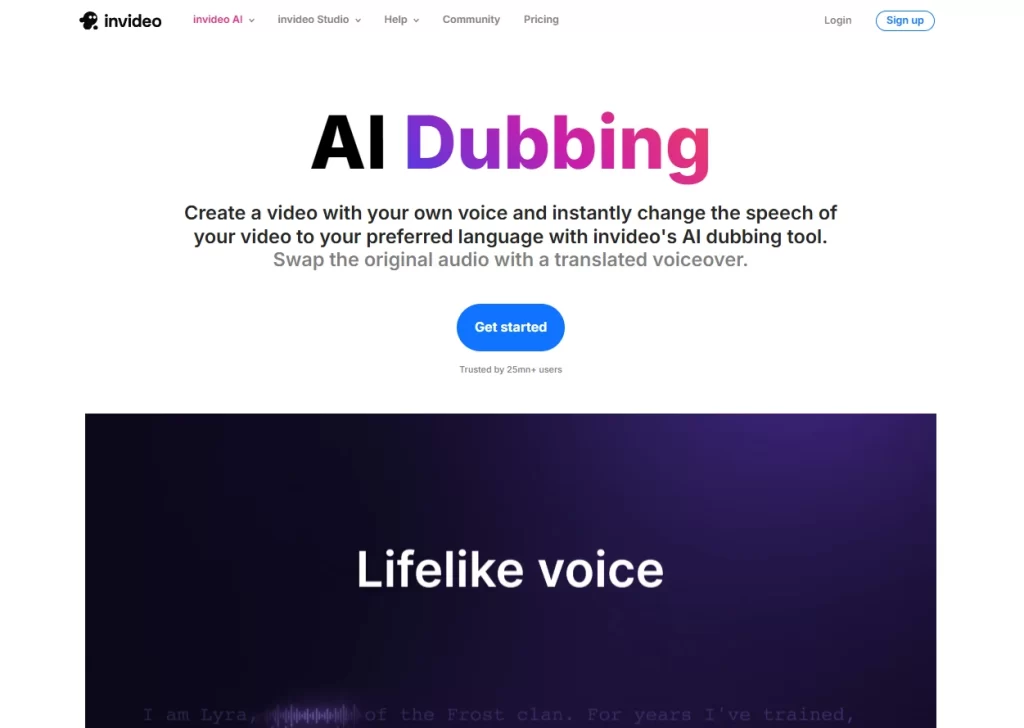
4. InVideo AI
InVideo combines AI-driven video creation with dubbing capabilities.
Key Features
- Text-to-video generation
- Automated voiceovers and dubbing
- Template-based video creation
- Support for multiple languages
Strengths
InVideo AI is designed for speed and simplicity. Users can generate videos from text and add dubbing within the same workflow, making content production highly efficient.
Its template-based approach also helps users quickly create visually consistent videos.
Limitations
While efficient, the platform offers less control over detailed dubbing elements such as timing and emotional nuance. Lip-sync capabilities may also be less advanced compared to dedicated dubbing tools.
Best Use Case
InVideo AI is best for rapid content production, particularly for marketing and social media applications.
5. Dubly.AI
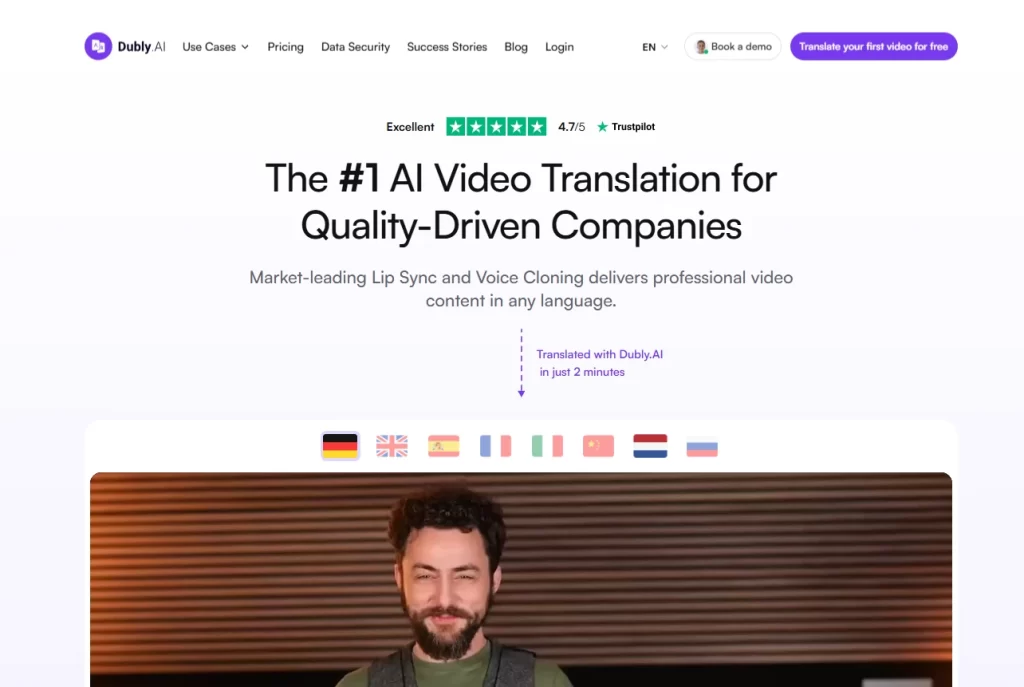
Dubly.AI is an emerging tool focused on simplifying multilingual video localization.
Key Features
- Automated translation and dubbing
- Voice cloning capabilities
- Streamlined workflow for quick processing
- Multilingual support
Strengths
Dubly.AI emphasizes simplicity and automation. It reduces the need for manual intervention, making it accessible for users who want to produce dubbed content quickly.
Its voice cloning feature also adds a layer of personalization.
Limitations
As a newer or less widely documented platform, there is limited transparency regarding performance benchmarks and advanced capabilities. Users may also encounter fewer customization options compared to more established tools.
Best Use Case
Dubly AI is suitable for basic multilingual content needs where speed and simplicity are prioritized over fine control.
6- Fish Audio
Fish Audio is a voice cloning and TTS platform built for creators and developers who need expressive, controllable synthetic voices for multilingual content production.
Key Features
- TTS generation across 80+ languages
- Clone any voice from a 15-second audio sample
- Fine-grained emotion control tags ([excited], [whispering], [sad])
- 200ms first audio latency, suitable for real-time and streaming applications
- 2M+ community voice models
- Also includes STT, SFX generation, and vocal removal
Strengths
Fish Audio’s S2 model delivers expressive and controllable voice cloning. Its emotion tagging system gives precise control over tone and delivery — particularly useful for localization where regional vocal nuance matters. API pricing starts at around $15/1M characters.
Limitations
The free tier is limited to 7 minutes per month. Commercial use of the open-weights model requires a paid license.
Best Use Case
Fish Audio is ideal for content creators and development teams who prioritize voice expressiveness and fine-grained control in multilingual dubbing workflows.
Challenges and Limitations of AI Dubbing
Despite its advantages, AI dubbing is not without limitations.
- Emotional Accuracy: While AI voices have improved significantly, capturing subtle emotional nuances remains challenging. This can affect content that relies heavily on tone, such as storytelling or dramatic performances.
- Cultural Context: Translation is not purely linguistic—it involves cultural adaptation. AI systems may struggle with idioms, humor, or region-specific references.
- Lip-Sync Precision: Although lip-sync technology is advancing, perfect alignment is not always achievable, especially in complex scenes.
- Ethical Considerations: Voice cloning raises ethical questions regarding consent and misuse. As the technology evolves, regulatory frameworks are likely to play a larger role.
Conclusion
AI video dubbing is reshaping the world by breaking content’s linguistic boundaries. By reducing the cost, time, and complexity of localization, it enables creators and businesses to reach every corner of the world.
The tools explored in this article—VMEG AI, Deepdub, Kapwing, InVideo AI, and Dubly AI—represent different approaches to the same challenge. Some see scalability as important, while others focus on precision and production quality.
Ultimately, the final choice of tool made by the user of the specific needs. However, one thing is clear: as AI dubbing continues to evolve, it will play an increasingly central role in how content is created, distributed, and experienced worldwide.