

A Believer In Consumer-First Marketing
Mohit Sareen
Director - (Board Member)
Cognavi India Pvt. Ltd. (Subsidiary of Forum Engineering)
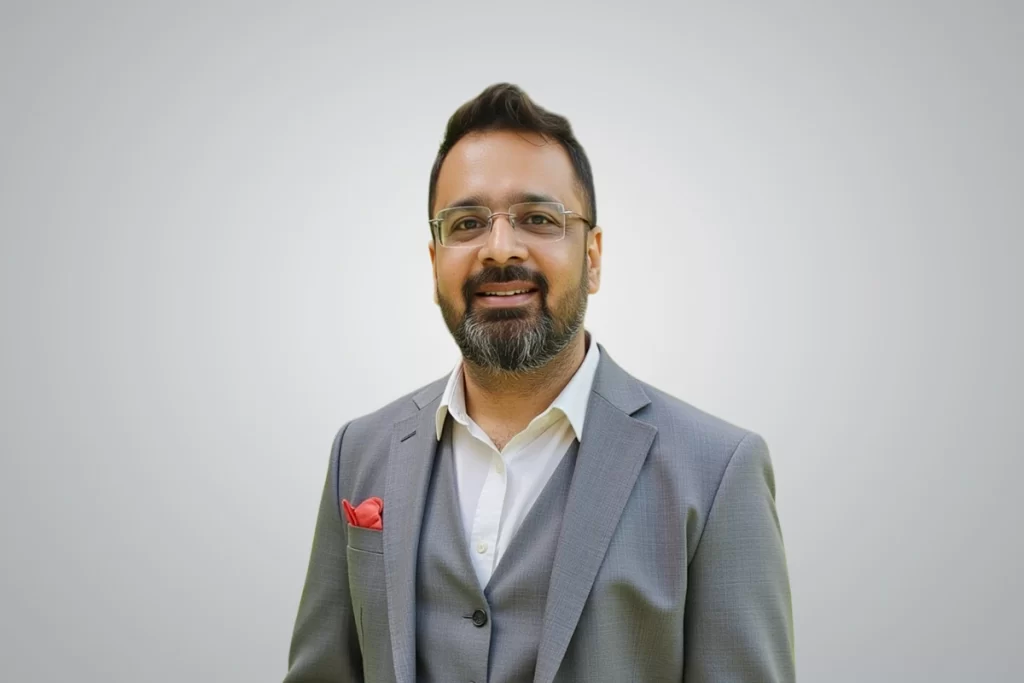
"A Believer In Consumer-First Marketing "
Mohit Sareen
Director - (Board Member)
Cognavi India Pvt. Ltd. (Subsidiary of Forum Engineering)
Data can tell marketers what people do. It rarely explains why they do it. That gap between information and understanding has become the defining challenge of modern marketing. In a world overflowing with dashboards, algorithms, and AI-generated insights, the real differentiator is no longer access to data but the judgment to interpret it—and the courage to act on that understanding.
Few marketing leaders articulate this balance as clearly as Mohit Sareen, Director and Board Member at Cognavi India Pvt. Ltd.. Over nearly two decades, Sareen has built a career navigating the intersection of strategy, digital transformation, and brand growth, consistently emphasizing that marketing’s true role is not promotion but enablement—creating the conditions that allow businesses to grow, products to succeed, and consumers to trust.
At Cognavi, that philosophy plays out within a rapidly evolving landscape where technology is redefining how organizations discover and engage talent. Yet for Sareen, even the most advanced tools remain secondary to a timeless principle: understanding people. During an exclusive conversation with TradeFlock, he reflects on the evolution of modern marketing, the leadership challenges behind transformation, and why authenticity and consumer insight continue to define the brands that endure.
How has marketing evolved from traditional brand promotion into the digital and AI-driven ecosystem we see today?
Marketing has evolved from a broad communication function into a structured consumer journey. Today, it operates across three critical stages: discovery, experience, and advocacy.
Discovery has moved almost entirely into the digital ecosystem. Consumers no longer encounter brands passively through advertising; they actively search for them. Platforms like search engines and AI assistants now serve as trusted gateways for buying journeys.
Experience has become the second defining layer. Visibility alone no longer sustains a brand. If the product or service fails to deliver what the brand promises, the consumer relationship ends quickly.
The final stage is advocacy. When brands consistently deliver value, consumers naturally become brand promoters within their own communities.
Modern marketing, therefore, is not simply about visibility. It is about designing and managing the entire consumer lifecycle, from how people discover a brand to how they ultimately advocate for it.
Why is marketing often misunderstood within organizations, particularly in its relationship with sales?
One of the most persistent myths in business is that marketing does not directly contribute to sales. This misunderstanding often creates unnecessary friction between the two functions.
Marketing and sales operate in complementary yet distinct roles. Sales focuses on closing transactions, while marketing builds the conditions that make those transactions possible. It shapes consumer perception, creates demand, and prepares the journey that ultimately leads to conversion.
A simple way to understand this relationship is to imagine sales trying to look beyond a wall. Marketing lifts them high enough to see the opportunity on the other side. Without marketing to create awareness and build trust, sales teams would struggle to generate consistent results. Although the two functions are frequently mentioned together, their fundamentals remain different. Marketing is not simply a partner to sales. It is the enabler of sustainable sales growth.
What qualities should define the next generation of marketing leaders?
The most important quality for future marketing leaders is the courage to make decisions. Modern marketers have access to enormous amounts of data and sophisticated analytical tools. While these resources are valuable, they can sometimes create hesitation. Many professionals become overly dependent on data before taking action.
Technical skills can be taught. Platforms, analytics, and digital tools evolve constantly and can be learned with time. What truly differentiates leaders are the softer qualities—judgment, accountability, curiosity, and the willingness to take responsibility for decisions.
Early in my career, I was fortunate to work with leaders who gave me the freedom to fail. That freedom allowed experimentation and learning. Marketing leaders must create similar environments where teams feel empowered to test ideas and grow from both successes and setbacks. Strong marketers remain curious, stay close to consumers, and continue learning throughout their careers. Those qualities ultimately shape leaders who can navigate change and build lasting brands.
What leadership challenges arise when introducing digital transformation into established organizations?
The biggest challenge in digital transformation is rarely technology. It is organizational resistance to change.
Many organizations hesitate to alter established systems, especially when current processes appear to be working. Leaders must therefore focus first on demonstrating impact rather than explaining technology. When the results are visible, the transformation becomes easier to accept.
Different stakeholders also evaluate transformation through different lenses. A finance leader may only support digital initiatives if they reduce costs or improve efficiency. A marketing leader will support them if they increase consumer engagement or brand adoption. Sales teams may initially resist them because new systems often demand additional time and adaptation. The most effective way to introduce transformation is to show clear business outcomes. When leadership understands the tangible benefits, whether growth, efficiency, or consumer reach, technology stops becoming a debate and starts becoming a solution.
As AI increasingly shapes marketing execution, what aspects of marketing must remain fundamentally human?
“Technology can accelerate marketing, but authentic ideas and real consumer understanding are what ultimately build lasting brands.”
Artificial intelligence can already generate content, analyze data, and automate many operational processes. These tools will become even more powerful in the coming years. However, technology alone cannot create meaningful ideas or genuine brand connections.
Consumers today are extremely perceptive. They can often distinguish between authentic communication and messaging that appears generic or automated. Strong marketing still depends on understanding how consumers think, behave, and make decisions. Technology should therefore be seen as an enabler rather than a replacement for human judgment. Tools can support marketers by improving efficiency and providing insights, but authentic ideas and deep consumer understanding remain the foundation of successful marketing.
Featured Magazine -

All Magazines-





Other Interviews-
- Joseph Nakhle-10 Best Tech Leaders from Asia 2026
- Vinod Kumar-10 Best Tech Leaders from Asia 2026
- Santosh Aghamkar-India’s 10 Most Influential Healthcare Leaders 2026
- Karanvir Gupta-10 Best Marketing Leaders in India 2026
- Sharon Dhaliwal-Most Impactful Women Leaders from Asia 2026
- Prakash Narayan Singhdeo-10 Best Marketing Leaders in India 2026
- Sanjeev Kumar-10 Best Marketing Leaders in India 2026
- Divesh Mahendra Parekh-India’s 10 Most Influential Healthcare Leaders 2026
- Kadambari Bendre-10 Best Marketing Leaders in India 2026
- Mohit Sareen-10 Best Marketing Leaders in India 2026
