

A Strategic Leader Built From Hardest Decisions
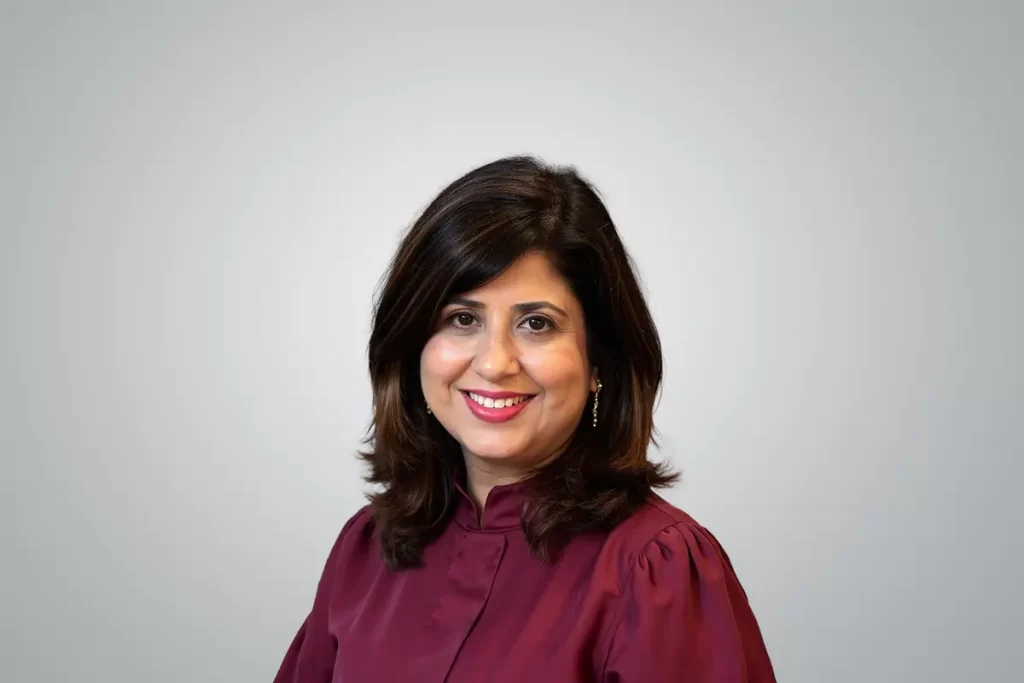
Dr Priyanka Bahl
Medical Director
A Strategic Leader Built From Hardest Decisions
Dr Priyanka Bahl
Medical Director
Twenty years ago, hospital management in India was not considered a career. It was considered a consolation: the domain of retired clinicians easing into governance at the tail end of lives lived elsewhere. Walking away from anaesthesia mid-training to build a future in healthcare administration was not unconventional. Most people watching simply found it inexplicable.
Dr Priyanka Bahl, Director of Medical Services at Apollo Hospitals, made that decision anyway. An MBBS, an LLB, an MPhil, and an IIM Ahmedabad qualification sit behind her name, each earned deliberately, each solving a problem the previous credential could not. She led public-private partnership hospitals through pandemic-era crises, steered Marengo CIMS to triple JCI accreditation, and directed citywide COVID operations without a single established protocol in sight. Her career was never built on waiting. It was built on walking into rooms nobody else would enter, and staying until the work was done.
She sat down with TradeFlock for a conversation about power, accountability, and what two decades in Indian healthcare have actually taught her.
You walked away from anaesthesia mid-training to pursue hospital management at a time when the field barely existed in India. What actually happened?
Anaesthesia made the answer clear before the question was fully formed. Standing behind a mask, behind a surgeon, managing sedation for procedures someone else was leading, that picture of a career did not hold. Around 2005, AIIMS introduced the first postgraduate seat in hospital management, and the recognition that this field was about to matter arrived with an immediacy that felt almost physical. Until that point, hospital administration was the domain of retired clinicians in their sixties who entered governance at the end of their working lives rather than at the beginning. Dr Vikram Shah and Dr Pankaj Doshi in Ahmedabad became the earliest mentors, and their support was unconditional in an environment that was not always generous. The commentary from elsewhere became background noise eventually. What carried it through was one understanding that has not changed across two decades: keep your doctors respected, and they will keep your patients well.
The LLB feels like the most deliberate credential in your portfolio. What problem were you actually solving for?
The knowledge existed well before the degree, built through years of genuine interest in medico-legal practice and short courses that never carried the weight of a formal qualification. The specific problem being solved was the senior consultant who had practised for thirty years in a generation where documentation was simply not considered part of medicine and who carried enough institutional authority that a junior administrator’s argument, however well-founded, would not move them. When that person needs to understand that their own inadequate documentation places them personally at legal risk, that the EMR is protection rather than paperwork, and that their own signature is what stands between them and a catastrophic outcome in the one case in a hundred that goes wrong, the conversation changes entirely depending on who is delivering it. The LLB opened doors that knowledge alone could not.
What does Indian healthcare look like in five years?
Consolidation will define the next chapter, driven by rising operational costs, advancing robotics, and a growing demand for institutional accountability that the single-operator model cannot meet structurally. Manipal’s restructuring of three hospitals in Kolkata demonstrated what aligned, consistent care delivery looks like when a chain brings genuine operational discipline to institutions that previously ran on individual discretion. Younger leaders inheriting this landscape will find senior resistance less entrenched and governance expectations considerably higher. The doctor who divides their time across multiple hospitals will find that model increasingly incompatible with the accountability structures that serious institutions will require. For that generation specifically, read every single day on the same day the question arises, because returning to knowledge the evening it became relevant is what separates leaders who grow from those who simply accumulate experience.
“The responsibilities come like a king. The powers are borrowed. That is the most honest thing I can say about what it means to be a medical director in India today.”
COVID is frequently described as a disruption to healthcare. You seem to experience it as something closer to a revelation.
It was a proof of concept that nobody had been willing to run before circumstances forced it. Before 2019, institutional change in healthcare moved at a pace that felt encoded into the industry’s DNA, with projects identified across quarters, resistance managed carefully, and progress celebrated in careful increments. COVID removed every assumption that this pace was necessary or inevitable. Vadil Seva was built and launched in 48 hours. Ambulance rotations were redesigned overnight. Doctors went into the city in their own vehicles carrying medicines, serving entire communities, while someone managed the logistics without a single established protocol to lean on. What that period proved permanently is that doctors have a far greater capacity for change than healthcare administration had ever credited them with. The shift from a culture of blame to one of shared accountability is the most meaningful structural change this industry has produced over two decades.
You described the medical director's authority as borrowed power. That is a remarkably candid characterisation.
It is simply the accurate one, and accuracy matters more than comfort on this particular question. The responsibilities that come with the title are real and substantial, but the structural authority to act on them lies elsewhere in most Indian hospitals, which are overwhelmingly promoter-driven, concentrating decision-making at the ownership level regardless of what clinical leadership identifies as necessary. The senior consultants add their own layer of complexity, territorial in ways that consume institutional energy and protected by longevity in ways that make direct challenge professionally costly. NABH has done what an accreditation body can reasonably do, but accreditation cannot manufacture institutional culture or genuine clinical accountability from the outside. Those have to be built from within, using whatever authority is genuinely available rather than whatever the title implies.
Featured Magazine -

All Magazines-




Other Interviews-
- Dr Lakshmipathy Ramesh Nagarajan-India’s 10 Most Influential Healthcare Leaders 2026
- Chetan Bipinchandra Shah-India’s 10 Most Influential Healthcare Leaders 2026
- Dr Priyanka Bahl-India’s 10 Most Influential Healthcare Leaders 2026
- Prahalad Singh Patel-10 Best CEOs in India 2026
- Rakesh Gaur-10 Best CEOs in India 2026
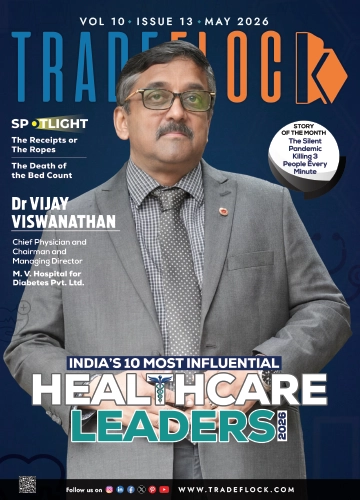
- Dr Vijay Viswanathan-India’s 10 Most Influential Healthcare Leaders 2026
- Dr Atantra Das Gupta-India’s 10 Most Influential Healthcare Leaders 2026
- Subhashis Chakraborty-Best Corporate Leaders in India 2026
- Vipul Jambucha-Best Corporate Leaders in India 2026
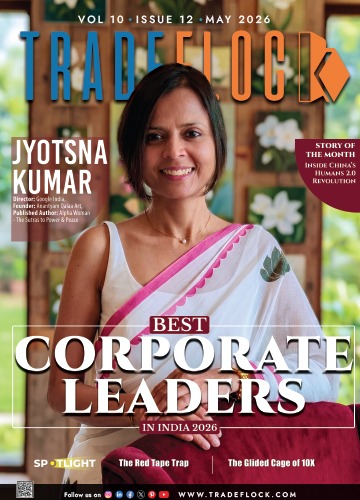
- Jyotsna Kumar-Best Corporate Leaders in India 2026
