

Engineering the Next Era of Adaptive Payment Infrastructure
Venkatesh R
Engineering Leader
VISA
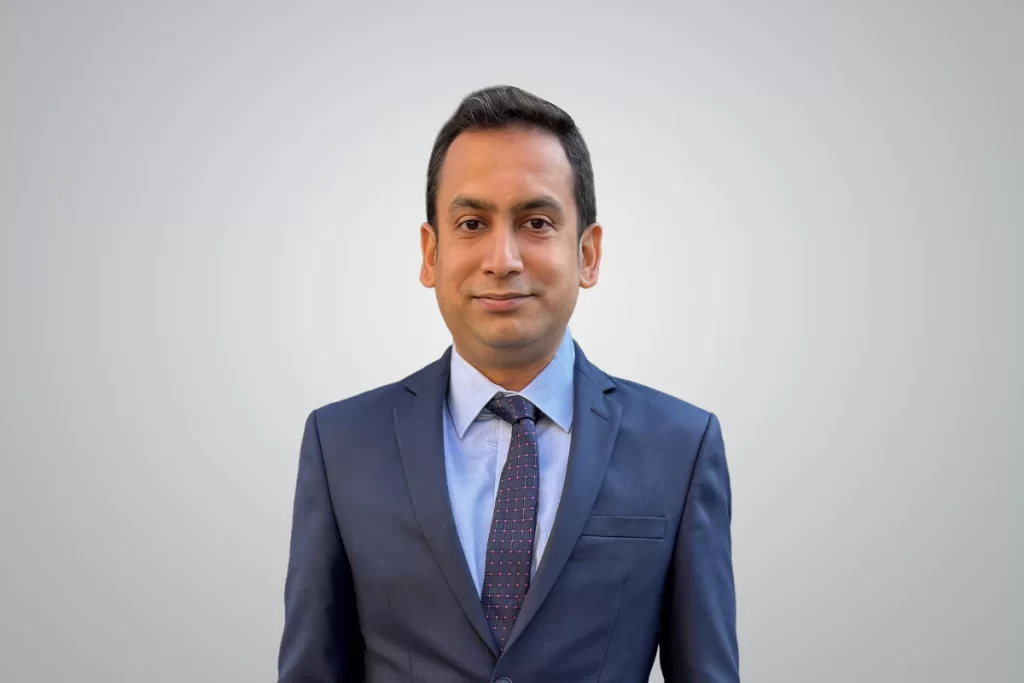
Engineering the Next Era of Adaptive Payment Infrastructure
Venkatesh R
Engineering Leader
VISA
Global financial systems are moving beyond speed and reliability toward real-time intelligence, embedded trust, and continuous decision-making at scale. On the other hand, payments infrastructure is evolving into an adaptive ecosystem where engineering, AI, and governance operate as a unified construct. With three US patents in AI, NLP, and compliance systems, Venkatesh R, Director – Data & AI Platforms at Visa, is at the centre of this transformation. He leads a globally distributed engineering organisation across India, the US, and Europe, managing 20+ teams responsible for platforms serving tens of millions of users and processing over 12,000 transactions per second.
His work spans Visa’s core digital architecture, including modern data platforms, high-throughput APIs, and always-on payment systems built on zero-trust security, compliance-by-design principles, and strong governance frameworks. Beyond scaling systems, his focus extends into AI-driven decisioning across payments, risk, and compliance, while aligning platform strategy and investment outcomes with business priorities. His engagement with NSRCEL at IIM Bangalore connects him with early-stage founders working on AI-led product strategy and platform scalability, bringing startup discipline into enterprise environments.
Speaking exclusively with TradeFlock, Venkatesh shares perspectives on enterprise transformation and AI-led platform evolution.
Which phase of your journey challenged you most, and how did it shape your leadership?
The most defining phase of my journey was moving from a hands-on architect to leading large, multi-layered engineering organisations building high-scale, customer-facing platforms. This shift required a clear change in mindset from solving problems directly to enabling teams to solve them at scale.
I have led distributed engineering organisations handling millions of interactions and thousands of transactions per second. At this scale, outcomes depend less on individual execution and more on how systems and teams are designed to work together.
The focus shifted to building frameworks, operating models, and decision guardrails that ensure consistent execution across teams and geographies. Leadership became about creating the conditions where the right answers emerge reliably. That transition from execution to orchestration continues to define my leadership approach.
In payments and AI, what concerns you most at scale? How are you addressing them?
The greatest concern is silent failures that remain undetected until they evolve into systemic risks. Data quality gaps, model drift, and edge-case behaviour in distributed systems can create subtle inconsistencies with significant downstream impact in regulated environments.
The response lies in building trust directly into system design. This includes strong data quality frameworks, continuous observability, explainable AI models, and governance-led engineering practices. The goal is to move beyond reactive debugging toward predictive assurance, where risks are identified early and mitigated before they surface at scale, ensuring reliability in high-stakes financial ecosystems.
When AI matures, what will matter most in your space, and are you already building for it?
When AI matures, value will come from deeply embedded, reliable systems within core business workflows rather than standalone models. In payments, this means AI-driven decisioning for fraud detection, anomaly detection, risk scoring, and operational resilience that is explainable, auditable, and compliant by design.
The differentiator will be the ability to operationalise AI responsibly at enterprise scale with trust and accountability. The focus today is on strengthening MLOps maturity, governance frameworks, and scalable integration patterns that enable AI to operate reliably in high-volume, regulated environments.
What is the toughest decision you’ve made, and what system-level issue did it resolve?
One of the toughest decisions I made was pausing and re-architecting a critical platform under intense delivery and business pressure. It required difficult stakeholder conversations and accepting short-term delays. In hindsight, the decision addressed accumulated architectural debt in systems that had outgrown their original design assumptions. Incremental fixes would have only delayed the underlying risk.
The reset approach strengthened resiliency, reduced recurring production issues, and created a foundation capable of supporting exponential scale with greater stability. It also improved release velocity and engineering efficiency across teams. More importantly, it reinforced a core leadership principle that when system design no longer aligns with scale, structural correction becomes essential to sustain long-term reliability and growth.
As payments fragment through regulation, geopolitics, and new rails like stablecoins, how are you ensuring global scalability and compliance?
Here, the traditional centralised model no longer holds. Building for scale now requires a more modular, region-aware architecture that can adapt to local regulatory needs while preserving a consistent global core. The approach focuses on decoupling compliance logic from core transaction systems and introducing configurable workflows that can evolve with jurisdictional requirements. Abstraction layers enable integration with multiple payment rails without redesigning foundational platforms.
The real challenge lies in maintaining balance in flexibility without fragmentation and scalability without compromising compliance or operational clarity.
What are your next 3–5-year priorities, and how is your leadership evolving?
The focus is on building platforms that are scalable and adaptive, capable of evolving with regulatory shifts, emerging technologies, and changing business models. This includes continued investment in data platforms, AI-driven capabilities, and resilient architectures that operate seamlessly across geographies.
Leadership evolution is centred on strengthening second-line leadership and building self-sustaining teams. The goal is to create an organisation that operates, innovates, and scales independently, with capability embedded across all levels.
Featured Magazine -

All Magazines-









Other Interviews-
- Sinan Safaa Aboeless-Asia’s Best Business Leaders 2026
- Dr. Sandeep Chatterjee-Best Education Leaders in India 2026
- Dr Priya Madhavan-Most Impactful Women Leaders from Asia 2026
- Venkatesh R-10 Best Tech Leaders in India 2026
- Elaine Tan-Most Impactful Women Leaders from Asia 2026
- Kishan Dumpeta-10 Best CEOs in India 2026
- C S Jadhav-10 Best CEOs in India 2026
- T. Hariraj-10 Best CEOs in India 2026
- Dr Lakshmipathy Ramesh Nagarajan-India’s 10 Most Influential Healthcare Leaders 2026
- Chetan Bipinchandra Shah-India’s 10 Most Influential Healthcare Leaders 2026
