

The Quiet Architect of India’s Academic Convergence
Dr. Sandeep Chatterjee
Former Pro-Vice Chancellor, DYPIU, Pune
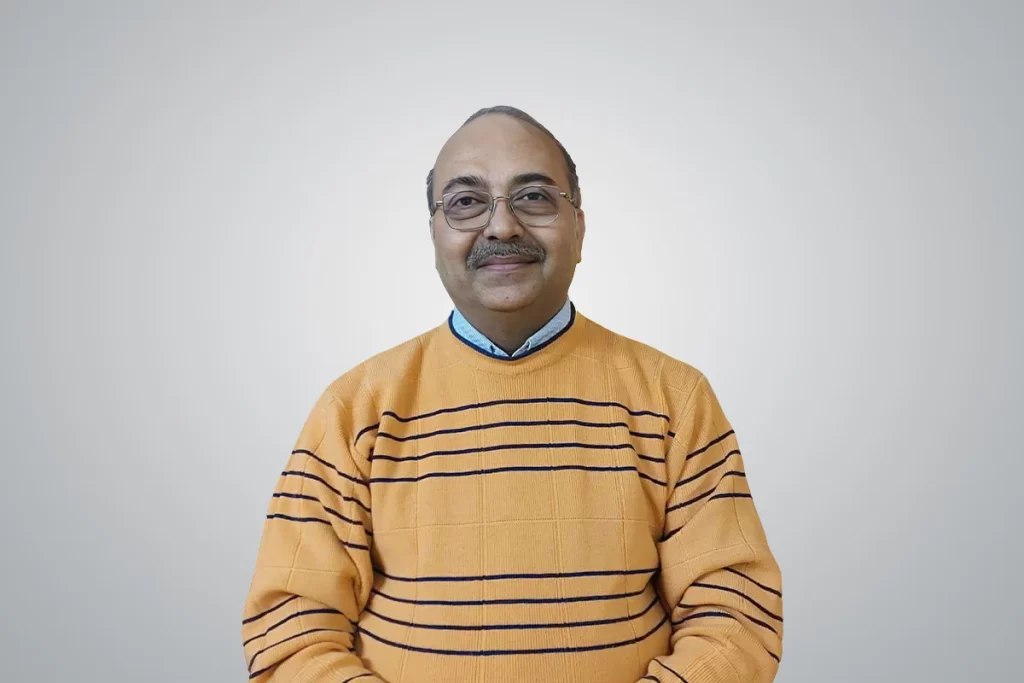
The Quiet Architect of India’s Academic Convergence
Venkatesh R
Engineering Leader
VISA
Bringing together different academic worlds while preserving what makes each unique has been central to Dr Sandeep Chatterjee’s leadership journey. With over 25 years in higher education, he has contributed to institutions shaped by distinct academic priorities and cultures. From the discipline and technological focus of IIT Delhi to the open intellectual discourse of JNU and the socially engaged environment of Tata Institute of Social Sciences (TISS), his experience reflects a deep understanding of institutional diversity.
His leadership is defined by the ability to balance academic freedom with effective governance, earning respect across the higher education ecosystem. In an exclusive TradeFlock interview, Dr Sandeep shares insights on reform, leadership, technology adoption, and India’s evolving knowledge economy.
Having served at IIT Delhi, JNU, and TISS, what was the biggest challenge in balancing their distinct academic cultures?
The most meaningful challenge was not about administration, but about aligning fundamentally different academic mindsets. Institutions like IIT Delhi, JNU, and TISS operate on distinct intellectual cultures. IIT Delhi is driven by precision, measurable outcomes, and structured problem-solving, while JNU and TISS encourage debate, plurality of thought, and critical inquiry where ambiguity is part of learning.
The real challenge was, therefore, not just aligning systems like curricula or funding but building mutual understanding across these contrasting academic ecosystems. The most rewarding outcome came through sustained dialogue, joint seminars, and collaborative work, where differences gradually transformed into complementary strengths rather than barriers.
What is the biggest gap between education policy and university implementation?
At the national level, education policies are broad, aspirational, and designed for diverse institutions and student populations, emphasising equity, innovation, access, and measurable outcomes. However, within universities, implementation becomes highly contextual, shaped by institutional culture, leadership, faculty engagement, administrative capacity, and available resources.
The biggest gap lies between centralised policy vision and decentralised institutional realities. While policies appear structured on paper, execution is often uneven due to workload pressures, funding constraints, lack of clarity, or resistance to change. Some institutions adapt quickly, while others continue traditional systems.
Bridging this gap requires early involvement of implementers, capacity-building, flexibility, and continuous feedback to ensure policies are practical, collaborative, and sustainably integrated.
What shift and barrier define India’s move toward an AI-native, future-ready education ecosystem?
India’s key shift must be adopting AI as an amplifier of human potential across all levels of education, whether schools, colleges, or technical institutions, embedding it as a core enabler of learning and skill development over the next five years.
The biggest barrier is the lack of structured systems to identify, nurture, and continuously develop talent. India must move toward early talent identification, sustained upskilling, adaptability, and lifelong learning to convert its large youth base into a strong, future-ready talent pipeline.
What is your boldest vision for India’s education system by 2035?
Improvement in India’s education system by 2035 must happen at every level, with learning becoming more flexible, multidisciplinary, and student-centric. Self-paced, modular, and project-based education should empower students with greater choice across subjects, skills, institutions, and languages. Supported by AI-driven platforms, strong digital public infrastructure, and continuous lifelong learning opportunities, the focus must remain on accessibility, innovation, adaptability, and meaningful knowledge creation.
How do you overcome resistance to ICT and automation in established institutions?
Resistance to ICT and automation is rarely about technology itself. It is about habit, trust, and fear of disruption. In established academic and government systems, long-standing processes and informal practices make sudden digital change difficult. What works best is a gradual, practical approach. Starting with visible areas like leave applications, thesis submissions, or assessments helps users experience real benefits. As paperwork and delays reduce, resistance naturally declines.
Peer validation is also crucial. When respected faculty or administrators adopt systems, acceptance spreads more easily. Sustainable digital transformation depends on patience, trust-building, simple design, and making technology feel helpful rather than intrusive.
Under NEP 2020, where can Indian universities make the strongest global impact in the next five years?
Under NEP 2020, Indian universities can make a strong global impact through multidisciplinary education, technology-enabled learning, and research addressing real-world challenges. India’s strength lies in creating scalable, affordable solutions in healthcare, sustainability, climate resilience, agriculture, digital governance, and inclusive education, all highly relevant for developing nations.
Another opportunity is strengthening digital education infrastructure, building on India’s large-scale public digital systems. Universities can expand AI-driven learning, multilingual access, and flexible academic models. Integrating traditional knowledge systems with modern research can further define a unique academic identity. With strong research, collaborations, and autonomy, Indian universities can become global knowledge contributors.
What governance milestone would you most like your leadership to be remembered for in Indian higher education?
No single leader can claim a system-wide transformation in Indian higher education, given its vast and diverse ecosystem. However, the governance milestone I would associate with my leadership is institutionalising transparent, accountable, and academically driven decision-making that outlives individuals and tenures. Higher education must move beyond personality-driven administration toward systems rooted in merit, academic priorities, and evidence-based governance. Clear processes for hiring, promotions, funding, and collaboration build trust and continuity. Ultimately, the true legacy of leadership lies in creating systems strong enough to sustain progress beyond any individual.
Featured Magazine -

All Magazines-








Other Interviews-
- Rajesh Pasari-Best Education Leaders in India 2026
- Sinan Safaa Aboeless-Asia’s Best Business Leaders 2026
- Dr. Sandeep Chatterjee-Best Education Leaders in India 2026
- Dr Priya Madhavan-Most Impactful Women Leaders from Asia 2026
- Venkatesh R-10 Best Tech Leaders in India 2026
- Elaine Tan-Most Impactful Women Leaders from Asia 2026
- Kishan Dumpeta-10 Best CEOs in India 2026
- C S Jadhav-10 Best CEOs in India 2026
- T. Hariraj-10 Best CEOs in India 2026
- Dr Lakshmipathy Ramesh Nagarajan-India’s 10 Most Influential Healthcare Leaders 2026
