
Building Systems That Outlast Technology Cycles
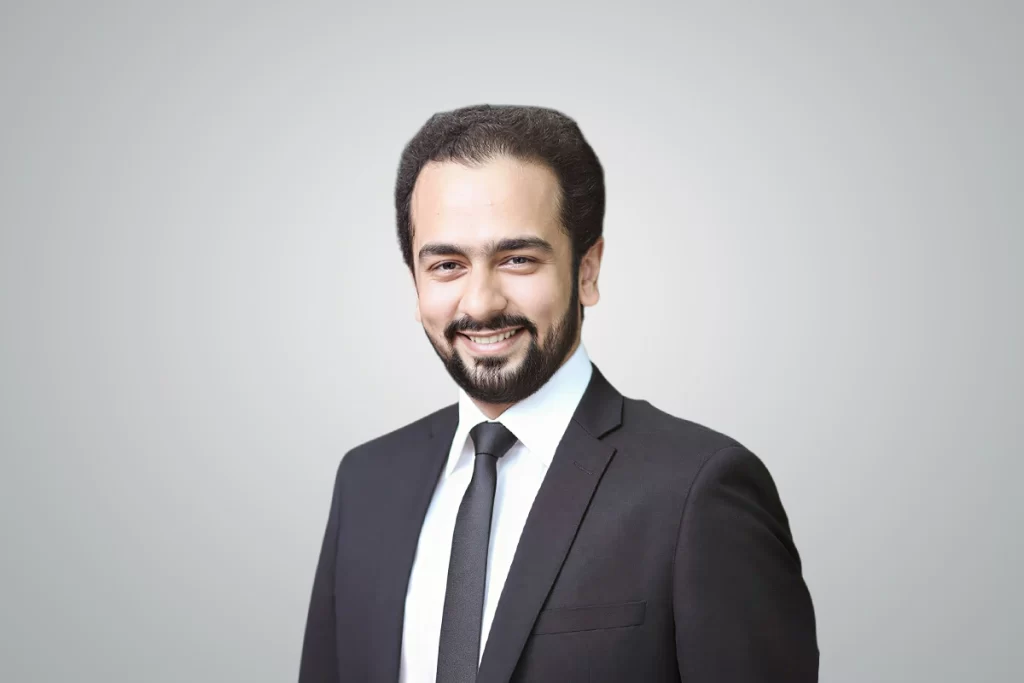
Faizan Ahmad Chughtai
CTO
RecyGlo Sdn. Bhd.
Technology leadership today is not defined by how quickly new tools are adopted, but by how thoughtfully they are understood, questioned, and applied. In an environment where AI, automation, and emerging systems continue to reshape development, the real challenge lies in balancing capability with judgment, ensuring that speed does not replace thinking.
Faizan Ahmad Chughtai’s career has been forged in this evolving landscape, carrying forward early lessons shaped by hands-on development, addressing unclear requirements, and building systems from the ground up. Over time, those foundations translated into leading full-scale SDLC, delivering complex ERP and cloud-based solutions, and scaling Skylinx Technologies into a high-performing, collaborative environment. Today, his approach reflects a clear focus on building resilient, scalable systems aligned with long-term business outcomes.
In an exclusive interaction, TradeFlock spoke with Faizan to understand his journey, challenges, key strategies, and the road ahead.
How has your journey from a developer to CTO shaped how you lead engineering teams today?
A lot of engineering leadership today gets shaped by the tools available at the moment, but the more lasting influence often comes from having worked in environments where those tools did not exist. Starting out as a developer in a time when frameworks were limited and most things had to be built from first principles creates a very different relationship with problem-solving. You are forced to understand not just how something works, but why it needs to work that way, especially when requirements are unclear or constantly evolving.
That experience continues to influence how I approach teams today. I don’t look at technology as a shortcut, and I don’t encourage my team to rely on it blindly either. Every new tool brings efficiency, but it also comes with assumptions, and unless those are questioned, they can limit how effectively a problem is solved. Which is why we position ourselves not around specific technologies, but around solutions. The emphasis remains on understanding the problem deeply, combining approaches where necessary, and building systems that hold up beyond the convenience of current tools.
As AI reshapes software development, what leadership blind spots must be addressed?
There is a tendency to view AI as a leap forward in capability, and in many ways, it is, but the more important question is how that capability is being used. The risk is not in adoption, it is in the quiet shift from using AI as a support system to depending on it as a decision-maker.
Engineering, at its core, is about accountability. A piece of code is not just written; it is owned. AI does not carry that ownership, and it does not fully understand the context in which decisions are made. Which is why the role of an engineer becomes even more critical, not less. There has to be a clear line where human judgment steps in, questions the output, and takes responsibility for the final result.
From a leadership standpoint, the focus has to be on building that awareness. Teams should use AI, but with discipline and an understanding of both its strengths and its limitations. Because speed without scrutiny can create problems that scale faster than they are noticed.
How do you mentor engineers to think beyond coding into architecture and business impact?
One of the subtle limitations in engineering teams is not a lack of skill, but a lack of exposure. When individuals spend too long working with the same technology or in the same environment, they become efficient, but their thinking can narrow without them even realizing it.
What tends to change is variety. Working across different technologies, different problem sets, and different constraints forces engineers to step back and think in terms of outcomes rather than just execution. They begin to understand why certain approaches work better in certain contexts, and how decisions affect performance, scalability, and even business outcomes.
That shift becomes increasingly important as expectations for engineering have evolved. It is no longer about writing code that works, but about building solutions that hold up in real-world conditions. Mentoring, then, is less about instruction and more about creating that exposure, allowing engineers to connect ideas, challenge assumptions, and gradually develop a broader way of thinking.
“Technology will keep evolving, but the real difference will always come from how deeply you understand the problem before choosing the solution.”
What cultural shift is most critical for organizations to truly leverage AI and emerging technologies?
AI has fundamentally changed what is possible, but it has also introduced a new responsibility in how work is approached. The challenge is no longer access to capability, but how that capability is applied.
One of the risks I’ve observed is a gradual over-reliance on AI-generated output. As speed increases, there is a tendency to reduce scrutiny, which can impact quality over time. That makes it essential for organisations to reinforce standards, governance, and review mechanisms that ensure outputs remain reliable.
The more important shift, however, is cultural. AI should be positioned as an enabler of better thinking, not a substitute for it. When teams use AI to augment their judgment rather than replace it, the outcomes are far more effective. Ultimately, organisations that succeed will be those that combine technological capability with disciplined, accountable ways of working.
What has been the most complex challenge in managing full-scale SDLC projects?
What makes large-scale software development challenging is not the execution itself, but the illusion of clarity at the start. Requirements often appear structured on paper, but the moment they begin to take shape in a working environment, they evolve, sometimes subtly, sometimes significantly. That gap between what is imagined and what is actually needed is where most complexity originates.
Over time, I’ve found that shortening that gap makes a meaningful difference. Building early prototypes and putting something tangible in front of stakeholders changes the quality of decisions. It grounds the conversation. At the same time, relying on a single development lifecycle rarely works in practice. Each model brings its own strengths and limitations, and applying one rigidly across different projects often creates more friction than alignment. The real discipline lies in adapting continuously, even when it means stepping away from what you are most confident about.
How do you embed security and compliance into innovation without slowing development cycles?
Security often becomes a bottleneck only when it is treated as something separate from development. When it is introduced toward the end, it disrupts the flow by forcing teams to revisit decisions made without that lens.
What changes the dynamic is when security becomes part of how systems are designed from the beginning. It shifts from being a requirement to being a way of thinking. With the nature of threats evolving constantly, especially with more sophisticated tools and vulnerabilities, it is no longer practical to treat security as an add-on.
When developers factor in privacy, compliance, and risk at the design stage, the process becomes more stable. There is less rework, fewer last-minute corrections, and a stronger foundation overall. Over time, this does not slow development; it makes it more predictable because the system is being built with long-term resilience in mind rather than short-term completion.
Which technology transformation you haven’t explored yet, and what conscious blind spot does that create for you?
Every technology journey has areas you’ve leaned into deeply and others you’ve observed more from the periphery. For me, blockchain sits in that second category.
I’ve followed its evolution and engaged with aspects of its architecture, particularly around security and distributed systems, but I haven’t fully immersed myself in it. What makes that a conscious blind spot is not the technology itself, but the shift in thinking it represents. Moving from centralized control to distributed trust challenges how systems are designed, governed, and scaled.
I’m particularly aware of how this may limit my perspective on simpler, high-trust use cases such as lending or transactional platforms, where transparency and resilience are critical. It remains an area I continue to explore, because understanding what you haven’t yet mastered often shapes how you evolve as a leader.
Aside from technical expertise, which leadership skill challenged you the most to develop?
The most significant shift was moving from being a technical contributor to taking ownership of the business as a whole. Building Skylinx required stepping into areas I had little formal experience in, particularly around financial management, negotiation, and team leadership.
In the early stages, we underestimated the value of our work quite significantly. Projects were priced far below what they were worth, often driven by the need to build credibility and momentum. At the time, those decisions felt necessary, but they also reflected a limited understanding of how value is positioned and sustained.
That phase was humbling, but essential. It forced me to develop a broader perspective, not just on delivery, but on how a business operates and grows. Financial discipline, in particular, has been an area of continuous learning, and it continues to influence how I lead today.
Who has influenced your leadership the most, and what have you carried forward from them?
The most enduring influence on my leadership has been my father. His impact wasn’t shaped through formal guidance, but through the consistency of his actions and the responsibility he carried over time.
Growing up, I observed a strong work ethic and a clear sense of commitment to creating opportunities for others. At the time, it was simply part of everyday life, but over the years, I’ve come to recognise how deeply that shaped my own perspective.
In my role today, that influence shows up in how I approach leadership. There is a strong focus on enabling others, creating the conditions for people to grow, and ensuring they have the tools and support to succeed. It has reinforced the idea that leadership is less about control and more about responsibility, particularly in how you contribute to the growth of others.
“The real risk with AI isn’t adoption, it’s losing the discipline to question what it produces.”
Featured Magazine -

All Magazines-





Other Interviews-
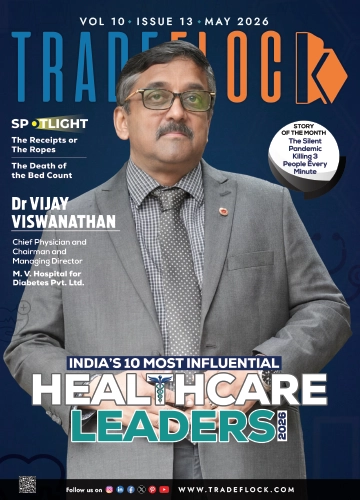
- Dr Lakshmipathy Ramesh Nagarajan-India’s 10 Most Influential Healthcare Leaders 2026
- Chetan Bipinchandra Shah-India’s 10 Most Influential Healthcare Leaders 2026
- Dr Priyanka Bahl-India’s 10 Most Influential Healthcare Leaders 2026
- Prahalad Singh Patel-10 Best CEOs in India 2026
- Rakesh Gaur-10 Best CEOs in India 2026
- Dr Vijay Viswanathan-India’s 10 Most Influential Healthcare Leaders 2026
- Dr Atantra Das Gupta-India’s 10 Most Influential Healthcare Leaders 2026
- Subhashis Chakraborty-Best Corporate Leaders in India 2026
- Vipul Jambucha-Best Corporate Leaders in India 2026
- Jyotsna Kumar-Best Corporate Leaders in India 2026
