Championing Purpose-Led Healthcare Marketing
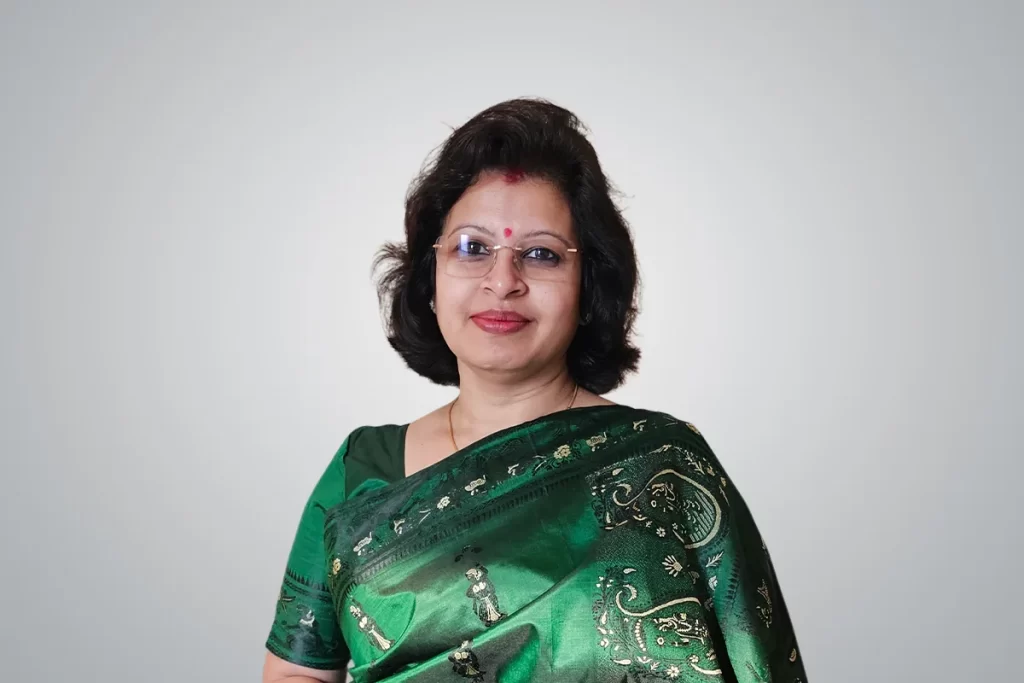
Barnona Basu
Director Marketing
Emcure Pharmaceuticals Limited
Championing Purpose-Led Healthcare Marketing
Barnona Basu
Director Marketing
Emcure Pharmaceuticals Limited
Healthcare marketing today demands far more than brand visibility. It requires scientific responsibility, empathy for patient journeys, and the discipline to align commercial strategy with clinical credibility. As pharmaceutical ecosystems grow increasingly complex, the leaders shaping meaningful impact are those who combine strategic clarity with a deep understanding of human needs.
Among them is Barnona Basu, Director – Marketing, India Business at Emcure Pharmaceuticals Limited. With more than 25 years across the pharmaceutical landscape, her journey reflects a steady progression through marketing, therapy leadership, and patient support strategy. Years of leadership across multiple roles at Lupin Limited strengthened her approach to therapy-focused marketing and patient support programs, building on earlier experiences with Sudler & Hennessey, Aristo Pharmaceuticals Pvt. Ltd., and Ranbaxy Laboratories. Today, she brings those learnings together to build patient-centric ecosystems that combine clinical insight, ethical marketing, and long-term healthcare value.
During an exclusive conversation with TradeFlock, she shared her journey, challenges, and vision.
In pharma marketing, how do you balance compliance and creativity in campaigns?
In pharmaceutical marketing, creativity must always rest on a strong foundation of credibility. I have learned that compliance should not be treated as a hurdle at the end of a campaign but as a partner involved from the very beginning. When medical and regulatory colleagues are part of early discussions, ideas evolve within responsible boundaries instead of being restricted later.
I usually begin by identifying the real unmet need. At times, it starts with understanding the specific challenges clinicians encounter in delivering optimal care; other times, it is a patient struggling with concerns that are not being addressed clearly. Every campaign must first be scientifically accurate, ethically sound, and genuinely meaningful. Once those pillars are secure, creativity can flourish with confidence.
Over time, I have relied on a simple internal checklist before moving forward. Is the message truthful? Is it responsible? Does it add value to the healthcare community? When the answer to all three questions is yes, the campaign is ready to move ahead.
What approaches help you build strong cross-functional collaboration in pharma marketing?
In pharma, meaningful work cannot be built in isolation. Marketing may shape the message, but medical safeguards the science, regulatory protects integrity, and sales carries the story to the field. If even one part moves out of rhythm, the entire effort weakens.
Over the years, I have realized that collaboration is less about formal meetings and more about building trust. I prefer bringing teams into discussions early, sometimes even when ideas are still evolving. When people are invited into the thinking stage, they feel ownership rather than simply being asked for approval.
I also encourage open disagreement. When concerns are voiced early, the final solution becomes stronger, and execution becomes smoother. During difficult periods, especially when the healthcare ecosystem faced intense pressure, this shared sense of responsibility allowed us to respond quickly without compromising standards. Alignment grows when people feel heard, respected, and part of a common purpose.
What leadership practices help foster learning, experimentation, and adaptability in marketing teams?
I do not believe people grow only under pressure; they grow when they feel trusted. I try to create an environment where curiosity is welcomed, and questioning is encouraged. Younger colleagues often bring digital instincts that are different from mine, and I value that exchange because learning should move in both directions.
I also speak openly about mistakes, including my own. When leaders pretend to have all the answers, teams stop experimenting. But when reflection and learning are normalized, people become more confident in trying new ideas.
For me, mentoring goes beyond teaching marketing skills. It is about helping individuals develop judgment, empathy, and resilience. The industry will continue to evolve rapidly, especially with digital transformation, but these qualities will always remain relevant. If my team becomes more thoughtful, more adaptable, and more confident and finds their purpose than when they started, I consider that the most meaningful measure of leadership.
With data shaping modern marketing, how do you balance analytics with human insight?
Data holds immense value, yet instinct and empathy remain equally important. Numbers reveal trends, growth curves, and engagement patterns, but they often overlook the subtle human factors that may cause a clinician to pause or a patient’s struggle to remain consistent with therapy.
Teams are encouraged to treat data as the starting point rather than the final answer. Patterns in analytics raise new questions about what might be happening behind the numbers. Conversations with field colleagues, clinicians, and healthcare partners help uncover the lived realities shaping those patterns.
Insights sometimes confirm initial assumptions and sometimes challenge them. Creativity often emerges in that space between analytical clarity and emotional understanding. Analytics provide direction, while empathy brings meaning. When both work together, marketing evolves from mechanical execution into purposeful engagement.
“Compliance works best when it becomes a partner in creativity from the beginning rather than a barrier at the end.”
Can you share a strategic marketing risk that shaped your view on innovation and execution?
A defining strategic decision was to invest in patient-centric initiatives, even as both the organization and the broader market were still focused primarily on product-driven priorities. Traditional promotional models delivered predictability and quick results, yet meaningful impact required deeper engagement with patient experiences.
Patient-centric programs demand long-term commitment and early investment. Outcomes rarely appear immediately; instead, they emerge through stronger trust, improved therapy continuity, and greater patient confidence.
Humrahi, a patient support initiative, became a turning point. Initial reactions viewed the idea as experimental and difficult to justify through conventional ROI measures. A focused pilot across select geographies helped balance innovation with disciplined execution. Insights from patient journeys revealed emotional, logistical, and financial barriers that traditional campaigns rarely addressed.
Continuous feedback from caregivers, patients, and field teams refined counselling processes, simplified communication, and improved accessibility. Progress unfolded gradually but proved meaningful. The experience reinforced a powerful lesson: impact may take time, yet patient-centered innovation creates lasting value when guided by real human needs.
Featured Magazine -

All Magazines-





Other Interviews-
- Dr Prasenjit Bakshi-10 Best CFOs in India 2026
- Padmakumar M-Best Corporate Leaders in India 2026
- Chetan Kumar Mehta-Best Corporate Leaders in India 2026
- CA Dhiraj Vashista-10 Best CFOs in India 2026
- Catey Josephine Palmer-Most Inspiring Global HR Leaders 2026
- Sanket Ramchandra Moharir-USA’s Most Influential COOs 2026
- Kevin R Jaffe-USA’s Most Influential COOs 2026
- Joseph Nakhle-10 Best Tech Leaders from Asia 2026
- Vinod Kumar-10 Best Tech Leaders from Asia 2026
- Santosh Aghamkar-India’s 10 Most Influential Healthcare Leaders 2026
