
Four Decades of Engineering Leadership in Infrastructure Consulting
Padmakumar M
Chairman & Managing Director
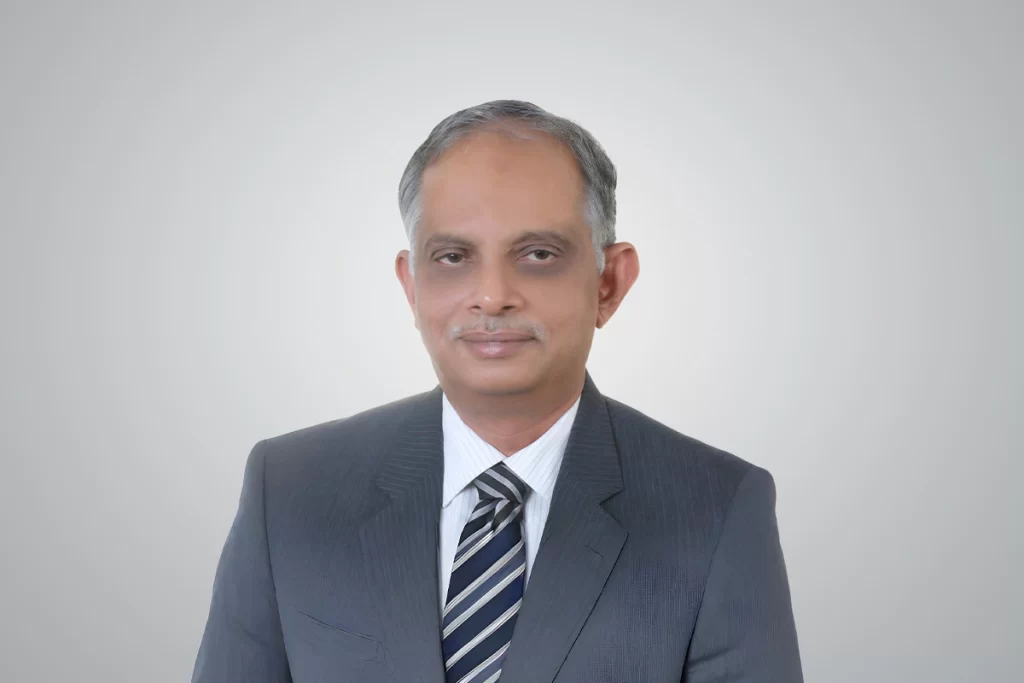
Four Decades of Engineering Leadership in Infrastructure Consulting
Padmakumar M
Chairman & Managing Director
PEMS Engineering Consultants Pvt. Ltd.
What has been your greatest personal strength in consulting?
My greatest strength has been a deep understanding of the consulting sector, built from decades of working closely with both government and private organisations. This experience helped me understand the entire project lifecycle, right from planning and tendering to execution and monitoring. It also enabled me to build strong professional relationships and navigate complex infrastructure projects effectively.
What are the major challenges in running a consulting firm today?
One of the biggest challenges today is finding experienced professionals for highly specialised roles. For instance, projects like large river bridges require structural engineers with expertise in complex systems such as open web designs, but such talent is limited.
At the same time, clients often demand engineers with 20–25 years of experience, creating a clear gap between expectations and availability. Specialised techniques like top-down construction in metro projects also require niche expertise. Without stronger industry training and practical exposure, this shortage of skilled professionals will continue to impact infrastructure development.
Was there a bold decision that shaped your organisation's journey?
One of our boldest decisions was taking up the Atal Tunnel project when our team had only about 30–40 people. Moving from Kerala to the challenging high-altitude environment near Manali was not easy. But we trusted our capabilities. Successfully delivering that project became a turning point and established our credibility in tunnelling and geotechnical engineering.
How are you building the next line of leadership?
Leadership transition is a challenge for many Indian companies. In our case, the next generation is gradually getting involved; one of my two sons has international exposure in transportation engineering, while another is actively working as a director. However, long-term continuity depends on building strong systems and professional management, rather than relying solely on individuals.
What infrastructure opportunities excite you the most?
India is entering a phase of major infrastructure expansion, with new railway lines, long-span bridges, metro systems, and underground networks being developed across the country. Projects like the Manali–Leh railway line are particularly exciting as they require advanced engineering expertise. We are preparing by strengthening our capabilities to contribute meaningfully to these large-scale projects.
How have you kept pace with the industry’s digital transformation?
When I began my career, there were no computers; everything was done manually, from calculations to drawings. Engineers relied heavily on their analytical skills and fundamentals. Today, technology and advanced software have completely transformed the industry, with tools like AI supporting project evaluation and monitoring. While this improves efficiency, it can also reduce deeper analysis if professionals rely only on software outputs.
I believe the key is balance. We cannot go back to the old methods, but we must use technology wisely. Tools like AI can help verify deliverables, monitor tasks, and improve accountability, ultimately strengthening project management.
How do you address technical misunderstandings with clients?
We always try to explain the technical aspects clearly, and most clients are willing to understand. However, if someone insists on unrealistic expectations, we explain the implications in detail. Consulting is about expert guidance, and if that advice is ignored, ensuring quality becomes difficult. In such cases, we would rather step away than compromise professional standards.
What core principles guide your leadership?
Integrity has always been our guiding principle. In the infrastructure sector, there can be pressure to engage in unethical practices, but we made a conscious decision never to compromise. If such expectations arise, we prefer not to take the project. Transparency and honesty build long-term credibility and ensure that quality is never compromised.
Is engineering education aligned with modern infrastructure needs?
Unfortunately, the engineering curriculum is still outdated and heavily theoretical. Modern infrastructure relies on advanced equipment, construction techniques, and complex project management, yet students often lack practical exposure to these realities. To bridge this gap, industry professionals should play a greater role in teaching and curriculum design, ensuring engineers graduate with stronger practical understanding.
Featured Magazine -

All Magazines-




Other Interviews-
- Dr Aarti Mishra Tripathi-Most Impactful Women Leaders from Asia 2026
- Deema Anani-Most Impactful Women Leaders from Asia 2026
- Dr Samah Abu Assab-Most Impactful Women Leaders from Asia 2026
- Vikas C Sajjan-10 Best Tech Leaders in India 2026
- Kadhirvel-10 Best Tech Leaders in India 2026
- Pullak Gupta-10 Best Tech Leaders in India 2026
- Nilanjan Mitra-10 Best Tech Leaders in India 2026
- Aman Sharma-10 Best Tech Leaders in India 2026
- Chakrapani Kodavati-10 Best Tech Leaders in India 2026
- Ashok Shankar P-Best Education Leaders in India 2026
