
Bridging the Gap through a Career in Translational Science
Asia Continental Lead and Director, South Asia
Bridging the Gap through a Career in Translational Science
Asia Continental Lead and Director, South Asia
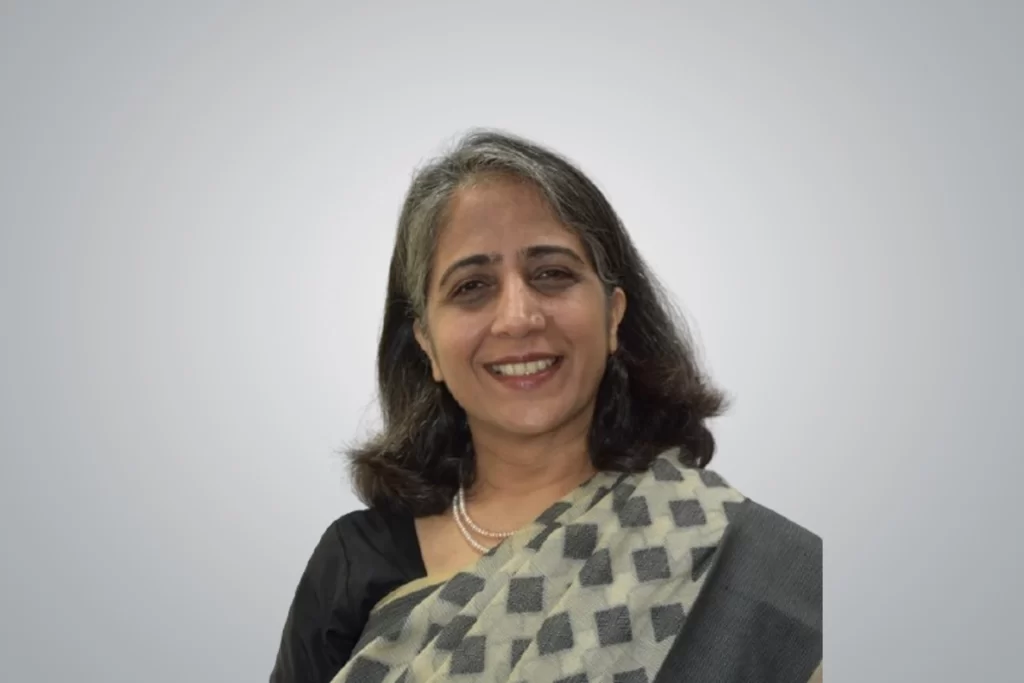
India stands tall at both ends of the healthcare research spectrum—home to brilliant minds in research institutions driving novel discoveries and a world-class pharmaceutical industry with unmatched manufacturing power. Yet, between these strengths lies a critical gap often called the ‘valley of death’— the challenging space of translational science, where breakthroughs must be transformed into real-world therapies. For Dr Kavita Singh, Asia Continental Lead and Director for South Asia at the Drugs for Neglected Diseases initiative (DNDi), this space is where transformative work happens. From advancing malaria vaccines from bench to clinic to leading the National Biopharma Mission’s efforts in building a self-sustaining ecosystem for Indian innovation, she has dedicated her career to ensuring discoveries don’t just remain in laboratories but reach the patients who need them most. With nearly three decades spanning biotechnology, clinical research, and public health, Dr Kavita combines scientific depth with strategic vision, driving initiatives that marry innovation with equity. Today, she stands at the forefront of bridging India’s research strengths and healthcare needs—transforming potential tools into life-saving realities. In this exclusive conversation with TradeFlock, she reflects on the need to continue to strengthen the space of translational research for healthcare innovation.
How have your diverse roles across pharma, government, and global non-profits shaped your perspective on healthcare innovation and access in India?
Each sector I have worked in offered a different vantage point on the same question: how do we deliver affordable, high-quality healthcare to everyone? My early years in industry, at Shantha Biotechnics and Ranbaxy, were a masterclass in urgency and rigour. I gained a deep understanding of clinical development, regulatory systems, and how market dynamics can accelerate or stall innovation. Working with Varaprasad Reddy, founder of Shantha Biotechnics and Padma Bhushan awardee, to launch India’s first indigenous biologics showed me how local innovation can break price and access barriers. At the Biotechnology Industry Research Assistance Council (BIRAC), the shift was from building a product to building an ecosystem. As the Founder Mission Director of the $250-million National Biopharma Mission and Mission COVID Suraksha, the focus was on infrastructure and capacity so Indian companies could de-risk innovation across the value chain. At DNDi, unmet need is the only driver. Here, industry discipline, government vision, and a notfor-profit’s equity lens converge—proving innovation must be collaborative to be truly impactful
What defines your leadership, and how do you leverage it?
My leadership journey has been less of a straight line and more of a conscious evolution spanning two decades. When I was first entrusted with a team, I was filled with self-doubt. Leadership did not come naturally, and in those early years, I mistook authority for effectiveness. I led with rigidity, overcompensating for insecurity and focusing more on directives than dialogue. Over time, I discovered that my true strength lies in doing the opposite—creating psychological safety and empowering colleagues to take ownership. Today, I see my role as an enabler rather than a director, unlocking the latent potential of my team. Success, for me, is best reflected when a colleague achieves something they once thought impossible and says, “I never knew I was capable of that.” Another strength I value is challenging traditional hierarchies where “senior is always right.” I consciously create platforms where even the most junior voice can challenge senior perspectives. This openness allows us to harness collective intelligence, benefiting both the company and the wider industry. As for weaknesses, I continue to refine my directness. While radical candour drives clarity, it can sometimes be too blunt. I am learning that lasting solutions often emerge from patient, layered dialogue. So, my leadership remains very much a work in progress
Would you encourage more clinicians to explore product development? Who mentored you on this path?
Absolutely, and I encourage it wholeheartedly. Clinicians are the essential bridge between the laboratory bench and the patient’s bedside. We see the real-world gaps and unmet needs daily, giving us a unique and critical perspective in designing solutions that are not just scientifically novel but truly practical and impactful. That’s precisely why I complemented my medical training with business management and epidemiology to navigate these intersecting worlds better. But a path like this is rarely walked alone, and I was fortunate to have been guided by incredible mentors who illuminated the way. During my M.D. training, Professor (Dr) Arunaloke Chakrabarti, ex-head and professor of the Department of Medical Microbiology of the PGIMER, Chandigarh, was my foundational mentor. He instilled in me a deep and enduring sense of scientific integrity and purpose. Though my professional focus eventually shifted from medical mycology, the core values he taught me have been my compass in every role I’ve undertaken, and he is still the person I turn to to-date. Later in my career, I had the immense privilege of closely observing and working with a very dynamic leader, Dr Renu Swarup, the former Secretary of the Department of Biotechnology.
Who are your inspirations, and why?
While I’ve had the privilege of engaging with many leaders in boardrooms, my deepest inspiration comes from India’s ASHA (Accredited Social Health Activist) workers. Honoured with the WHO Director-General’s Global Health Leaders Award, they embody resilience and purpose. I have witnessed their extraordinary dedication, walking miles across harsh terrain or wading through swollen streams, driven by the belief that every child deserves protection through immunisation. Their work is a masterclass in commitment and community trust. Equally inspiring is their adaptability: as the Ministry of Health introduces digital tools and new care protocols, they continuously upskill, embracing technology to deliver frontline healthcare with dignity and impact.
You’re an avid longdistance self-driving traveller. Has that shaped your personal growth? What advice would you give women eager to try it?
I love to talk about it. Longdistance self-driving is active meditation and a masterclass in self-reliance, demanding discipline, resilience, and confidence that spills into life beyond the road. I mark milestones this way: India-to-London at age 50, Kashmir-to-Kanyakumari at age 55, and driving solo within a convoy for solitude and safety. Crossing terrains and cultures teaches you to trust instincts, continuously adapt to enjoy the change, and shed the non-essential. For women hesitant to try: start small, join a reputable convoy, prepare thoroughly, and embrace discomfort; it’s where growth lives. The first step is the hardest, but who you become on the other side is worth it.
What were the biggest challenges and outcomes of leading India’s national biopharma and COVID missions?
The challenges matched the mandates. The National Biopharma Mission demanded patience, building a self-reliant product development ecosystem with significant capability gaps could not be achieved overnight. Investments focused on platforms, consortiums, academia-industry collaboration, scale-up capacities, testing facilities, etc, so future products could move faster, meet regulations, and face fewer bottlenecks. Mission COVID Suraksha, by contrast, was a sprint in a storm—speed, scale, and constant uncertainty. India’s pandemic response required real-time mobilisation of components, resources, and processes to support multiple vaccine, diagnostic, and therapeutic platforms simultaneously. The two together have strengthened India’s capacity to develop and manufacture its own medical solutions and improve preparedness for future health emergencies
How do you stay current in your industry and contribute to its growth?
In biopharmaceuticals and healthcare, staying updated is not optional; it is a responsibility. Scientific progress is advancing at an extraordinary pace, with breakthroughs that would have seemed like science fiction a decade ago. Innovations in cell and gene therapies, next-generation monoclonal antibodies like bispecifics and antibody-drug conjugates, and novel vaccine platforms such as mRNA and viral vectors are transforming medicine. Equally critical is understanding shifts in disease patterns driven by demographics, climate change, and global health inequities. I connect knowledge with practice through my governance and professional roles. As an independent director at Gennova Biopharmaceuticals, I engage with cuttingedge biotech innovation. I engage with earlystage ventures, driving social impact through my position at Social Alpha. In my full-time role at the Drugs for Neglected Diseases initiative (DNDi), I collaborate on drug discovery and development, ensuring novel science translates into accessible treatments for underserved populations
"Long-distance self-driving is active meditation and a masterclass in self-reliance, demanding discipline, resilience, and confidence that spills into life beyond the road. Crossing terrains and cultures teaches you to trust your instincts, adapt with joy, and shed the non-essential."
What are your five-year goals, and how will you achieve them?
Over the next five years, I aim to play a catalytic role in shaping India’s healthcare technology ecosystem by leveraging my end-to-end experience, from laboratory research to bedside care to community health. As homegrown innovation accelerates, I see an opportunity to strengthen the bridge between discovery and delivery, ensuring science translates into meaningful patient outcomes. One focus will be continuing and expanding my work as an independent director on corporate boards. These roles allow me to guide organisations through critical innovation phases, navigating regulations, building robust development pipelines, and ensuring products are both commercially viable and socially impactful. Equally important is advancing translational research in India. Too often, promising science remains confined to journals rather than improving lives. I plan to collaborate with universities, medical colleges, and hospitals to integrate translational research early in the student journey, positioning it as a core multidisciplinary discipline. This will nurture a generation of researchers and clinicians with a real-world application mindset. In addition through my association with WomenLift Health I plan to continue to mentor midstage career women working in the field of public health.
What legacy do you hope to leave? What advice would you give young women aspiring to shape health tech in India?
I hope my legacy proves that a career can be built entirely around advancing access and affordability and that when science, policy, and industry align, India can solve its own health challenges. I’ve had the privilege of shaping institutions from the ground up and hope it inspires others to step forward. The work is altruistic and often unseen; recognition may be scarce, but impact is certain. To the young women: Be fearless in your ambition and stay relentlessly curious. Master the art of hearing to understand, not just to reply. Ground your decisions in evidence and lead from a place of self-defined purpose. Don’t shy away from boardrooms or complex debates because your voice matters and your perspective is essential.
"The challenges matched the mandates. The National Biopharma Mission demanded patience—building a self-reliant product development ecosystem with significant capability gaps could not be achieved overnight."
Featured Magazine -