Bridging Numbers and Narratives in Indian Politics
Director and COO
Bridging Numbers and Narratives in Indian Politics
Director and COO
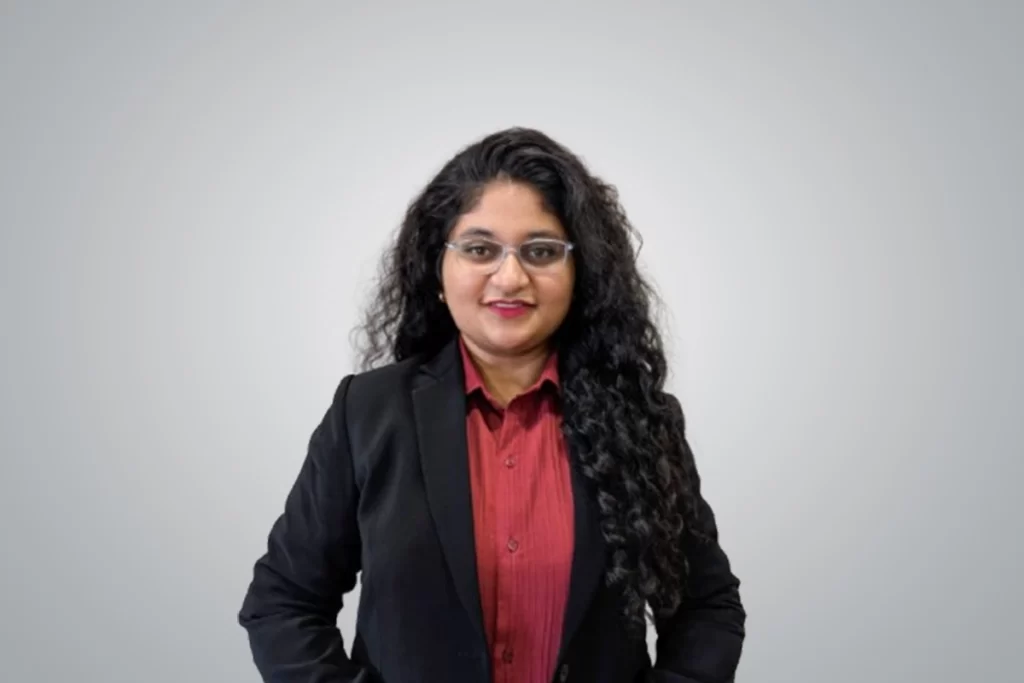
Surabhi Surve believes that politics is ultimately about people—their stories, their identities, and the aspirations that drive them. As a political enthusiast and a budding entrepreneur who recently incepted Sparkweave, she has built her career on bridging the gap between data and human narratives, ensuring that research never loses sight of the lives it represents. In conversation with TradeFlock, she reflects on a journey that blends academic rigour with immersive field experience. Her fascination with the forces shaping political thought began during her social sciences studies, where she explored political socialisation—the ways in which family, community, and media influence beliefs and worldviews. While many of her peers focused on abstract theories, Surabhi deliberately pursued unconventional research projects that sought to understand human behaviour in real-world political contexts. The true turning point, however, came with her work at Anubhuti, a grassroots organisation that empowers youth and women in NT-DNT communities. Leading awareness campaigns and capacity-building programmes, Surabhi learnt to listen deeply to voices often absent from mainstream discourse, observing how identity, emotion, and aspiration shaped civic participation. At Sparkweave, this combination of empathy and analytical insight defines her leadership. Surabhi transforms complex political data into actionable strategies, always keeping the “why” behind the “what” in focus. For her, research is never just about numbers—it is about the human stories that give those numbers meaning. Read more about Surabhi here.
How did working with PhD scholars at Wisconsin–Madison influence your perspective on political research?
My three years as a remote research assistant for PhD scholars at the University of Wisconsin– Madison provided an immersive experience in both research methodology and political behaviour. I focused primarily on local body elections in Maharashtra, conducting interviews with government officials, political stakeholders, and elected representatives, especially at the Gram Panchayat level or Rural Local Self Government level. Collecting primary data in such diverse contexts offered candid, often off-the-record insights into achievements, challenges, and community dynamics, revealing how local issues and economic realities shape electoral choices. This experience taught me that understanding political behaviour goes beyond formal responses—it requires uncovering the beliefs, assumptions, and lived experiences that influence decision-making. I learnt to triangulate public statements, private sentiments, and empirical data while working on research projects that are both methodologically rigorous and contextually sensitive. Most importantly, it honed my ability to extract the “emotional truth” from raw data—a skill that now lies at the heart of my approach to political consulting.
What gaps in India’s political information ecosystem do you aim to address?
India’s democracy is strong, but its information ecosystem faces pressing challenges. A major issue is accountability. Citizens often lack clarity on which leaders are responsible for specific concerns, weakening performance-based evaluation. This lack of civic awareness is especially evident in local body elections, where campaigns often emphasise national achievements that don’t necessarily translate into local development. There’s a growing disconnect between campaign narratives and voter priorities, as voters are sometimes swayed by identity politics, polarisation, or party propaganda – factors that may not reflect the realities of local governance. This underscores the need to promote greater civic awareness and hold leaders accountable for their actual roles. The second challenge is misinformation, now amplified by AI. With regulations lagging behind, voters face an unchecked flow of unverified content, while algorithms reinforce bias and deepen polarisation. The third challenge is the digital divide, leaving many without regular digital access excluded from political engagement. Addressing these requires voter literacy programmes, media that demand substantive answers, and simple, accessible grievance mechanisms. I truly believe that in order to strengthen democracy, politics must shift from propaganda-driven narratives to a people-centred agenda, prioritising accountability and tangible improvements in citizens’ lives.
How do you ensure research depth while meeting the demands of political consulting?
At Sparkweave, research and strategy are inseparable, each strengthening the other. We view survey research not merely as data collection but as an active dialogue with the electorate. By combining diverse research approaches, we capture ground-level issues, public sentiment, and emotional undercurrents that shape political behaviour. This dual focus provides both quantitative data and qualitative insights, allowing us to gauge shifts in public opinion effectively. Our findings are distilled into evidencebased recommendations for communication, messaging, and outreach strategies. Supported by trusted local networks, we receive regular onthe-ground feedback, ensuring strategies evolve with changing realities and remain firmly rooted in evidence, not assumption.
What sparked the idea for your startup, and what challenge does it address?
When I founded Sparkweave Political Consulting, my goal was to break away from traditional approaches. The consulting space is often dominated by digital marketing agencies that promise quick wins, sometimes through manipulative tactics. But I believe democracy is not about short-term victories alone but about strengthening the social contract between citizens and their leaders. At Sparkweave Political Consulting, research begins on the ground. A constituency cannot be understood from behind a screen—it requires listening to lived realities, mapping aspirations, and understanding frustrations. That foundation allows digital engagement to become a meaningful complement, amplifying authentic narratives instead of manufacturing consent. Unlike the conventional model of simply serving the political leaders, our philosophy is rooted in serving people by equipping leaders to represent them more effectively. Guided by constitutional values of participatory democracy, we focus on strategies that not only aim for electoral success but also encourage citizen engagement, strengthen accountability, and build long-term trust. I’m especially drawn to working with independent or first-time candidates and young leaders who are committed to fostering meaningful, trust-based relationships with their constituents, rather than relying on short-term appeals to win elections. For us, true political success lies not only in winning elections but in building empowered and engaged citizenries.
Featured Magazine -