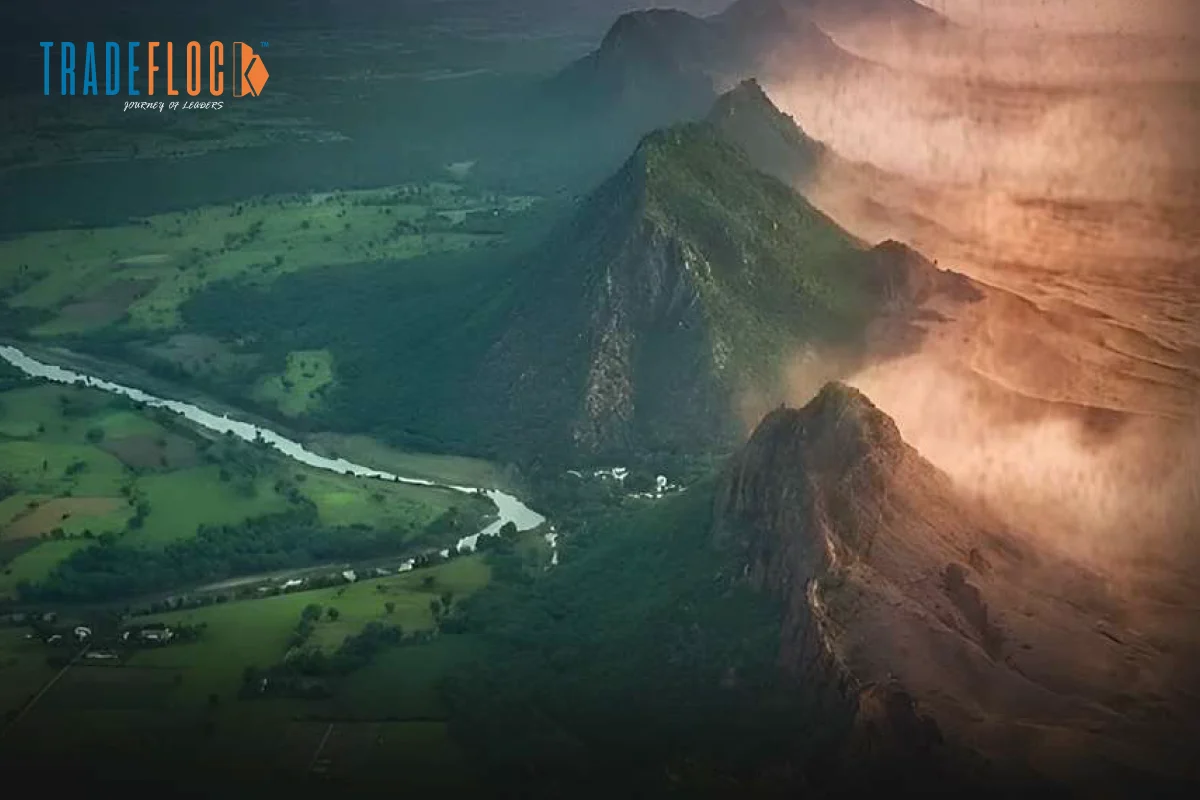
The Aravalli Hills, the ancient sentinels of the country, are at the centre of India, and they are at least 2 billion years old. It is therefore far more ancient than the Himalayas and the earliest known human civilisations. In this period, these hills were home to many individuals as was the case with the people of the Indus Valley Civilisation. The mountain range, which spans over 700 kilometres across Haryana, Rajasthan, and Gujarat, is not merely a belt of rocks and slopes; it is the biological support for an area that sustains millions of lives through water, biodiversity, soil stability, and climate stability.
The Aravallis have long been a natural barrier to the encroaching sands of the Thar Desert, a very important recharge area and a green lung to the largely urbanised National Capital Region. Moreover, the hills’ forests are home to many species unique to the region. What was previously boasted and proclaimed as a geological wonder has ended up in the fire of popular passions and political strife.
Table of Contents
So Much Noise about the Aravalli Hills, Why?
The Aravalli came to the limelight after a Supreme Court (SC) decision in November 2025. This decision created a standard legal definition of the Aravalli Hills and Aravalli Range. According to the SC, any landform rising 100m or more above the surrounding area will be considered as the Aravalli Hills. This definition was supposed to lead to consistency across the states and to help regulate mining and land use, especially in places where boundaries had long been technically unclear. The ruling also reiterated a ban on new mining leases until a comprehensive Management Plan for Sustainable Mining is prepared.
The Reason Behind the Protest
Some of the greatest causes of protest include the SC’s definition of a hill. Scientists, environmental groups and activists have complained that the 100m threshold has excluded a large portion of the ranges, which are ecologically significant. The implication of this law is that any person who mines below 100m has not gone far outside the law. Following this, mostly peaceful protests erupted all across North India. This was met with public controversy and, with review petitions and mass protests, the Court stayed on 29 December 2025, before the 100-metre cutoff, pending a broader scientific re-evaluation.
It’s worth noting that these protests do not stem from a political agenda. Instead, the demonstrations are based on empirical issues. According to official and media records, there are tens of thousands of mining violations that have been reported in the Aravalli Hills over the last decade. In Rajasthan, as per reports, there are more than 29,000 cases of illegal mining in the Aravali over 5 years, between late 2018 and 2023. Based on these tracks, the state authorities attacked about 20 districts, which led to seizures, fines, and FIRs, tangible evidence of the continued existence of illegal mining in the ranges.
Groundwater & Climate: Measuring the Degradation Cost
In areas under the influence of the Aravalli, scientific observations indicate severe hydrological stress. The trend of studies over the years on groundwater in Rajasthan indicates a steady depletion in water levels. To explain this downward trend, all that needs to be mentioned is an increased demand and a reduced supply. Water extraction in the area has exceeded recharge rates, a situation exacerbated by changes in the landscape.
In neighbouring states like Haryana, reliance on groundwater remains high. Though the supply is somehow supplemented by the presence of rivers, it will not be able to substitute it completely. Household-level surveys reveal systemic water-supply shortages in several districts, underscoring the extent to which communities remain dependent on groundwater to meet their daily needs.
Such stress is further increased by the continuous disappearance of the Aravalli cover and hill-slope systems. With the erosion of these natural recharge processes, exposure to drought and desertification increases. The effects are quantifiable and extensive, as they impact water supply, agricultural production, and livelihoods in rural areas throughout the region. This is further intensified in Haryana, one of the most agriculturally dependent states in India.
The Supreme Court’s Interim Fix & the Government’s Reaction
After extensive demonstrations in Rajasthan, Haryana, and other areas where the policy was implemented, the Supreme Court intervened to defuse the situation and delay its implementation. The Court granted a stay of the 100-metre order on 29 December 2025, halting its immediate application and avoiding abrupt enforcement measures that had caused alarm among citizens, local governments, and industry associations. Meanwhile, the Court upheld the current ban in contentious areas, indicating that protection is not withheld even whilst proceedings are under review.
The Union environment ministry reacted publicly to the unrest, stating that policymakers were listening and that any long-term framework would entail expert scrutiny and consultation with stakeholders. The stay was also celebrated by a number of state governments, and was justified as a measure to provide clarity and fairness in case the tension was still high. In addition, the government suggested that it could even prohibit mining in the Aravalli Range.
The Road Ahead: Policy that Fits the Landscape and its People
The Aravalli case raises the question of whether India will conserve ecosystems using holistic, data-driven landscape criteria or by returning to narrow administrative regulations that create enforcement loopholes. The Court has rejuvenated the issue to allow room to establish a structure grounded in multidisciplinary science, concrete enforcement indicators, and local expertise, thereby guaranteeing uniformity across states.
This should be guided by existing evidence, such as mining incidents, groundwater trends, and enforcement records. The Aravallis have survived for thousands of years; it is now the government’s challenge to demonstrate that it can safeguard them equally seriously.