
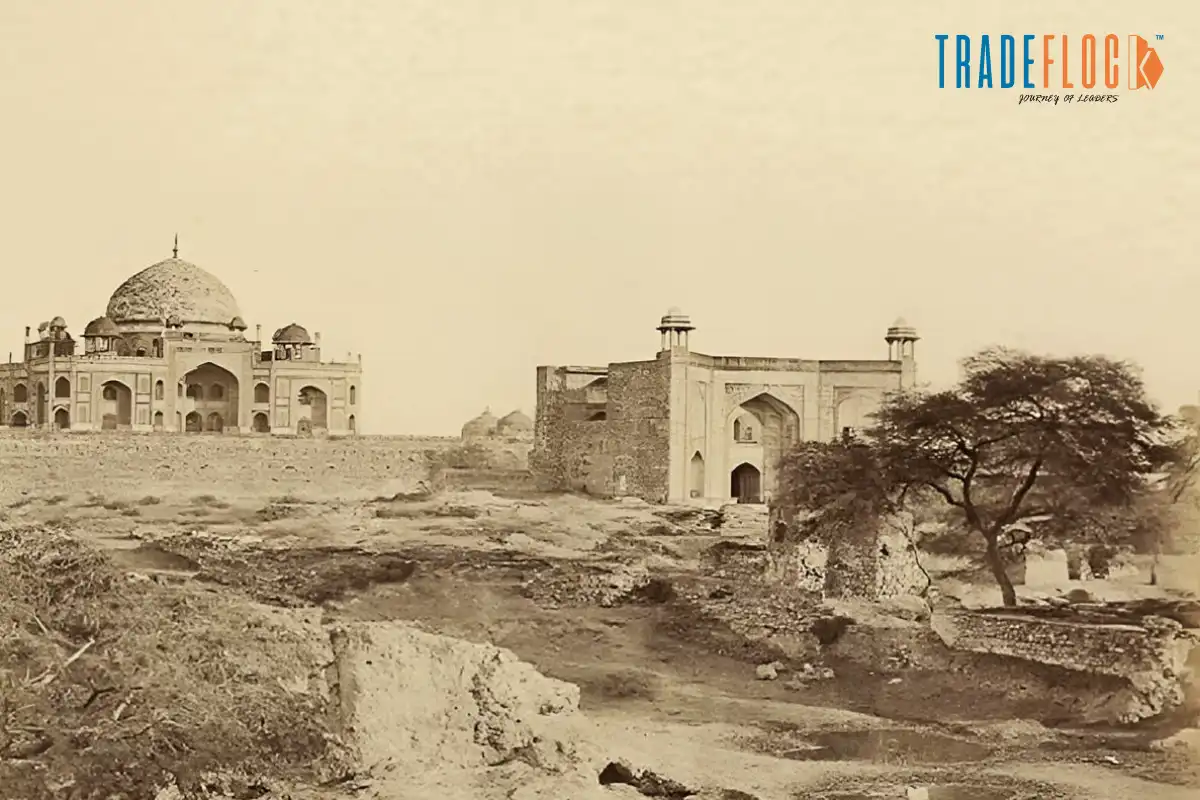
Delhi embodies a recurring dream of power, a burial ground of eight empires where Turkic ‘dehliwal’ coins and Mughal echoes linger near Qutub Minar and Red Fort. It’s a melting pot of rulers from Prithviraj Chauhan to Babur and the British, with foundations shifting like the Iron Pillar. From Tomars’ settlement to Bahadur Shah Zafar’s exile, Delhi has been a bloody crossroads, a resilient heart soaked in massacres, now the National Capital Territory, linking India’s past and future.
On November 1, 1956, India’s bold experiment achieved a milestone. The States Reorganisation Act reclassified Delhi not as an independent province but as a Union Territory, placing the country’s vital, unstable center directly under central control. This shift was subtle yet meaningful, symbolising the quiet fulfillment of a dream with its own set of challenges.
Delhi: The Necessary Tether
On November 1, 1956, Delhi’s status changed dramatically when the States Reorganisation Act made it a Union Territory, moving it from a semi-autonomous Part C state. This decision was driven by practical needs rather than democratic oversight. After Partition, the country faced the challenge of maintaining unity amid demands for states along linguistic lines, which threatened the stability of the new republic. Because Delhi housed the Supreme Court and Parliament, it was considered too important to be governed by a local assembly. The change was a strategic move: the city’s small legislative body was dissolved, removing provincial ties and establishing direct control by the central government. With the creation of 14 new states and six Union Territories, Delhi shifted from a semi-autonomous region to a direct reflection of the nation’s core, trading local independence for centralized stability, a deliberate choice that favors federal integrity over fragmented authority.
Pioneers Behind this Event
Delhi’s central role in Indian governance was established over time through a series of visionary ideas, rather than a single action or person. A key moment was the 1955 States Reorganisation Commission (SRC), also known as the “troika of titans,” which included Justice Fazl Ali, renowned for his legal acumen, along with H.R. Gokhale and K.M. Panikkar. Their report, highly foresightful and practical, went beyond advocating for linguistic states to honor India’s diversity. It also emphasized Delhi’s importance with the clear directive: “Keep it central.” This was more than administrative advice; it was a unifying call to bring the nation together around a common core.
Within Parliament, Prime Minister Jawaharlal Nehru passionately championed this vision, lending the SRC’s recommendation profound significance through his eloquence and strong convictions. For Nehru, Delhi’s importance was both practical and symbolic, representing a unifying link across India’s diverse languages and customs. His fervent support elevated the idea to a fundamental element of Indian federalism, serving as a unifying force for a young nation striving to balance unity and diversity.
Nehru’s alone, but behind the scenes, Home Minister Govind Ballabh Pant orchestrated strategic maneuvering, ensuring Justice Ali’s legal framework aligned with Nehru’s ideals. This alchemy of law and politics forged a lasting, elegant compromise, shaping modern Indian federalism. The result was a capital at the nation’s core and a reimagining of how a diverse land coalesces around a shared center, echoing through decades.
Societal -Economic Reverbations
The Union Territory designation spurred rapid social change in Delhi, transforming it into a diverse urban center. Post-1956, migration- initially of over 500, 500,000 Hindu and Sikh refugees from Pakistan after the 1947 Partition, later driven by economic opportunities- expanded the population from 2 million in 1961 to 16 million. 8 million in 2011, with the NCR surpassing 28 million. This diversity blends Punjabi influences from Partition settlers with newcomers from Bihar, Uttar Pradesh, and other regions, shaping the culture through festivals like Chhath Puja and a multilingual society led by Hindi (81.3%), alongside Punjabi, Urdu, Bhojpuri, and Bengali. Urbanisation increased, reducing farmland and shifting rural jobs to horticulture, dairy, and poultry to meet urban demand.
Delhi’s Union Territory status elevated it from a modest post-colonial city to one of India’s wealthiest regions, with centralized control enabling infrastructure investments. It became northern India’s main commercial hub, with a GDP of ₹ 6,224 billion in 2016–17, growing at 13% annually.
Per capita income ranks second nationwide, with a shift to the tertiary sector, at 70%. 70.95% of the total includes IT, telecom, banking, media, tourism, and retail. The 1985 NCR setup decentralized industries to Gurugram and Noida, boosting incomes and FDI through skilled labor and consumer markets. Employment grew by 52. Unemployment rates decreased from 52% in 1991 to 4.63% in 2003, driven by the government and private sectors. Projects like the Delhi Metro and IGI Airport improved connectivity, reduced pollution via CNG mandates, and boosted real estate.
Challenges include informal sectors, sectoral competitiveness, and environmental issues such as severe air pollution, as Delhi was the world’s most polluted capital in 2024, reducing life expectancy by approximately 10 years. Other concerns include water scarcity, congestion costing ₹60,000 crore annually, and health concerns. Overall, the 1956 reorganization drove growth but highlighted the need for sustainable and equitable planning to reduce disparities.