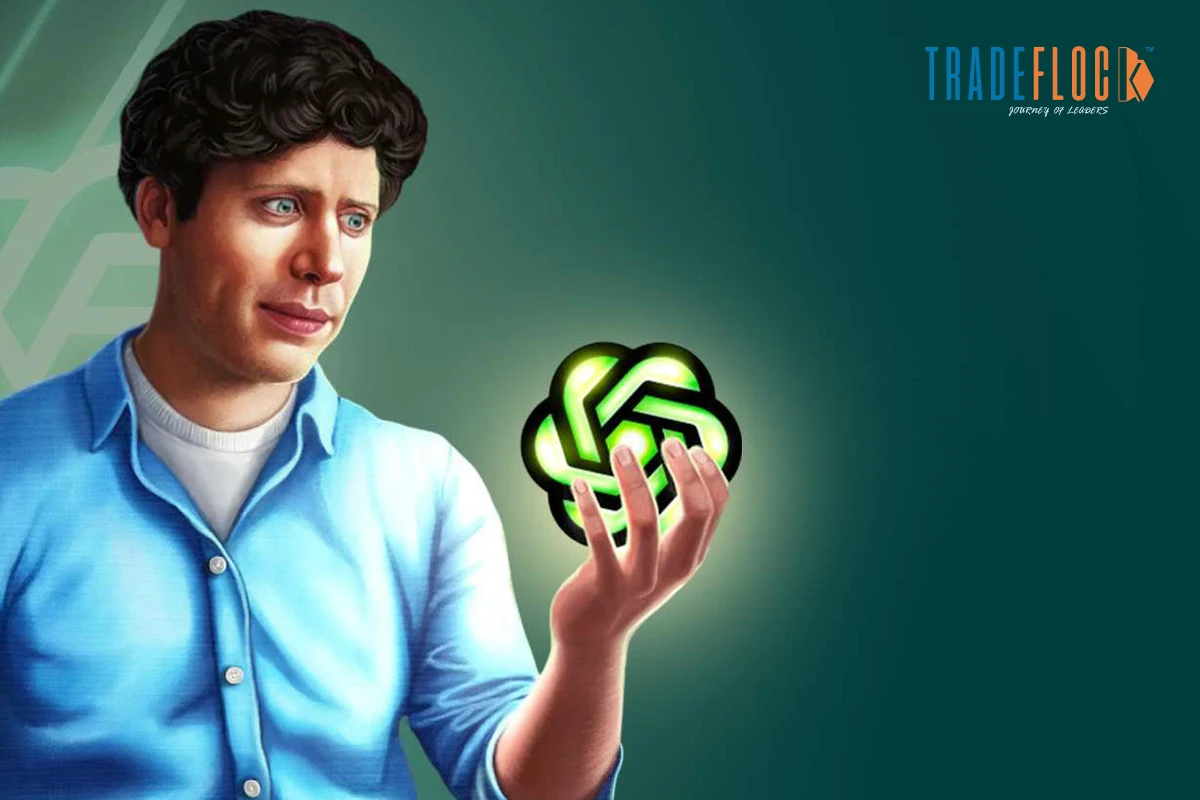
In a world where innovation is moving at a breakneck speed and global threats are looming large, Sam Altman is the force behind the radical transformation of tech. With OpenAI, a company worth almost $90 billion in 2024 and backed by over $13.75 billion from Microsoft, Altman has played During Altman’s tenure, OpenAI launched ChatGPT, which gained 100 million users in less than two months, outpacing many other consumer applications in terms of speed of growth.
With a global AI market that is set to surpass $407 billion by 2027, Altman’s leadership is changing the way technology is used and fundamentally changing the structure of industries. By transitioning from the launch of Loopt to the head of such a transformational AI organization as OpenAI, Altman’s story is a rich case study for leaders who want to understand how to navigate the disruptive impact of AI.
Table of Contents
Visionary Thinking in a Disruptive Era
Altman’s defining trait as a leader is his ability to envision the future before it becomes obvious to others. At a time when many saw AI as speculative or narrowly applied, he saw its transformative potential.
Creating powerful models was a secondary goal for Altman in comparison to a larger mission. He wanted to ensure that AGI served human well-being and that its benefits were for the whole society. Altman’s belief in the transformative power of AGI, which he believed was on par with the industrial revolution, inspired elite talent and secured billions in funding—not because it was audacious, but because it was a guiding principle.
Lesson: True leaders don’t just react to trends—they anticipate them and take courageous steps before consensus forms.
Balancing Innovation with Ethics
Perhaps the major takeaway from Altman’s legacy will be how the balance was struck between technological advancement and responsible implementation. OpenAI’s strange offshore-hybrid structure, capped-profit to put people over shareholders is a direct representation of this.
As the world has become fascinated with the AI abilities of products like ChatGPT and GPT-4, Altman has been explicit and clear about safety, alignment, and ethics – he even lobbied in favour of oversight mechanisms to slow down the AI race!
In his 2023 testimony before the U.S. Congress, Altman explicitly called for a pause on AI development and planetary standards, among other things, like model evaluation and licensing requirements. This is unprecedented; many tech CEOs are unwilling to even admit this. His rationale was more than aesthetics – it was a message – OpenAI does not want to lead the evolution of AI – they want to steward AI.
Lesson: Good leaders reflect on “Can we?” and “Should we?”. Ethics must rapidly evolve, just as work does.
Developing Talent and Empowering Others
Prior to joining OpenAI, Altman was President of Y Combinator, where he mentored and helped early startups such as Airbnb, Stripe, and Dropbox. Altman’s actual strength as a leader goes beyond organisational construction; he is good at identifying and elevating top-tier individuals.
At OpenAI, he created an environment where great researchers are recruited and interdisciplinary collaboration is thriving. He enables teams to be independent while steering them towards the bigger mission, a difficult task in dynamic companies.
Altman fosters a culture that values mission, freedom of thought and long-term impact, so that staff are inspired by purpose, not productivity.
Lesson: Empower your team, link them to a larger purpose, and get out of micromanagement.
Handling Crisis Situations Calmly
Altman became the center of news in 2023 when he was forced to quit his position as CEO of OpenAI in a quick and unexpected boardroom change. He showed great resilience, trust and loyalty to his stakeholders. In just a few days, most of OpenAI’s staff declared that they would quit if Altman was not reinstated as CEO, an indication of the high level of loyalty he had built among his colleagues.
Returning as CEO and ending the crisis showed an important trait: crisis-tested leadership. He remained calm and did not attack or blame the media. His strategy included conversing, restoring trust, and making the company’s future sustainable.
Lesson: It is in the face of adversity that one’s true leader is revealed, not in the face of prosperity. Act under crises with clear thought, composure, and humility.
Long-Term Thinking and Legacy Building
While many Silicon Valley entrepreneurs are preoccupied with revenue and exits, Altman looks at decades rather than quarters. He has stated publicly about getting ready for AGI, the transitions it will create within society, and new economic models such as universal basic income.
Altman’s larger goal goes beyond technology. Altman is very interested in how society is governed and stable, and the dangers of concentrating power. Legal imposition of OpenAI to prioritize the benefit of humanity even at the cost of sacrificing maximum profits has been a move by Altman to show his ambition to leave a legacy rather than a typical corporation.
Lesson: Legacy is built by those who look far beyond the present and plant seeds they may never see grow.
Staying Curious and Continually Evolving
Altman, while successful in his own right, is a constant learner. He reads a lot, asks hard questions, and keeps a beginner’s mind. Whether it is nuclear energy, geopolitics, or the philosophy of consciousness, he has curiosity that creates strategic clarity.
At a time when many leaders are locked into their echo chambers, Altman is an example of what it takes to be a humble and intellectually honest leader willing to pivot when evidence changes.
Lesson: Stay curious. The best leaders are lifelong learners who evolve faster than their environment.
The Altman Framework for Future Leaders
In an age when technology is reshaping the world faster than governance or philosophy can keep up, leaders like Sam Altman remind us that foresight, responsibility, and humility are not optional—they are essential. His journey is still unfolding, but his legacy is already taking shape: not as the man who built the most powerful AI, but as the one who asked, “How do we make it serve the world?”