
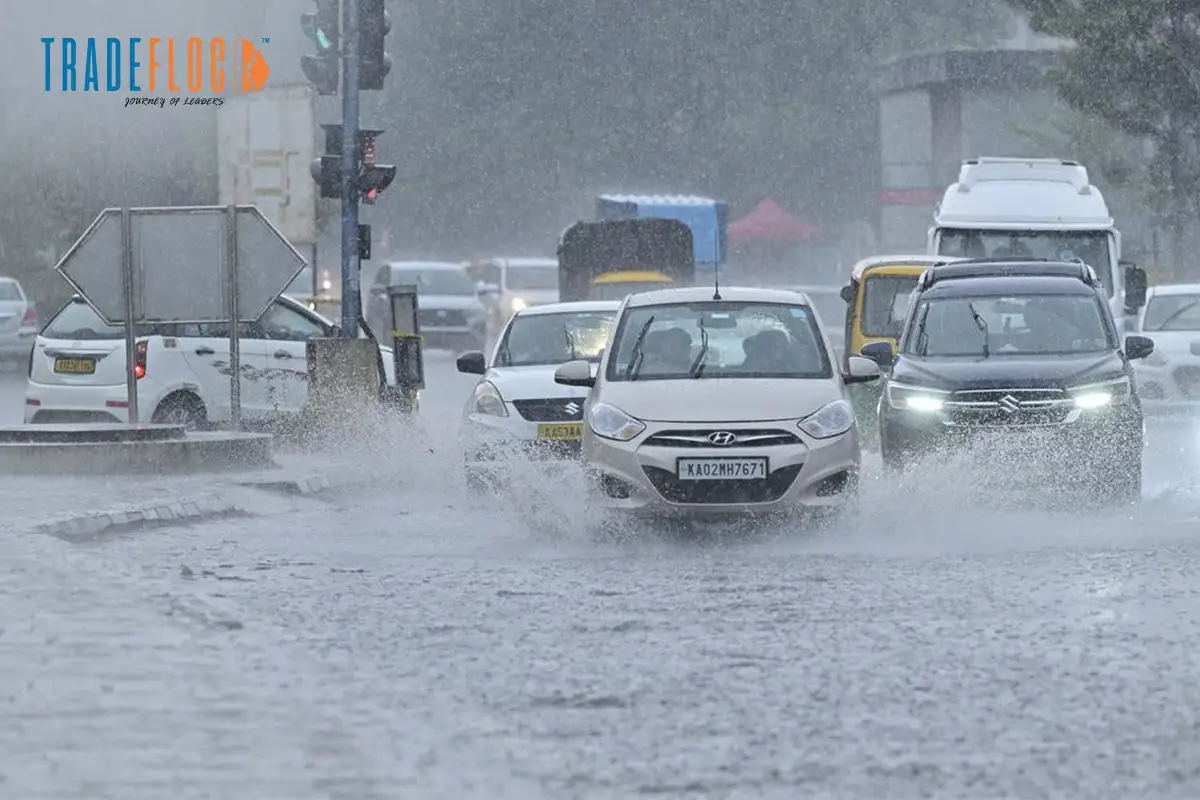
Bangalore and Gurugram’s roads, built for fast business, are now clogged with traffic that never seems to move. This permanent gridlock wastes millions of work hours every day. When the monsoon hits, it exposes the city’s failures, turning highways into sudden, dirty lakes.
We ended up creating a weird situation: our cities are writing the world’s most advanced software, but the people who live here are stuck in the world’s worst traffic. We need to stop pretending this is acceptable. This isn’t just a minor infrastructure problem; it’s a major civic failure that is ruining the very future these cities were supposed to create.
Table of Contents
Stuck in Neutral: The Economic Toll of Traffic
In Bengaluru and Gurugram, the two leading tech hubs of India, success is often overshadowed by traffic congestion and flooding, exposing the fragility of their progress. During the 2025 floods, Gurugram transformed into a disaster zone, with highways submerged and underpasses flooded by ponds.
These issues are not solely caused by rain but stem from human-made droughts resulting from damaged natural defences and illegal pond covering, which reduce water absorption and lead to floods. In contrast, Noida’s proper planning highlights Gurugram’s outdated drainage systems, demonstrating that growth on borrowed land is a risky proposition. Commuters in Bengaluru spend an average of 63 minutes daily, almost six days annually, stuck in traffic, contributing to a high Misery Index.
Traffic conditions differ: tech districts in the east are consistently congested, while those in the west experience smoother traffic flow. Gurugram’s NH 48 frequently acts as a parking lot during the rains, causing frequent delays for travellers.
The Unveiling: When Rain Exposes the Cracks in the Metropolis
The primary reason for this failure is unchecked ambition, which acts as a double-edged sword, hindering India’s progress. Although Tier-1 cities have expanded their infrastructure, such as airports and roads, by doubling their capacity, this growth remains inadequate to accommodate the large influx of migrants. Cities like Bengaluru and Gurugram are overwhelmed by the excitement over IT jobs, straining planning efforts and resulting in shortages of basic services. The dense populations lead to persistent traffic congestion and rapid infrastructure degradation, primarily due to underinvestment in resilience. Between 2020 and 2025, Gurugram experienced worsening air quality and polluted water, with roads becoming more fragile and succumbing to monsoon damage. Outdated urban planning neglects these environmental risks, leaving cities vulnerable to collapse. Economic growth often masks deeper structural issues and problems.
The Vanishing Hours: The Personal Cost of Urban Paralysis
Beyond the balance sheets, the rot is claiming the most precious resource: human potential. Traffic is more than an inconvenience; it’s a significant contributor to the accelerated decay of well-being. Employees arrive already frazzled, their productivity choked by hypertension and mental fatigue, direct dividends of the daily commute.
The cost is immediate and profound: not just the billions of potential GDP shaved off by Bengaluru’s congestion, but the utter shutdown when Gurugram’s floods left thousands stranded, destroying work and family time.
Environmentally, the cycle is vicious: endless vehicle idling transforms fresh air into toxic smog. Socially, it’s a wedge: while the wealthy ascend on flyovers, the working class is forced to wade through the muck, solidifying a bitter inequality where poor infrastructure traps the most vulnerable in a desperate loop. The city’s failure to move is a failure to care.
The State’s Response: A Patchwork of Progress
The government is addressing this chaos with a two-pronged strategy. For traffic issues, it invests heavily in expanding Metro and Suburban Rail in Bengaluru and upgrading highways, such as the NH-48 flyovers in Gurugram, to divert congestion. To tackle the monsoon challenges, efforts focus on reversing ecological damage by restoring Bengaluru’s lakes and encouraging Gurugram to reclaim buried ponds and improve drainage under schemes like AMRUT 2.0. While these initiatives demonstrate a commitment to growth, they often lack integrated urban planning, which is crucial for managing rapid expansion effectively. Consequently, cities remain caught in a cycle of trying to build their way out of problems that fundamentally require better management.
Fixing the Foundations: A Strategy for Metropolitan Recovery.
Despite the failures, hope remains. Bengaluru is finding solutions by tackling traffic chaos with congestion taxes, a smart way to manage the problem. Gurugram knows exactly what to do: follow Noida’s example, by urgently restoring its buried ponds and investing in modern, smart drainage to rectify the mess caused by rapid, unplanned building.
This isn’t just a local problem; the whole country must act. India needs to shift its focus to tough, resilient urban development. We must invest significantly in green infrastructure and robust public transportation to manage future growth and climate-related shocks.
Policymakers need to see the bigger picture: these cities aren’t just entries on a financial ledger; they are the beating hearts of the nation’s dreams. The decision is simple and urgent: Ignore these deep cracks, and the entire foundation will collapse. Invest wisely and now, and these giants can truly rise to their potential. Time and the climate are giving us a final deadline.


