

Every founder knows the content paradox. To build authority, attract investors, win customers, and recruit talent, you need to show up consistently with high-quality content across multiple channels. But content production — especially video, which dominates every platform algorithm in 2025 — requires time, skills, and budget that most early-stage companies simply don’t have. The result is a familiar compromise: irregular posting, repurposed text content that underperforms, and a brand presence that doesn’t reflect the quality of the actual product or service.
AI-powered text to video tools are resolving this paradox at a structural level, and the entrepreneurs who have integrated them into their marketing workflows are building brand visibility at a pace and cost that would have been impossible two years ago.
Table of Contents
Why Video Has Become Non-Negotiable for Startup Marketing
The shift toward video-first content distribution is not a trend that founders can wait out. LinkedIn’s algorithm now gives video posts three to five times more reach than equivalent text content. YouTube has become the second largest search engine globally, and a startup that doesn’t have a presence there is invisible to a significant portion of its potential customer and talent base. TikTok and Instagram Reels have opened distribution channels where a well-crafted short video from an unknown brand can reach hundreds of thousands of people organically — something that text content simply cannot do on those platforms.
For B2B startups, the stakes are equally high. Buyers in 2025 conduct extensive research before engaging with a sales process, and video content — founder explainers, product demonstrations, customer stories, thought leadership clips — is increasingly what that research looks like. A startup whose founder has a visible, credible video presence on LinkedIn converts inbound interest at significantly higher rates than one that relies entirely on text-based content and website copy.
The obstacle has never been the message. Most founders have clear, compelling things to say about their market, their product, and their vision. The obstacle has been production — the gap between having something worth saying and having the resources to say it in a format that the current attention economy rewards.
From Written Content to Video in Minutes
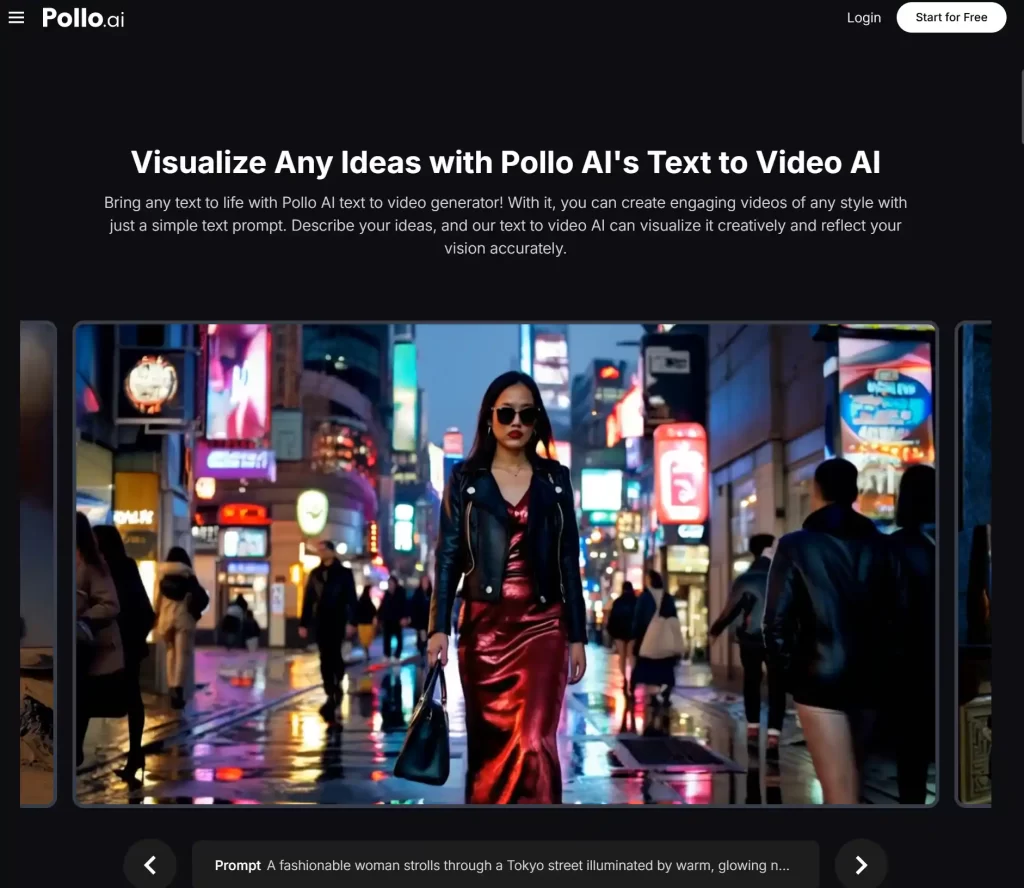
The text to video tool on Pollo AI addresses the production gap directly. You bring written content — a blog post, a LinkedIn article, a product brief, a market insight, a customer case study summary — and Pollo AI converts it into formatted, platform-ready video with visuals, text overlays, and appropriate pacing. For founders who are already writing content in some form, this creates a direct pipeline from existing assets to video output without requiring any video production skill or additional creative investment.
The practical implications for startup content workflows are significant. A founder who writes a weekly LinkedIn newsletter already has the source material for a weekly video series. A content marketer who produces monthly blog posts already has the source material for a YouTube channel. An investor relations team that writes quarterly updates already has the source material for shareholder video content. Pollo AI makes the conversion step fast enough that it can sit inside an existing content process rather than requiring a separate production workflow.
For resource-constrained early-stage teams, this changes the content volume equation entirely. A two-person marketing team that previously produced two or three content assets per week can produce ten or fifteen with AI-assisted video conversion — without hiring, without agencies, and without a significant additional time investment. Pollo AI has built this specifically for the workflow reality of small, fast-moving teams.
Building a Video Content Strategy Around Your Startup’s Growth Stage
The video content that drives results for startups varies significantly by growth stage, and understanding which formats to prioritize at each stage prevents wasted effort.
Pre-seed and seed stage: The primary job of content at this stage is founder credibility. Investors, early customers, and potential co-founders are evaluating whether the person behind the company is someone worth backing. Short-form thought leadership video — founder perspectives on market trends, commentary on industry developments, honest reflections on building — builds this credibility in a way that pitch decks alone don’t. The format should be conversational and direct, not polished to the point of feeling corporate.
Series A and growth stage: At this point, the content job shifts toward category ownership. You want your company to be associated with the problem space you’re solving, so that when buyers become ready to purchase, your brand is the first one that comes to mind. Explainer videos, use case demonstrations, and customer story content all serve this goal. Volume and consistency matter more than any individual piece of content — the goal is presence across the channels your buyers use.
Scale stage: Content at this stage is primarily about talent, partnerships, and market positioning. Video content that communicates company culture, product innovation, and industry vision attracts the caliber of talent and partners that the next phase of growth requires. This is also where thought leadership content — founder keynotes, panel contributions, long-form YouTube content — pays the most significant compounding returns.
Script-Based Video for Product and Sales Content
Beyond marketing and brand content, there’s a category of business video that follows a different production logic: structured, scripted content for specific sales and customer success purposes. Product explainer videos, onboarding walkthroughs, FAQ content, feature announcement videos — these require a different approach than organic social content because they need to deliver specific information precisely and repeatably.
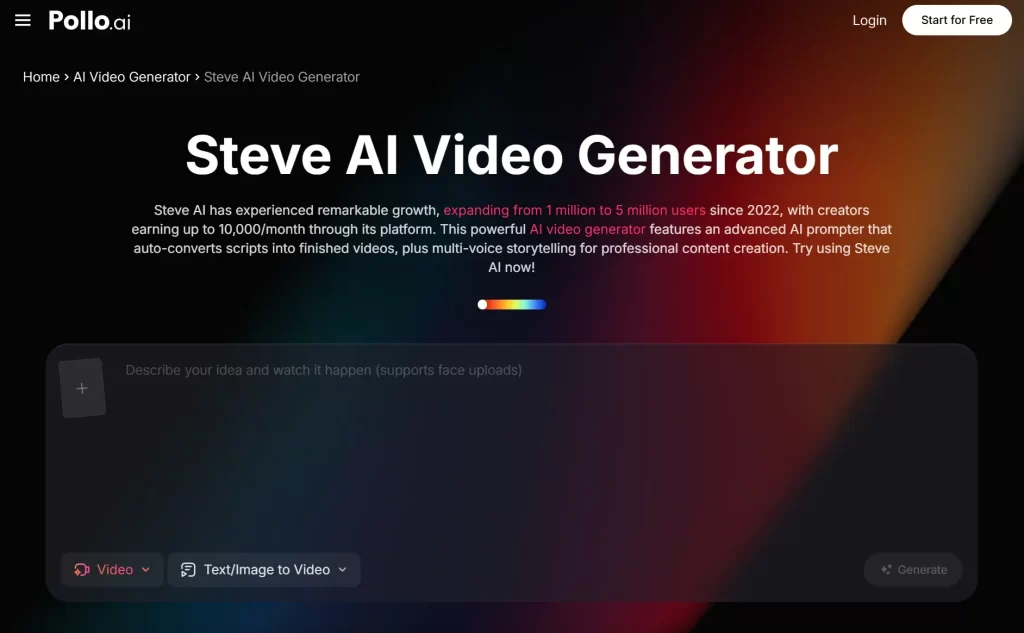
Steve AI, accessible through Pollo AI, is particularly well-suited for this category. Its text-to-video workflow is designed for script-based content production, converting structured written briefs into professional video that can be used for sales enablement, customer onboarding, and internal training. For startups that are building out a customer success function or scaling a sales team, having a library of well-produced video content that explains the product, handles common objections, and walks new customers through key workflows reduces onboarding time and support overhead in measurable ways. Pollo AI connecting both tools means your organic brand content and your structured product video content can be produced within the same workflow ecosystem, rather than requiring separate vendors for different content categories.
The Compounding Returns of Consistent Video Presence
The most important thing to understand about AI-assisted video content is that the returns are compounding. A YouTube channel with 50 well-produced videos is significantly more valuable than fifty individual videos watched once — because each new piece of content feeds into an archive that continues attracting organic search traffic, building subscriber relationships, and establishing category authority long after it’s published.
Founders who started building consistent video presences eighteen to twenty-four months ago using AI tools are now operating with a distribution advantage that would cost hundreds of thousands of dollars to replicate through traditional content agencies. Their channels have algorithmic momentum. Their audience has built a habit of engaging with their content. Their brand is associated with expertise in their category through hundreds of hours of publicly available content.
That advantage is available to founders starting today — but the window in which early movers have a significant head start over later entrants is not permanent. As AI video tools become more widely adopted, the differentiator shifts from having the tools to knowing how to use them strategically: what to say, to whom, on which platforms, and at what frequency.
The strategic advantage belongs to the founders who start building that expertise now, while most of their competitors are still debating whether video content is worth the investment.