

Empathy in leadership is quickly emerging as a differentiator in successful business leadership. At a time when the business world is highly unpredictable, talent markets are limited, employee expectations are rising, and confidence in leadership is low, leaders who fail to engage employees emotionally risk losing morale, productivity, and retention. However, compassion is not sufficient. What will make truly great leaders in 2026 stand out is the prudent empathy, the skill to understand the emotional background and react in a manner that encourages, electrifies, and manoeuvres people, as per the report by Harvard Business Review.
Table of Contents
Empathy to Wise Empathy: The Difference?
Conventional empathy focuses on understanding others’ feelings, but wise empathy combines emotional intelligence with appropriate action. It’s about choosing responses that suit the situation, like celebrating high performers or supporting struggling employees to prevent burnout.
Harvard Business Review notes that workplace empathy is vital, but if misapplied, it can make people feel invisible or exhausted. Proper empathy involves acknowledging feelings nonjudgmentally, enabling leaders to support others without undermining them.
The Case of Wise Empathy: Speaking Volumes
The business case for sound empathy is not merely a story; it is quantifiable and compelling. Emotional intelligence enhances leaders’ performance. Organisations that do not embed empathetic leadership are likely to lose $180 billion in annual revenue due to unnecessary turnover and attrition, according to reports from Harvard Business Review.
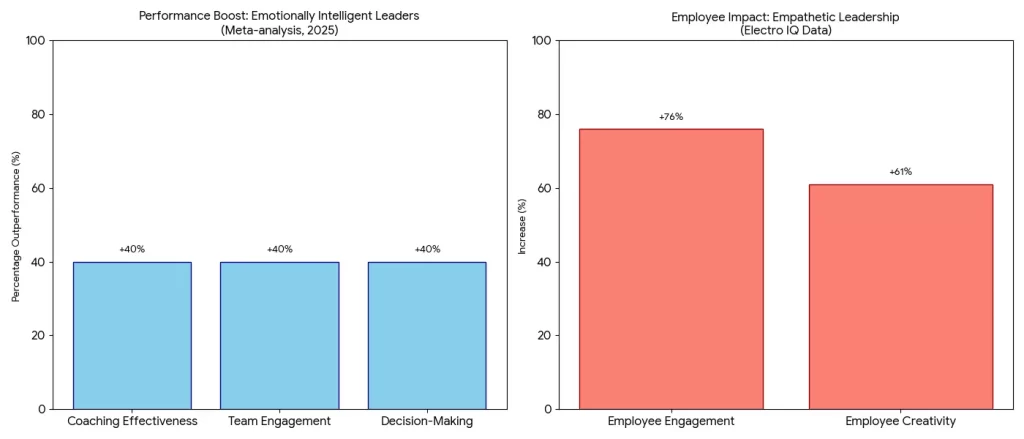
The data clearly shows that leaders’ confidence is diminishing worldwide. As perTechRadar survey, an index on the workplace in 2025 showed that the UK has the lowest trust rate in senior leaders’ ability to make the right decisions, with only 14% of employees trusting their actions, a 12-point decline from the previous year, largely due to a lack of empathy and transparency.
These figures lead to one conclusion: empathy is not a soft leadership quality; it drives quantifiable business performance.
Four Pillars of Wise Empathy Practising
1. Look at the Emotional Background and then React
Not all emotional situations require the same response. Intelligent leaders determine whether a person is stressed, excited, discouraged, or overwhelmed and respond accordingly. Such reflective silences minimise mistakes and drive trust.
2. Regulate Your Own Emotional Response
Leaders who have learned to manage their emotions will be better able to manage others. Remaining calm under pressure demonstrates a leader’s stability and builds confidence. Forbes studies have shown that self-aware leaders foster a sense of psychological safety, enabling team members to express themselves.
3. Be Intentionally Selective in Choosing to Care or Share
Wise empathy involves choosing whether or not to take in another’s emotional state and to provide practical assistance that helps them get well and move on. It is a difference that allows leaders to avoid burnout and maintain empathy.
4. Perceptions and Not Intention Checks
Empathy is not concerned with what leaders believe they said, but with what the employees believe they got. Leaders who check the comprehension of their actions create transparency. According to a Harvard Business Review study, empathy lapses typically occur when intentions fail to translate into perceptions.
Empathy, Wise and Future of Work
Wise empathy is crucial amid evolving work, hybrid teams, increased wellbeing demands, and rapid tech change. Employees want leaders who listen, empathize, and respond to human emotions. Data from Electro IQ shows emotional intelligence and empathetic leadership outperform other strategies by up to 22 times. The ability to bond, detect emotional cues, and make sound decisions will distinguish future leaders in a world where AI handles analytical tasks.
Leadership that Resonates
Intelligent empathy does not mean being soft or emotional all the time. It has to do with being strategically human, the combination of insight, emotional sensitivity, and discernment into leadership behaviour that really makes an impact on people.
This skill will not only ensure that the teams are happier in 2026 and onwards, but also make organisations more flexible, creative, and competitive. Empathy is not the price of leadership, as the data indicates, but rather the competitive advantage that distinguishes the two in the contemporary workplace.