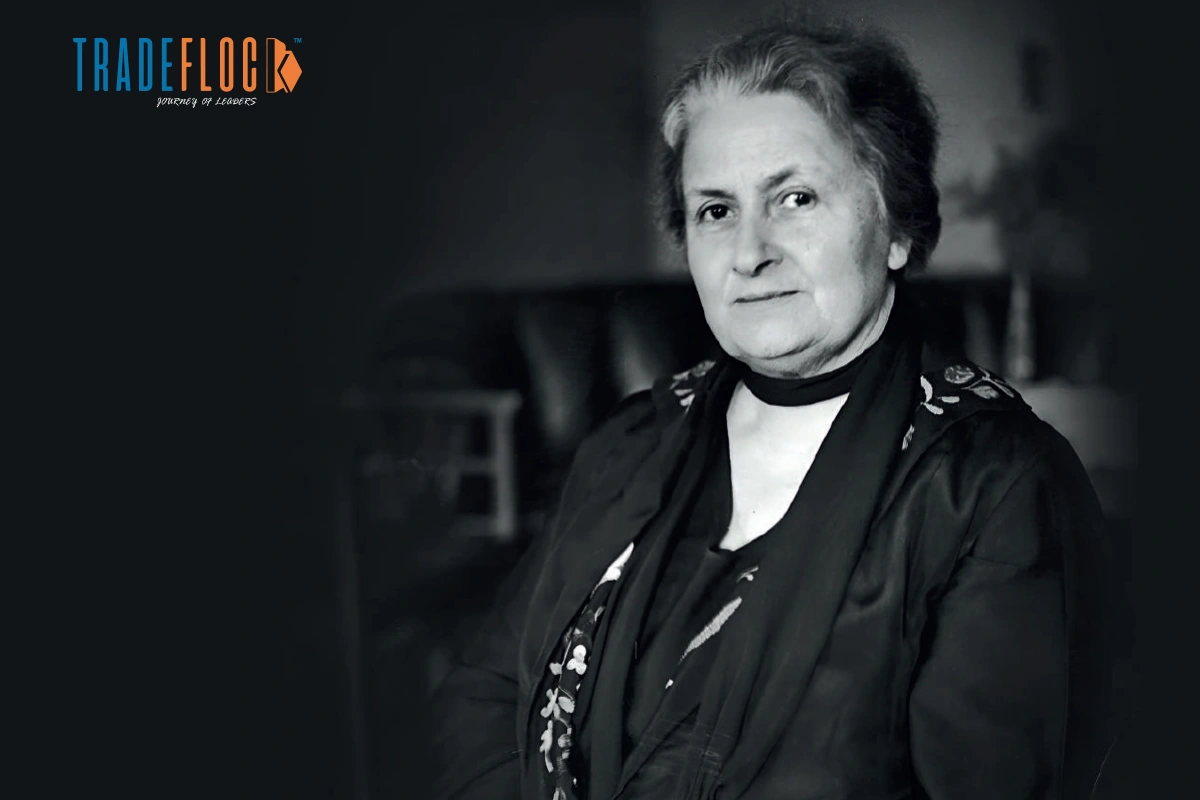
Education, empowerment and innovation all combine around Maria Montessori, an Italian doctor who was ahead of her time and transformed how teaching and learning are seen. Best known for her work with the Montessori Method, Dr. Montessori also strongly influenced how people view human potential, leadership and heritage.
Montessori’s story is one of perseverance, vision, and relentless commitment to children’s independence, dignity, and development.
Table of Contents
Removing Challenges to Create Different Opportunities
Born in Chiaravalle, Italy, in 1870, she made many early achievements. In 1896, she became Italy’s first female doctor, completing her medical training at the University of Rome. As science and medicine were mainly dominated by men in her era, she experienced and got rid of doubts and discrimination.
Because she worked in medicine, Montessori gained valuable knowledge about children’s psychology and growth. She began by watching how children with special needs behaved and designed lessons that matched their skills, rather than what they couldn’t do.
Lesson: Trailblazers realise that they must make their own way, rather than watching for an opportunity to come. Her strong desire to go beyond standard beliefs shows how far a vision can take a person.
Watch and Study Before Doing Anything
One of Montessori’s most defining principles was observation. She preferred to observe how kids behave toward each other, with things around them and when working, rather than enforce planned lessons. She realised that children naturally like to ask questions, prefer to keep things in order and focus well once they are not interrupted.
Then, she set up a learning environment where children were treated as independent, offered self-help tools and allowed to pick their own activities. Things became focused on an approach in which the child stood at the heart of the system, not the teacher.
Lesson: real leaders pay attention to what people are saying before they begin to lead. Observing allows us to understand better and using this insight makes our systems work better.
Enabling Independence, Instead of Control
In Montessori’s day, traditional education involved strict rules, a strict order between students and teachers and lots of memorising facts. She found this viewpoint unacceptable and replaced it with a way that focused on becoming independent, staying disciplined and choosing your own actions.
To put it another way, leadership should include handing off tasks, allowing teams to make their own decisions and not controlled oversight. Her ideas led to better learners who could also think clearly and solve problems.
Lesson: Supporting new ideas helps a business prosper. Leadership is not just about being in charge; it’s about helping others succeed on their own route.
Creating Systems with a Focus and Intention
Rather than only offering learning tools, the Montessori Method relied on information from psychology, anthropology and philosophy. The size of classroom furnishings, the organisation of space and the supplies were all planned to help children grow.
Thanks to its well-designed and focused pedagogy, Montessori schools can be used everywhere and adapted for all ages. At this time, there are over 20,000 Montessori schools in more than 100 different nations.
Her studies suggest that the structure of a system is important but so is why it was created. In any field, if design has a clear purpose, it helps achieve lasting success.
Lesson: Standards and structures created by a vision survive changes in trends. Defining a clear goal allows an organisation to last.
Understanding development as the basis of world vision
Maria Montessori believed education should create peace and positive change in the wider community. She thought that allowing children to learn in freedom and respect would help them later really uphold those values as adults. Such a belief earned her a total of three nominations for the Nobel Peace Prize.
She went around the globe, both in India and the U.S., to instruct teachers and discuss education, child development and peace. For Bottler, raising good citizens requires us to begin by respecting the child.
Lesson: Real leadership looks after people, traditions and promotes peace in addition to each employee’s performance.
Turning Lessons into Leadership: How Education Helps in Business
Her ideas have reached far outside the world of education. Organisations, entrepreneurs and leaders choose to apply Maria Montessori’s beliefs, including autonomy, respect, self-discipline and purposeful systems, in order to bring about friendlier and more unique organisational practices.
Many good entrepreneurs and creative figures, for example, Jeff Bezos, Sergey Brin and Larry Page, completed their primary education in the Montessori system. Curiosity, independence and innovation typical characteristics of Montessori education are clearly present in their work.
You can still see Montessori’s influence in leadership coaching and organisational development. Today’s leaders are advised to foster conditions that enable teams to be self-organised, learn through making mistakes and develop solutions on their own like children in a Montessori classroom.
Lesson: A visionary’s work spreads and influences other areas as well as its own. Great work always involves considering empowerment and design considerately, regardless of where it happens.
Montessori’s way of leading for all ages
Her ideas did more than help children; they also showed how to lead with positive influence. People across industries and generations feel the influence of her ideas about observation, independence, systemic connections and purpose.
Following Maria Montessori’s example shows us that helping the smallest people is a good way to change the world. Thanks to her faith in children, she helped bring about a world that is kinder, brighter and better.
Her legacy endures not just in schools, but in every space where growth, learning, and leadership come together.