

With start-ups being founded at a rate of one per minute and failure rates stubbornly over 60%, success is no longer something that can be left to instinct, grit, or luck. The romanticised image of the dashing visionary following their gut feeling is insufficient in today’s hyper-competitive market. Rather, the strongest founders tend to be scientific thinkers who do not rely on intuition; they make decisions based on evidence, systematically test their assumptions, learn, and adjust their decisions as the evidence changes. This is not academic realism; empirical studies have recently shown that a scientific mindset materially improves entrepreneurial performance and decision-making.
Table of Contents
Gut Feeling to Hypothesis: The Strength of Structured Thinking
The hypothesis, or a straightforward, testable assumption concerning the world, is at the core of the scientific method. Entrepreneurs usually begin with ideas, but ideas alone are stagnant and unbounded. Scientists, on the other hand, are specific in their hypotheses; they know exactly what should be done in uncertain situations. Such a change in the mindset can turn the entrepreneur’s business into a matter of winning over stakeholders and facing uncertainty.
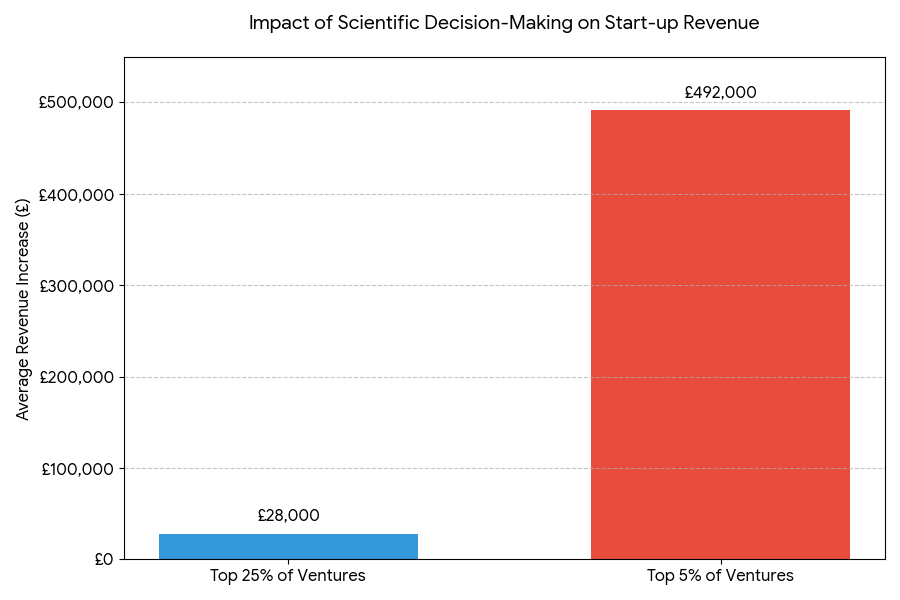
It is not merely a question of money but life itself. Entrepreneurs who can test and pivot on weak assumptions will avoid the costly trap of creating products no one wants, a factor contributing to as many as 38% of start-ups failing due to capital depletion or market mismatch.
Experimentation as an Option, Not a Necessity
Learning involves experimentation. Instead of building a finished product expecting momentum, founders should run small tests to quickly validate assumptions. Good design prevents confirmation bias, ensuring participants see what you intend. Unlike simple A/B tests, scientific testing compares hypotheses rigorously to identify causal factors influencing customer behavior. This approach accelerates learning and reduces uncertainty. Systematic testing helps startups avoid guesswork, enabling quick learning, informed decisions, and better product-market fit.
Pivot Power
Entrepreneurs too often view pivots as failures. In fact, successful ventures and failures are divided by evidence-based strategic pivots. Consider YouTube: the company started as a dating site and only realised its true value as a video platform after experimenting and listening to customers.
This delivery process is accelerated by scientific thinking. Founders redefine failure as a learning opportunity, rather than stubbornly clinging to a failing idea because it feels right. This reframing will turn failure into a learning process, further enhancing future success.
Prioritising Data
Evidence-based decision-making is better than intuition. To illustrate, structured evidence gathering, such as customer interviews, surveys, and controlled tests, uncovers facts about customer needs and market demand that gut instincts often overlook. In any industry, data-driven organisations outperform other organisations in profitability and productivity.
However, fewer than 37% of founders are STEM, indicating that most entrepreneurs must consciously develop these analytical muscles to make evidence-based decisions.
Build a Culture of Inquiry
The scientific mindset is a corporate culture that promotes inquisitiveness, humility, and persistence. Leaders should adopt scientific habits like hypothesis-driven planning, testing assumptions through real customer behavior, and making evidence-based pivots only with clear evidence. It also involves Bayesian updating of beliefs as new data emerges. This approach reduces decision-related emotional costs, improves disciplined strategy, and fosters team learning over defense.
Why Does This Matter Now?
The entrepreneurial landscape worldwide is on fire. But there is hope, and hope is accompanied by overwhelming doubt. The ugly reality is that nearly one-fifth of start-ups fail within one year. These disillusioning statistics help highlight the importance of the scientific attitude, not as an intellectual luxury, but as a strategic necessity.
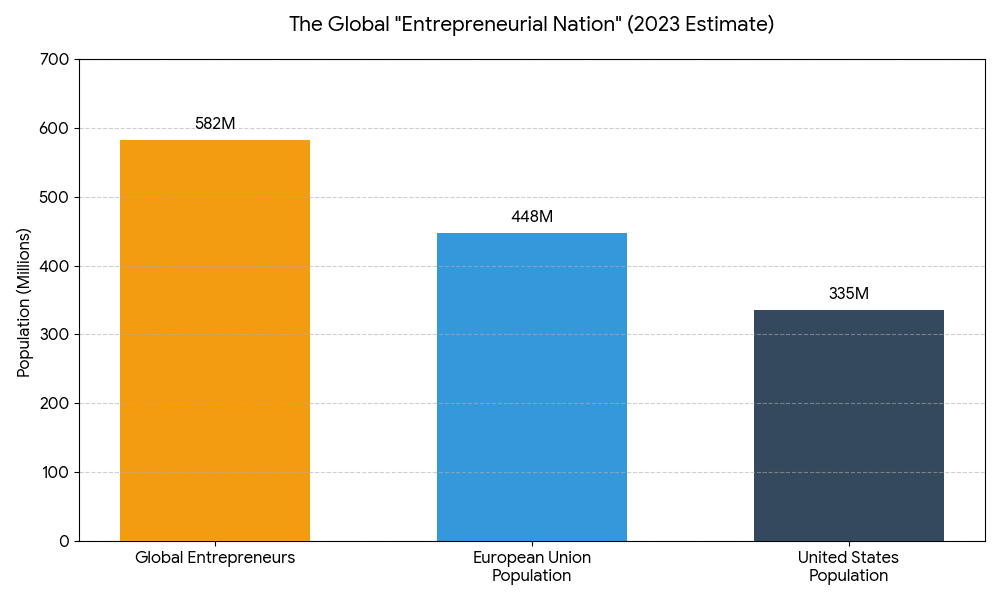
Against this backdrop, the scientific approach offers a way out of the trial-and-error rut. It turns grey data into quantifiable knowledge and anarchy into serious research.
Scientific Entrepreneur
Entrepreneurship education has long been full of the idealised figure of the founder. The information today tells otherwise: vision without verification is a liability. The future entrepreneur is not only an innovator but also an empiricist, one who questions, experiments, learns, and modifies.
Being a scientist doesn’t kill creativity. It is an exaggeration of it in its clarity and accuracy. It transforms intuition into wisdom, uncertainty into evidence, and ambition into impact. For those inclined to view uncertainty as something to be curious about, not something to fear, the scientific mindset is not merely an instrument but a competitive edge in the never-ending quest for meaningful and scalable success.


