
On a chilly morning in 2018, a group of engineers at a legacy car company gathered anxiously around a large screen. On it played a livestream from California. Elon Musk was unveiling the Tesla Roadster, an electric sports car claiming 0 to 60 mph in 1.9 seconds, faster than anything they had ever built. Silence filled the room. One engineer reportedly muttered, “This changes everything.” And it did.
The auto industry, long accustomed to incremental upgrades and cautious innovations, was suddenly facing a competitor that treated convention like scrap metal. Tesla’s rise from a niche startup to a $550 billion giant (Statista, 2024) is beyond a story of electric cars. It is a masterclass in how disruption becomes a competitive edge.
Table of Contents
A Factory That Builds Factories
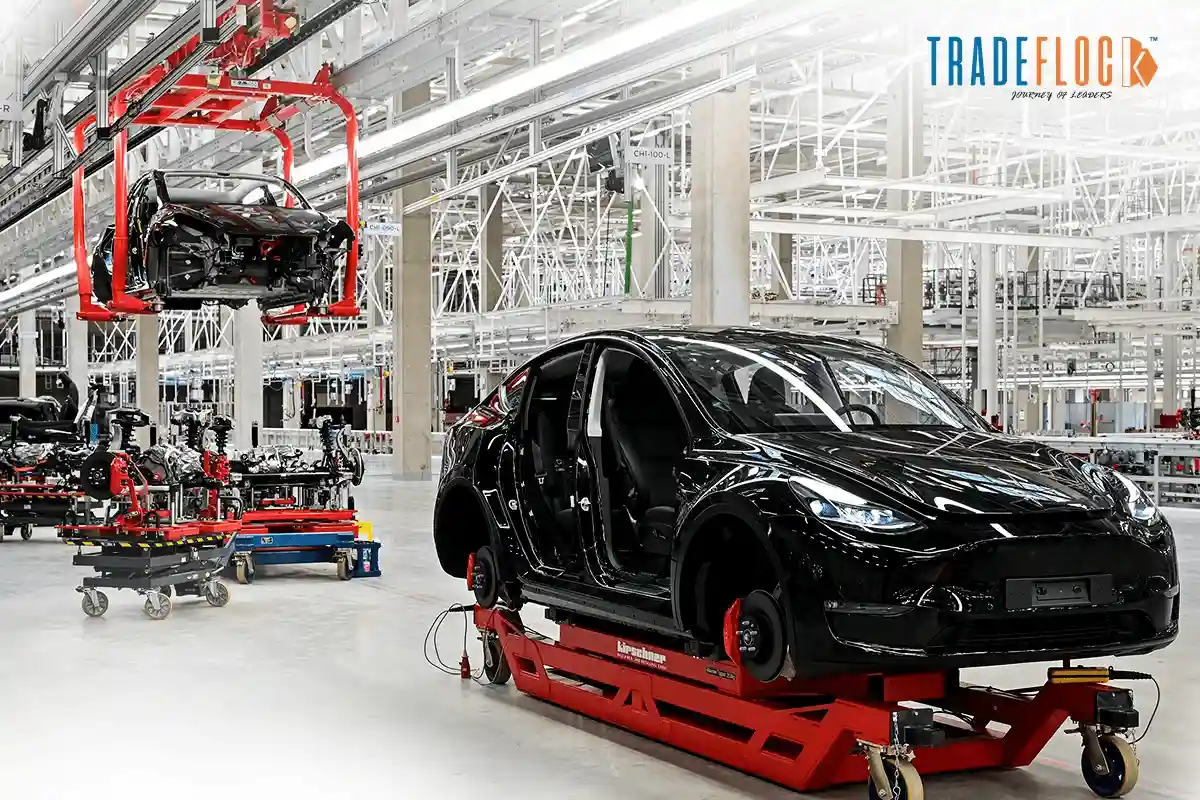
Tesla approaches manufacturing with a mindset few others have embraced. The company does not simply assemble cars; it designs factories that optimise themselves. The Gigafactory concept, with six facilities globally, produces batteries, motors, and even refines lithium on-site. This cuts production costs by up to 20 per cent (Reuters, 2024) while reducing reliance on external suppliers.
Speed Runs the Show
In 2021, as chip shortages paralysed global manufacturing, most automakers halted production lines. Tesla responded differently; its engineers rewrote software in weeks to support alternative chips. This ability to pivot at speed trimmed product update cycles by 35 per cent compared to traditional manufacturers (McKinsey, 2023). Customers received performance upgrades remotely, transforming cars into products that improve over time.
A Wake-Up Call to an Entire Industry
For years, competitors laughed off Tesla’s ambitions. Today, they license Tesla’s charging technology, emulate its direct-to-customer sales model, and chase EV adoption goals that looked impossible a decade ago. Tesla’s decision to open its patents in 2014 accelerated this shift, forcing an entire industry to innovate or be left behind.
The Ultimate Lesson
Tesla proves that disruption is not about chaotic risk-taking; it is about designing a system that thrives under change. Whether in mobility, energy, or technology, the companies winning this decade are those treating reinvention as a discipline, not an accident.