
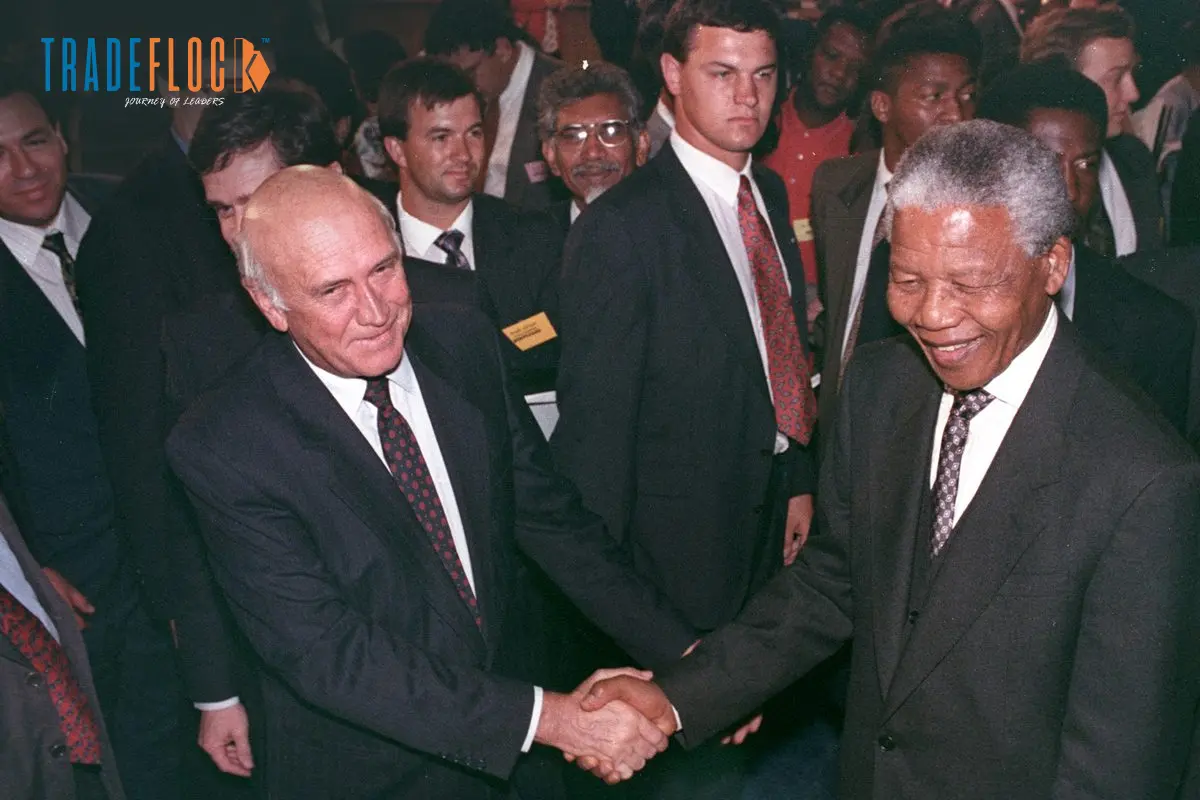
November 18, 1993, marked a pivotal date in the transformation of the South African political landscape. The country’s political parties enacted a new interim constitution, ending apartheid’s remnants and paving the way for the first multiracial elections after years of struggle, division, and global isolation. This historic event marked the end of white minority rule and the beginning of an inclusive democracy based on equality, representation, and reconciliation.
Table of Contents
From Apartheid’s Shackles to the Promise of Freedom
In South Africa, apartheid, which was a strict system of racial segregation, had been a defining feature of the country for nearly 50 years, during which the Black majority faced discrimination and institutionalisation. The apartheid government that began in 1948 under white minority control ruled every aspect of life, including housing, education, and political participation. Black South Africans were denied basic human rights, land, and the right to vote.
By the 1980s, pressure on the apartheid regime increased through internal opposition and sanctions from the international community. Millions were mobilised by activist movements such as the African National Congress (ANC), Pan Africanist Congress (PAC), and United Democratic Front (UDF), and figures like Nelson Mandela, who spent decades in prison, became a global symbol of resilience. The times were changing, and by the early 1990s, discussions between the apartheid government and liberation fronts were no longer evasive.
The Long Road to Negotiation and Nationhood
The years of intense negotiations led to the endorsement of the 1993 interim constitution. After Mandela was released from prison in 1990, the then-President F.W. de Klerk began negotiations that would result in the abolition of apartheid laws. The talks were not smooth; violence, mistrust, and political assassinations repeatedly threatened the process.
In December 1991, the Convention for a Democratic South Africa (CODESA) was established, bringing together representatives from 19 political parties. It aimed to create a new constitutional framework that would ensure universal suffrage and protect the rights of all citizens. Despite setbacks such as the failure of CODESA in 1992 and increasing violence among political factions, the movement towards democracy continued.
Finally, a historic consensus was reached on 18 November 1993 by the Multi-Party Negotiating Forum (MPNF). The interim constitution, which marked a pivotal step in ending apartheid, served as a roadmap for South Africa until a permanent constitution was adopted in 1996.
A Constitution That Redefined Citizenship
The 1993 interim constitution was revolutionary. It granted all South Africans, regardless of race, colour, or gender, the right to vote and participate in shaping the country’s future. It also created a Bill of Rights guaranteeing civil liberties, equality, and protection against discrimination.
The document introduced a Government of National Unity, involving major political parties in governance during the transition. It established a Constitutional Court to protect democracy and human rights. These changes were symbolic and structural, helping to unify a long-divided nation and laying the foundation for justice and inclusion.
More than a legal document, it was a moral declaration. It reflected a people’s desire to end racial segregation and create a country where individuals are defined not by skin colour, but by their identity.
The Road to the 1994 Elections and Mandela’s Presidency
The interim constitution was adopted, paving the way for South Africa’s first democratic elections from 26 to 29 April 1994. For the first time in history, Black South Africans were able to vote alongside white, Indian, and mixed-race citizens. The images of people who had endured decades of labour and hope casting their ballots were deeply emotional.
The African National Congress, led by Nelson Mandela, won the election in a landslide, securing 62% of the votes. Mandela became South Africa’s first Black president, marking a victory of democracy over apartheid. The peaceful transition shocked the world and served as an example of reconciliation in a society deeply divided..
Reconciliation, Challenges, and the Legacy of 1993
The new constitution prioritised national reconciliation, exemplified by the 1995 Truth and Reconciliation Commission (TRC), led by Archbishop Desmond Tutu, which documented rights violations and granted amnesty to confessing perpetrators.
Despite ending apartheid, inequality persisted with economic disparities, land issues, and racial tensions remaining entrenched. The 1993 structure promoted addressing these through democratic means, not force.
Scholars view the 1993 constitution as a liberal, pioneering document in human rights and democracy, symbolising a hope that even deep divisions can be bridged through dialogue and courage.
A Day That Redefined South Africa’s Destiny
November 18, 1993, was not just a date in the country’s political history, but also the day when South Africa began to rebuild itself. The ratification of the interim constitution marked a victory of reason over hatred and democracy over domination. It demonstrated that countries could rewrite their own histories when guided by the principles of equality and justice.
Modern South Africa remains influenced by the echoes of that day. Despite ongoing challenges, the democratic foundation established in 1993 is the country’s greatest achievement, serving as a living example of the power of negotiation, forgiveness, and compassion.
Even to this day, the spirit of November 18 reminds us that freedom, once obtained, must be constantly protected, nurtured, and passed on to future generations.