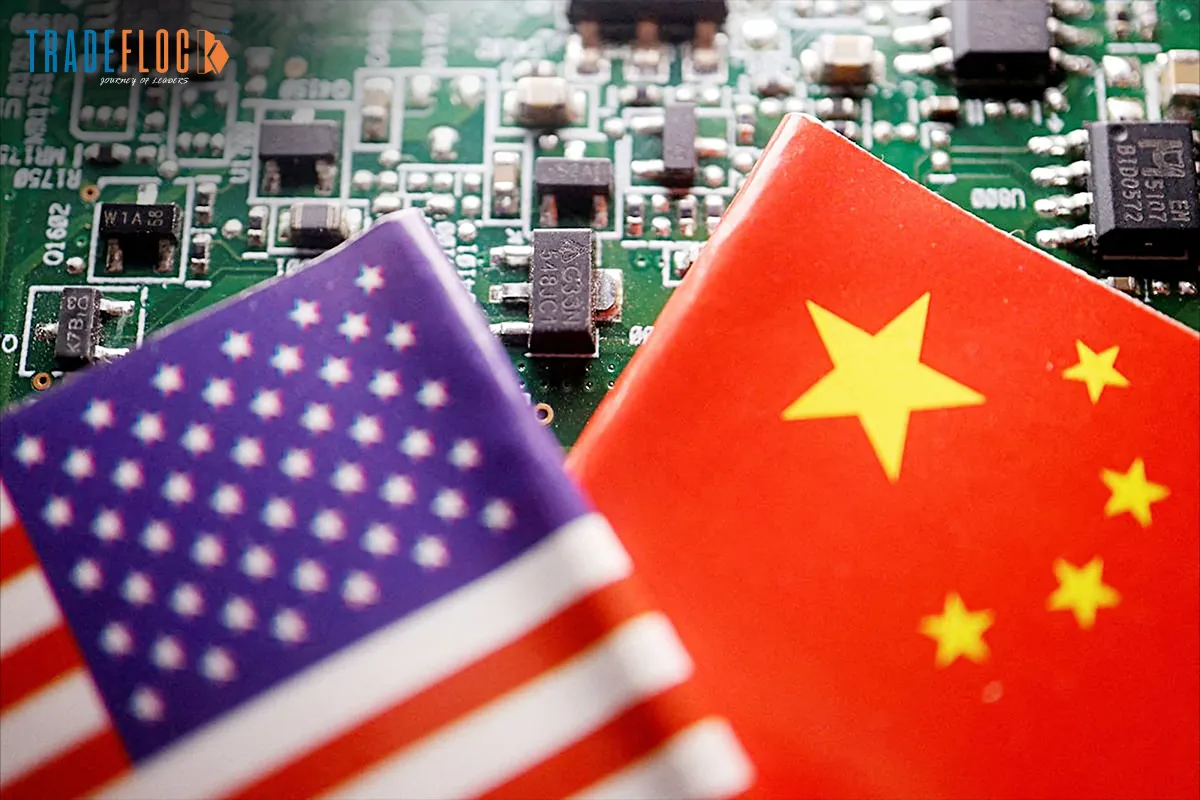
Tensions between the United States, China, and the European Union in geopolitics quietly lead to major changes in the tech industry. Because of these tensions, known as the “silent tech wars,” companies are changing their strategies in semiconductors, data sovereignty, and AI. Export controls, trade restrictions, and different regulations make it difficult for companies, which can seriously affect innovation and competition. According to Brookings, Lazard, and HFS Research, these trends make companies adjust to a more divided global market.
Table of Contents
The Stronghold of Semiconductors
Semiconductors are essential for modern technology and are found in everything from smartphones to AI. NVIDIA and Intel lead chip design in the U.S., but most of the world’s chips are made in Asia, especially by Taiwan’s TSMC. The increased rivalry between the U.S. and China has intensified the fight for this resource. According to a 2022 Brookings report, U.S. export controls, including those on ASML’s advanced lithography machines, are intended to prevent China from producing sub-7nm chips important for AI and military purposes.
The country has invested heavily in its own semiconductor industry. The National Integrated Circuit Industry Investment Fund, which was set up in 2014, aims to help China become a top chip producer by 2030. HFS Research points out that the increased use of AI-driven chips, especially GPUs, has made it necessary for companies to diversify their supply chains. TSMC’s dominance in producing advanced chips could cause problems during trade wars and disputes over Taiwan. Intel and TSMC are setting up new factories in the U.S. and Japan to lower their dependence on Asian manufacturing, but this comes at a higher cost and with more challenges. McKinsey points out that semiconductor companies are changing their supply chains to avoid risks from tariffs and political issues.
Data Sovereignty: A Fragmented Digital Landscape
Nations are now fighting over data sovereignty, aiming to control where and how data is handled. The GDPR from the EU is a worldwide standard for privacy, and its digital sovereignty strategy aims to reduce the use of U.S. and Chinese tech companies. According to a 2023 report from the Atlantic Council, three-quarters of countries have introduced data localisation policies, which have divided the global internet. China’s rules on cybersecurity require that data be stored locally and supervised by the government, which means Apple has to work with state-supported companies to run its data centres.
These different strategies cause problems for companies. A GRC Outlook report points out that digital authoritarianism and other geopolitical risks affect digital supply chains, leading companies to develop data strategies for each region. Amazon and Microsoft are setting up cloud services in Europe and China to meet the requirements of those regions, even though it is costly. The EU’s actions, such as opening a Silicon Valley office to ensure U.S. tech firms comply with its AI and Digital Markets Acts, make things more complicated for companies. Because smaller firms find it hard to comply, the tech giants may control more of the market.
The Global Competition for AI Leadership
AI is a key area of competition among the U.S., China, and the EU. OpenAI leads in U.S. innovation, while China advances through government support and vast data access. A Lazard report notes the challenges posed by differing regulations and trade policies for companies in light of the U.S. and China’s strong AI position. The EU also promotes global AI ethics standards through its AI Act, imposing additional requirements on companies.
China’s DeepSeek AI model exemplifies its challenge to the West. A 2025 Bruegel report highlights that DeepSeek’s progress, despite U.S. chip export restrictions, reflects China’s capability to develop its AI technologies. Consequently, U.S. companies are accelerating their innovation, and firms like NVIDIA may face market shifts. The RAND Corporation suggests AI’s military and economic impact could turn India and the UAE into “geopolitical swing states” through strategic AI investments. Corporations are prioritising local AI development and partnerships, as evidenced by the U.S. collaboration with Japan and South Korea to enhance talent and secure supply chains.
How Companies Adapt and What Lies Ahead
Due to silent tech wars, companies are focusing on supply chain strength and regulations. A report from the Centre for International Governance Innovation claims U.S. export controls could harm global innovation by fostering mistrust in the semiconductor industry. For instance, TSMC is expanding in the U.S. and Japan, utilising AI to manage risks, similar to Qualcomm’s predictive analytics for supplier risks.
However, these changes have drawbacks. A BlackRock report indicates geopolitical issues like U.S.-China tariffs and regional conflicts prompt companies to rethink supply chains, with Intel advocating a balanced approach. Companies finding innovative solutions, such as open-source AI or local cloud services, can gain, while smaller firms struggle with high compliance costs.
Silent tech wars are reshaping the global tech industry. Brookings notes that varying digital policy approaches in the U.S., China, and the EU are dividing the digital landscape. To succeed now, corporate leaders must innovate and adapt strategies regionally. Today’s decisions will significantly influence the future of technology and the economy for years.