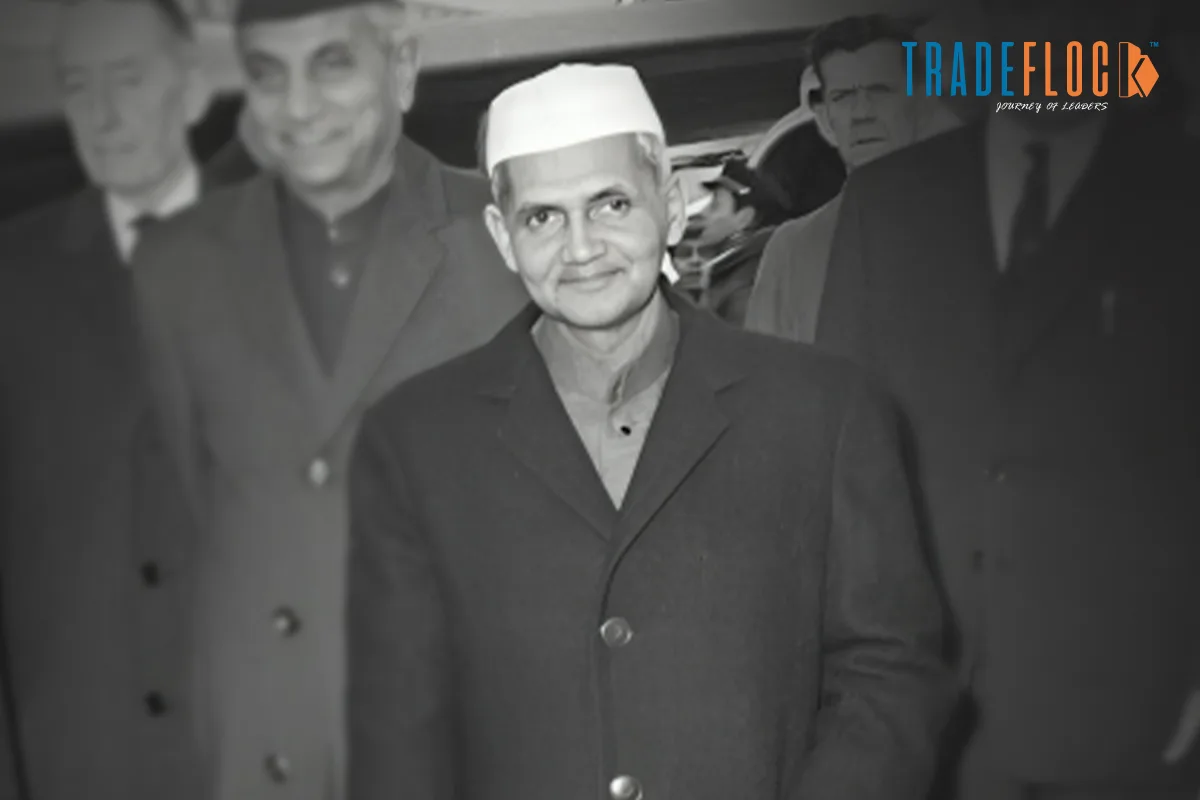
On June 9, 1964, Lal Bahadur Shastri, one of India’s most respected and understated leaders, was sworn in as the second Prime Minister of India, following the death of Pandit Jawaharlal Nehru. During political uncertainty, economic strain, and external challenges, Shastri stepped into a role that required diplomacy, authority, humility, and vision.
Though his tenure was tragically short, lasting just 19 months until his untimely death in January 1966, Shastri’s leadership left an enduring legacy. He focused on building self-sufficiency in food production, strengthening the economic foundation, and preparing the country for long-term stability. His popular slogan “Jai Jawan, Jai Kisan” became a rallying cry for national development and self-reliance.
Table of Contents
A Nation in Transition
When Lal Bahadur Shastri took office, India was in a period of transformation. Nehru’s long tenure had come to an end, and the country was grappling with a number of pressing challenges:
- A slowing economy with widespread poverty.
- Low agricultural productivity and frequent food shortages.
- Rising tensions with Pakistan and China.
- A growing need to define India’s identity in a post-colonial, multipolar world.
Though seen as a consensus choice, quiet, soft-spoken, and unassuming, Shastri quickly demonstrated that he possessed firm resolve and a clear sense of purpose.
Agricultural Self-Sufficiency: Planting the Seeds of the Green Revolution
One of the most important things Shastri did was support changes in agriculture. In the early 1960s, people in India faced acute hunger, and the nation had grown dependent on getting its food supplies mainly from the United States through the PL-480 programme. Worsening drought in 1965 further aggravated the crisis.
Shastri knew that India must be food secure to maintain independence. He advanced innovations in science and allowed farmers to use crop varieties that yielded a lot, as well as fertilisers and irrigation practices that would later be important during the Green Revolution.
While full implementation took place after his tenure, Shastri’s groundwork promoting agricultural investment, supporting farmers, and championing policy reforms was critical in preparing India for a more self-reliant agricultural future.
The president urged patriotic adults to fast on Wednesdays to save food and strengthen the national reserves, as he himself fasted every Wednesday. His ethical leadership won him favour with people.
Economic Policy and Effective Administration
Shastri believed in applying practical solutions while staying dedicated to his country. Though he supported socialist ideals, he suggested greater work efficiency and responsibility within the system. Under his rule, planning gave way to a greater emphasis on putting ideas into practice.
Important parts of his economic policy were:
- Encouraging public sector companies (PSUs) to improve while asking for more transparency and results.
- Supporting industry in rural centres will lower the differences between urban and rural life.
- Backing research and education that helps achieve the objectives set for the long term.
- Keeping the nation’s finances in check, as more resources are used on vital infrastructure projects.
Shastri supported giving power to regular people and ensuring grassroots development. He started the process that led to later changes in the agriculture sector and industry.
Impacts of Foreign Policy during and after the 1965 Indo-Pak War
Shastri faced a major test during the Indo-Pak War of 1965 over Kashmir, challenging India’s unity and fighting capability. He supported the armed forces, insisting that India would remain strong and safe.
He introduced the phrase “Jai Jawan, Jai Kisan,” highlighting that a nation’s security relies on soldiers and farmers. This motto reinforced Shastri’s goal of a self-reliant India in the public’s mind.
A ceasefire between the Soviet Union and the United States led to the Tashkent Agreement on January 10, 1966. Tragically, Shastri died in Tashkent just hours later, under mysterious circumstances, after signing the peace accord.
A History of Being Both Simple and Strong
During his brief tenure as Prime Minister, Lal Bahadur Shastri demonstrated strong values and effective administration. He exhibited compassionate leadership and showed that humility and strength coexist.
His contributions to agriculture, financial independence, and military issues shaped Indian policy for years. He trusted scientists and public officials, believing that change occurred outside Parliament, in factories and farms.
As PM, Shastri embodied ideals of simplicity and service. He lived without a car in a modest home, and the nation mourned the loss of a leader who unified it during a significant period of change.
A Statesman for the People
When Lal Bahadur Shastri ascended to office on June 9, 1964, it was not a moment marked by ceremony or focused on the world. Even so, how he handled his post greatly influenced India’s future. The main ideas he expressed about self-reliance, cooperative growth, and principled leadership have affected India’s development right through to today.
Amid the usual focus on charisma and thrills, Shastri’s story teaches us that true leaders are backed by substance, sincerity and service.