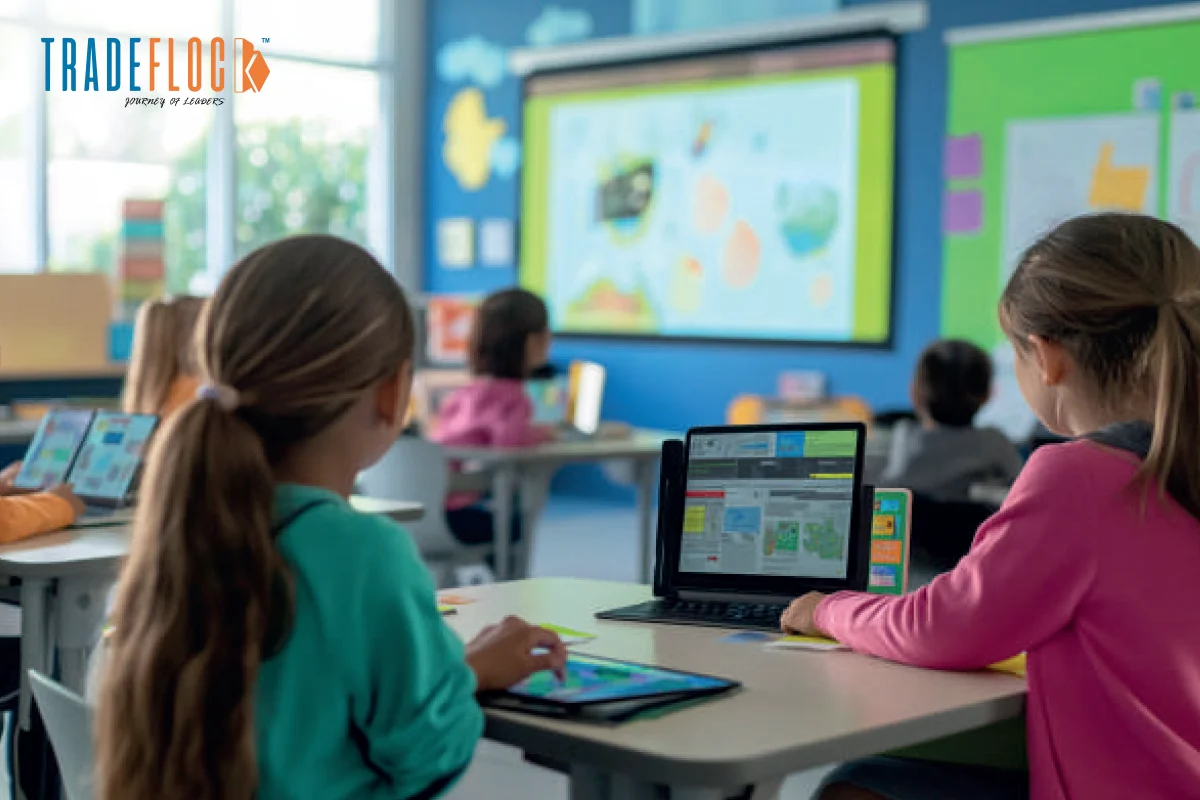
Across the world, education is changing due to AI because traditional classrooms now use data to personalise learning for each student. With teachers using AI tutors and methods developed by GPT and students following adaptive paths, AI is helping shape learning and teaching practices and making it easier for institutions to tackle challenges like widening access, higher standards and running a smooth system.
This is a change occurring worldwide, affecting education systems in all nations from Estonia and South Korea to Ghana.
Table of Contents
Personalised Learning is on the Rise
Over time, a general way of teaching has dominated and this does not help students with different learning needs and rates. AI platforms and tutors are doing this by studying student data and customising each student’s learning experience.
Deloitte’s report shows that 72% of schools around the world acknowledge AI could help with personalised learning and 60% plan to apply AI tools in the classroom in the next five years. Content, difficulty and pacing in these systems change to match the real-time results of students.
Khan Academy’s AI assistant “Khanmigo” is a prime example, offering 24/7 personalized tutoring and assisting educators in designing tailored lesson plans. Just like in other apps, AI on Duolingo personalized lessons for students to remain interested and motivated at their own level.
McKinsey has found that learning personalized by AI boosts retention for students by 20 to 30%, raises test results by 10 to 15% and saves up to 30% of time on learning subjects. They show that AI speeds up and strengthens learning by delivering the correct information as needed to each student.
AI Education Action Plans
AI is being used in schools in Estonia, as the government has launched “AI Leap” with the aim to supply 58,000 students and 5,000 teachers with AI tools by 2027. AI-powered accounts will serve as guides throughout a student’s education, encouraging learning that works well with AI tools.
On China’s Squirrel AI, machine learning allows subjects to be divided into knowledge points and helps find out where students need help. Study plans are tailored to help students with those weaknesses. AI by Squirrel serves nearly a million students spread across 60,000 schools in Asia, showing how it is suitable for many students.
South Korean students use GPTeens, a GPT-powered chatbot, for tutoring in subjects that match their curriculum. The app provides protection and filters so students can only interact in ways suited to their age, with instant individual support if needed.
Ghana takes advantage of AI by giving teachers local language resources and information that matches their culture. Educators are given resources that meet their needs and new teaching approaches which helps to solve educational issues in areas that are underserved.
Helping Educators and Solving Problems Faced by the Workforce
AI influences both student learning and plays a part in supporting teachers and better organising administrative tasks. Grade marking, attending students, developing lessons and report writing require a lot of teachers’ time.
KPMG has revealed that using automation with AI can greatly reduce the administrative work teachers do, giving them more time for individual teaching and interacting with students.
In addition, AI provides recommendations for teacher training based on classroom information. This matters, as according to UNESCO, the world will have to hire 69 million new teachers by 2030 to provide quality education. This gap can be solved to a degree with the help of AI tools.
Issues and Matter of Ethics
Because AI systems depend on student information, privacy is becoming an important concern. GDPR and COPPA are laws that must be followed, though following them can be very hard. Having secure data, consent control and clear rule-following is essential to maintain the trust of everyone.
Getting AI-supported learning requires access to devices, meaningful internet connection and the basic skills for using technology. Research by McKinsey indicates that about 30% of all students worldwide cannot use digital learning effectively and this may make educational inequality grow, mainly in countryside and poor regions.
The EY report for 2024 points out that 40% of teachers think they are not ready to fully utilize AI in their teaching. For AI to give its full benefits, we need to make sure people receive adequate training and support. It is absolutely necessary to keep learning new skills.
Without intervention, AI algorithms can contribute to the continuation of existing social inequalities. The two organisations say that using many types of data, making algorithms clear and doing audits regularly can help AI education solutions be fair and supportive of everyone.
AI and Education Going Forward
AI is opening up a time of personalised, fast and fair education across the globe. Because AI supports custom learning, automates tasks usually handled by staff and improves what teachers can do, it is likely to improve education in many settings.
Still, being successful calls for balancing new ideas with looking after people’s privacy, fairness and making sure teachers are comfortable and the technology is not biased. Estonia, China, South Korea and Ghana have shown that AI works best when approaches are tailored to local situations.
Working as a team, policymakers, educators, technology providers and communities will help find solutions and utilise AI effectively. With AI, all students from any place and circumstance can get the chance to succeed and adjust to upcoming advancements.