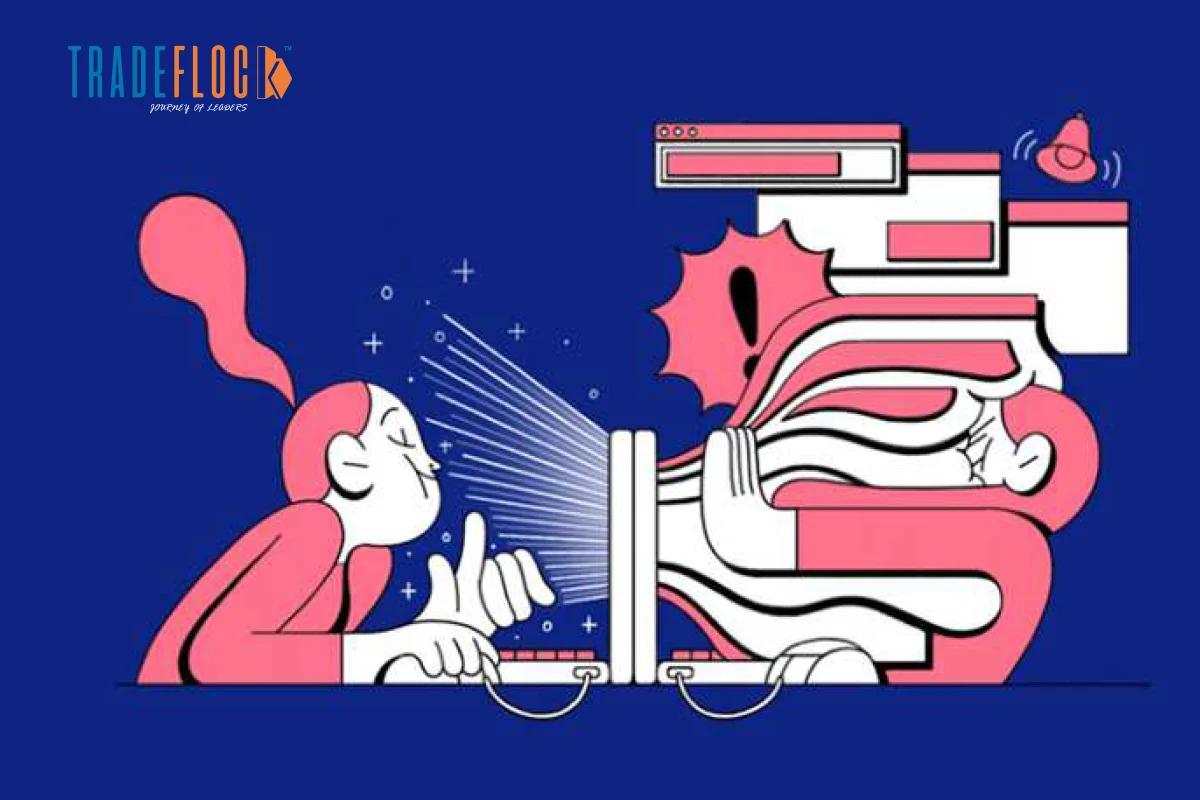
Most apps we are using today are intentionally designed to capture attention, infinite scrolling, hyper-personalised notifications and dopamine-triggering design elements. Still, when we use this same logic in enterprises, it can turn into a problem. When employees’ internal tools work like addictions, they lower productivity, make concentration hard, and may cause stress and tiredness. This is why an increasing number of digital ethicists, behavioural scientists, and enterprise designers are wondering how software can focus on users, instead of making them addicted?
A 2023 study by the Harvard Business Review found that 64% of workers feel overwhelmed by the number of workplace apps they’re expected to use daily. Moreover, Stanford University’s Calming Technology Lab emphasises that tools designed to constantly “ping” rather than support can trigger stress responses, especially in high-cognitive-demand jobs.
Table of Contents
Problems With Engagement-Focused User Interface
Most of these tools are designed to make people more efficient at work. Weirdly, several common work platforms include user-friendly features found in consumer apps. These include:
- Rewards that are given for fast observation skills
- Sites that are crammed with designs often don’t help users focus.
Research carried out by Harvard Business Review found that around 58% of a knowledge worker’s day is spent communicating using different tools. Meanwhile, the Microsoft Work Trend Index reveals that employees are showing more signs of digital fatigue and wish for less busy and more calm work areas.
Key principles of creating ethical businesses
Ethical design at work should emphasise empowering users instead of engaging them. You should be aware of these important ideas shaping the upcoming generation of enterprise tools.
- Notifications are meant to appear at once instead of flooding throughout the day. Tools like Slack and Microsoft Teams are now exploring “focus modes” to mute non-critical alerts.
- Clear and important information is put front and centre. Features are given a clean layout that appears when needed, to lower your decision fatigue.
- Some platforms (such as Notion and Linear) now include signs for the hours when people are most productive and do not recommend sending messages or arranging meetings during those hours.
- Instead of letting people compete for game-like rewards, ethical tools present them with actual results that matter.
The report from Deloitte Digital points out that when companies embrace mindful design, their employees are more productive, suffer less turnover, and enjoy better digital wellbeing.
Leadership’s Role in Mindful Tech
Design needs to be supported by other factors. The adoption of regular no-meeting hours, having fewer tools on hand, and a “right to disconnect” policy should be supported by leaders as new digital habits. Top IT and human resources professionals cooperate with design experts to include digital wellbeing in their platform plans.
Building Tech That Respects Attention
Since workplaces are now digital almost everywhere, having the ability to focus can help someone achieve more. The future for enterprise software is not about doing more, but about slower keyboards. Removing things that make people addicted and caring about attention will help us build useful tools instead of using people.