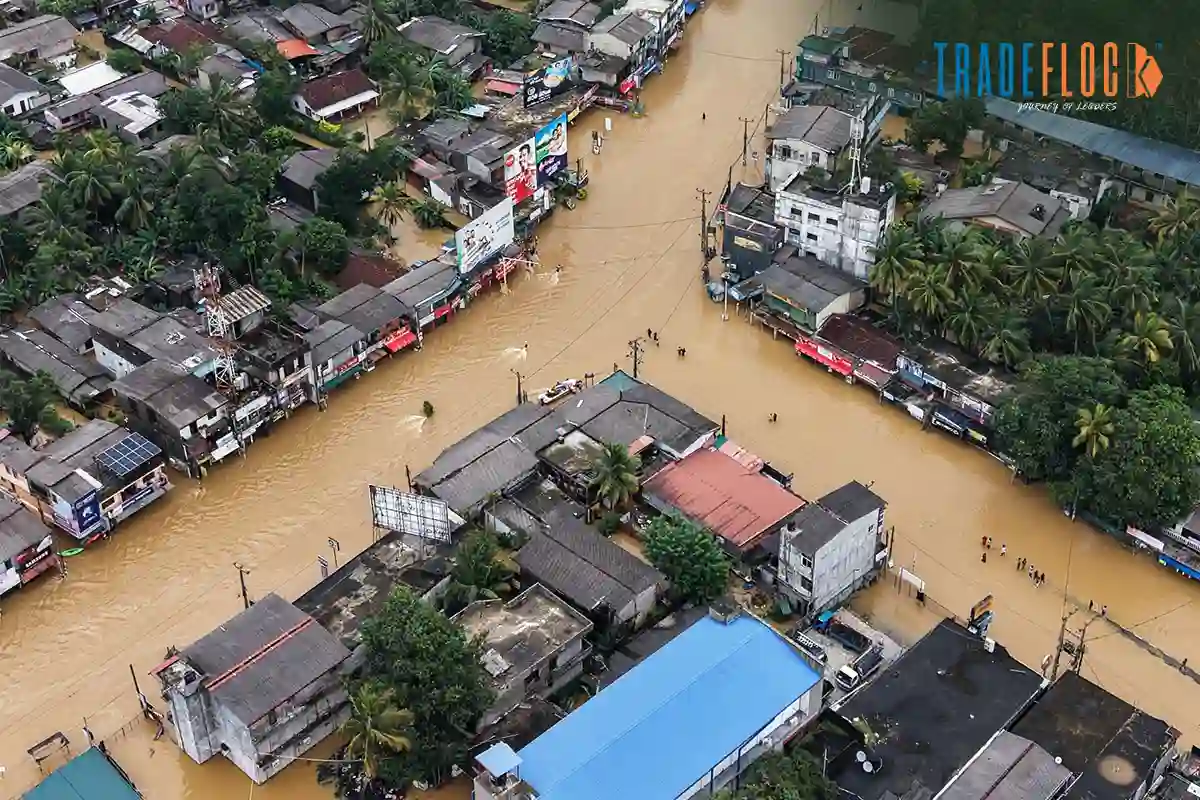
A strong tropical cyclone that developed in the southwest Bay of Bengal this week quickly became a devastating, far-reaching disaster, initially causing massive floods and landslides in Sri Lanka, then weakening into a deep depression as it moved towards the east coast of India. The storm exposed weak defences in coastal and highland settlements, destroyed crops, and damaged transport and power infrastructures, soon escalating into a multi-country emergency requiring urgent cross-border action. The effects of Ditwah’s first landfall were most severely felt in Sri Lanka, where rivers and hill slopes burst, causing devastating losses that emergency teams are still working to clear.
Table of Contents
How Ditwah Formed and Evolved into a Regional Threat
On 28 November, Ditwah formed in warm waters southwest of the Bay of Bengal and was gaining strength as it moved northwards. Rapid intensification, caused by favourable sea surface temperatures and reduced vertical wind shear, was observed by meteorological agencies.
The forecast warned that the system could cause persistent heavy rainfall, squally winds, and localised storm surges in low-lying coastal areas, which might lead to fatal landslides in the central highlands – a pattern similar to what was observed in Sri Lanka and later in parts of Tamil Nadu and Puducherry. The weather services in India issued warnings to the public, advising preparedness for heavy rain and potential flash floods as the cyclone approached.
Sri Lanka: Flash Floods, Landslides, and a Grief-Stricken Toll
By the time Ditwah struck Sri Lanka, it was dumping heavy rain across the country in a very short period, causing the worst floods and landslides in years. Settlements on hillsides were covered with earth, towns in lowland areas were inundated, and bridges and roads were swept away. Both official sources and the media reported hundreds dead and many more missing in the immediate aftermath as search teams struggled to reach isolated villages; hundreds of thousands of people were affected, and tens of thousands were displaced.
Relief efforts were hurriedly undertaken to provide food, shelter, medical care, and search-and-rescue services amid ongoing rains and unstable ground. International responses, including naval and airlifted shipments, were intensified after the Sri Lankan government requested aid.
India’s Response: Operation Sagar Bandhu and Rapid HADR Support
India quickly deployed forces through Operation Sagar Bandhu, a Humanitarian Assistance and Disaster Relief mission involving Indian Air Force aircraft, navy vessels, and NDRF teams to deliver relief supplies, rescue teams, and medical personnel to Sri Lanka. Evacuations of stranded citizens in New Delhi and local rescue efforts with regional aid were organised. New Delhi also managed airlifts and sea deliveries of tents, blankets, rations, medicines, and shelters. The Prime Minister’s involvement highlighted India’s diplomatic and humanitarian response, aiming to be a key responder in the Indian Ocean.
Impact on India: Agriculture, Towns and Coastal Warnings
Although Ditwah weakened to a severe depression near India’s southeastern coast, its remnants brought heavy rain and strong winds, causing local damage. Tamil Nadu faced flooding in Chennai, Kanchipuram, Chengalpattu, and surrounding districts; authorities issued a red and yellow alert, leading to the closure of schools and public transportation as a safety measure. Farmers in flooded areas such as Mayiladuthurai suffered crop losses, prompting calls for swift government aid. The storm’s unpredictable behaviour, including sudden U-turns and slow coastal movements, complicated forecasting and response efforts.
What Governments and Agencies are Doing on the Ground
Sri Lanka and Indian disaster services have combined their efforts in organising rescue teams, relief material distribution centres, temporary shelters, and damage assessment units. In Sri Lanka, military assets and foreign forces have been employed in the cleanup operation and to access remote communities. Mobile medical and psychosocial units are operating to treat injuries and trauma. The governments of Indian states activated emergency funds, pumped water out of flooded areas, prepared rehabilitation strategies, and advised their populations not to travel to vulnerable regions. Both countries emphasised the importance of rapid needs assessment to effectively direct cash aid, seed replacement, and reconstruction funds once the waters recede.
Longer-term Challenges: Recovery, Infrastructure and Climate Resilience
The destruction of Ditwah underscores recurring weaknesses: cleared slopes, outdated drainage systems, settlements, and agricultural lands in flood-prone zones, and single-crop losses. Rebuilding will require both short-term reconstruction efforts and long-term investments in slope stabilisation, river control, early-warning systems, and resilient farming practices. In the case of Sri Lanka, where recovery must contend with steep roads and unreliable supply lines, the rehabilitation process will be lengthy and costly. Devolving regional collaboration in disaster preparedness, improving the speed of information dissemination, and collective training in HADR operations have become priorities following this disaster.
What to watch next
Meteorologists believe the remnant low of Ditwah will continue to weaken, and patches of rain and wind may persist briefly in coastal areas. Governments are proceeding with localised evacuations, relief operations, and mapping long-term recovery requirements. With immediate search and rescue shifting towards rebuilding and economic support, governments will face difficult decisions about resource allocation and resilience planning, decisions that will help communities recover more effectively and be better prepared to withstand future extreme events.