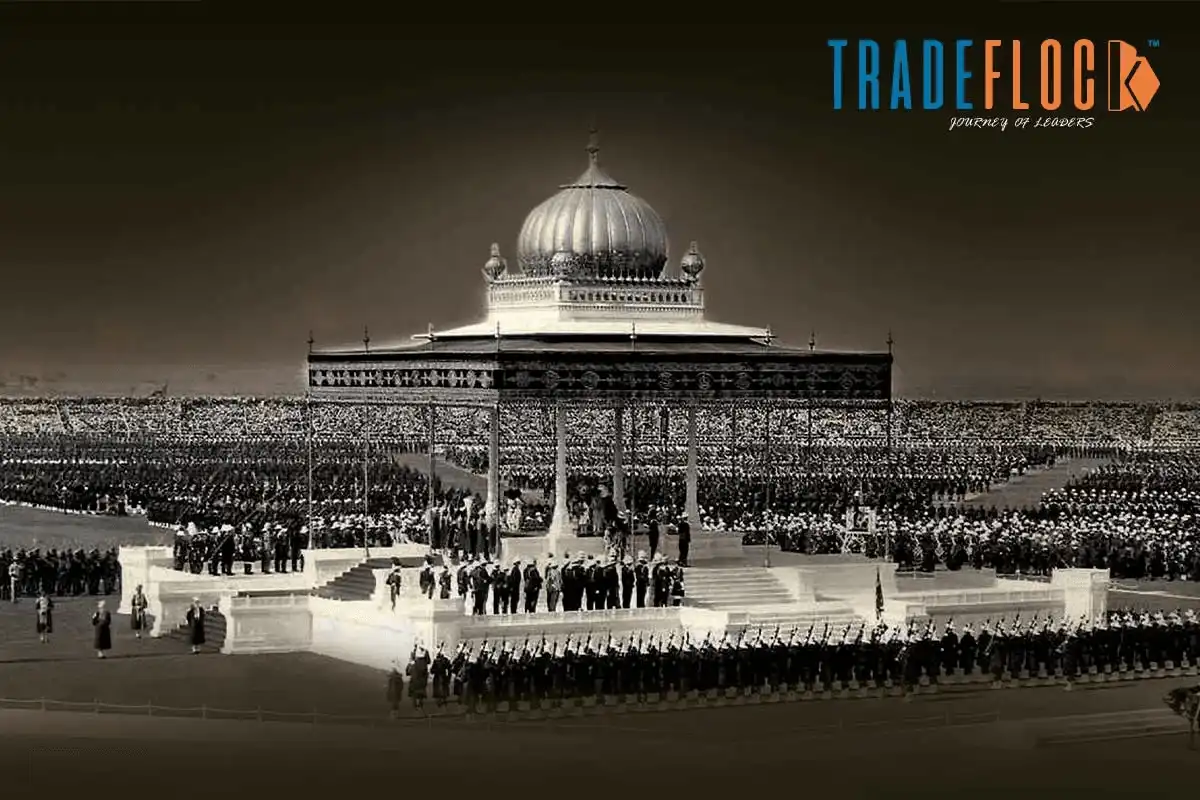
History is often marked by transformative decisions that define the trajectory of nations. One such meaningful event occurred on December 12, 1911, when King George V, during the Delhi Durbar, announced the transfer of the capital of British India from Calcutta (now Kolkata) to Delhi. This strategic move was a significant political manoeuvre and a decision laden with social, economic, and cultural ramifications.
Table of Contents
The Context of 1911
By 1911, Calcutta had served as the capital of British India for over a century. The city was a bustling trade hub and the epicentre of the Indian freedom struggle. However, it was also geographically isolated from the rest of India, particularly the north, where uprisings such as the Sepoy Mutiny of 1857 had shaken British authority.
Delhi, in contrast, carried immense historical and cultural significance. The city, once the heart of the Mughal Empire, represented both authority and grandeur. By relocating the capital to Delhi, the British sought to consolidate their rule by aligning themselves with India’s imperial legacy. This move aimed to placate growing nationalist sentiments while reinforcing colonial dominance.
Architects of Change
King George V’s proclamation at the Delhi Durbar of 1911 was a grand spectacle designed to reaffirm British imperial authority. The announcement highlighted the Crown’s decision and symbolised its strategic realignment in response to India’s evolving political landscape. However, it was Lord Hardinge, the then Viceroy of India, who convinced the British government of the benefits of this monumental decision. It was his vision to relocate the capital from Kolkata to Delhi strategically. He believed Delhi’s central location and historical significance would strengthen British governance. Also, leaders like Bal Gangadhar Tilak and Surendranath Banerjee influenced this decision through their vehement opposition to British policies, which compelled the administration to rethink its strategies.
The task of designing the new capital, New Delhi, fell to renowned architects Edwin Lutyens and Herbert Baker. Their creation of iconic structures like Rashtrapati Bhavan and India Gate reflected British aspirations to project their rule as modern yet rooted in India’s imperial past.
The Dual Impact
The relocation catalysed massive investments in urban planning and infrastructure. Railways, roads, and telecommunication networks were expanded to connect Delhi with the rest of the country. By shifting the capital in Delhi closer to the North-West Frontier and Central Asia, the British sent a strong message to global powers about their strategic dominance in the region.
Also, while Delhi gained prominence, Calcutta faced economic stagnation. Industries in Calcutta struggled as administrative focus and investments shifted westward. This triggered resentment among the Bengali intelligentsia, who viewed it as a calculated attempt to undermine their political and cultural influence. But no sooner than later, Calcutta retained its position as an economic hub due to its port and industries, underscoring the divide between economic and political capitals.
Delhi’s dramatic transformation from a historical city into a bustling modern metropolis became a melting pot of cultures as people across the country migrated for opportunities. However, this choice brought along its own unique challenges. While it temporarily subdued unrest in Bengal, it also fueled resentment among Indians, who saw it as a reminder of British dominance. Leaders like Mahatma Gandhi criticised the British for their extravagance during the Durbar amidst widespread poverty, galvanising support for the freedom struggle.
Echoes of the Past
The decision to shift the capital has left an indelible mark on India’s socio-political landscape. Delhi remains a symbol of power and unity in modern India, housing the Parliament and serving as a hub for national and international policymaking. The city also stands as a cultural and historical crossroads, blending India’s ancient heritage with its aspirations for the future. For the world, the move underscored how colonial powers used urban planning as a tool for control, a practice that has shaped global geopolitics in the 20th and 21st centuries, highlighting the intersection of governance, architecture, and societal transformation.
A City Reborn, a Nation Awakened
The proclamation by King George V was far more than an administrative announcement—it was a turning point in India’s colonial history. By shifting the capital, the British reshaped the country’s political geography and economic priorities. However, the move also strengthened India’s resolve for independence, proving that even calculated strategies by empires can sometimes spark unintended revolutions.
The echoes of that royal decree still resonate in the corridors of power in New Delhi, a living testament to a transformative chapter in India’s story.