
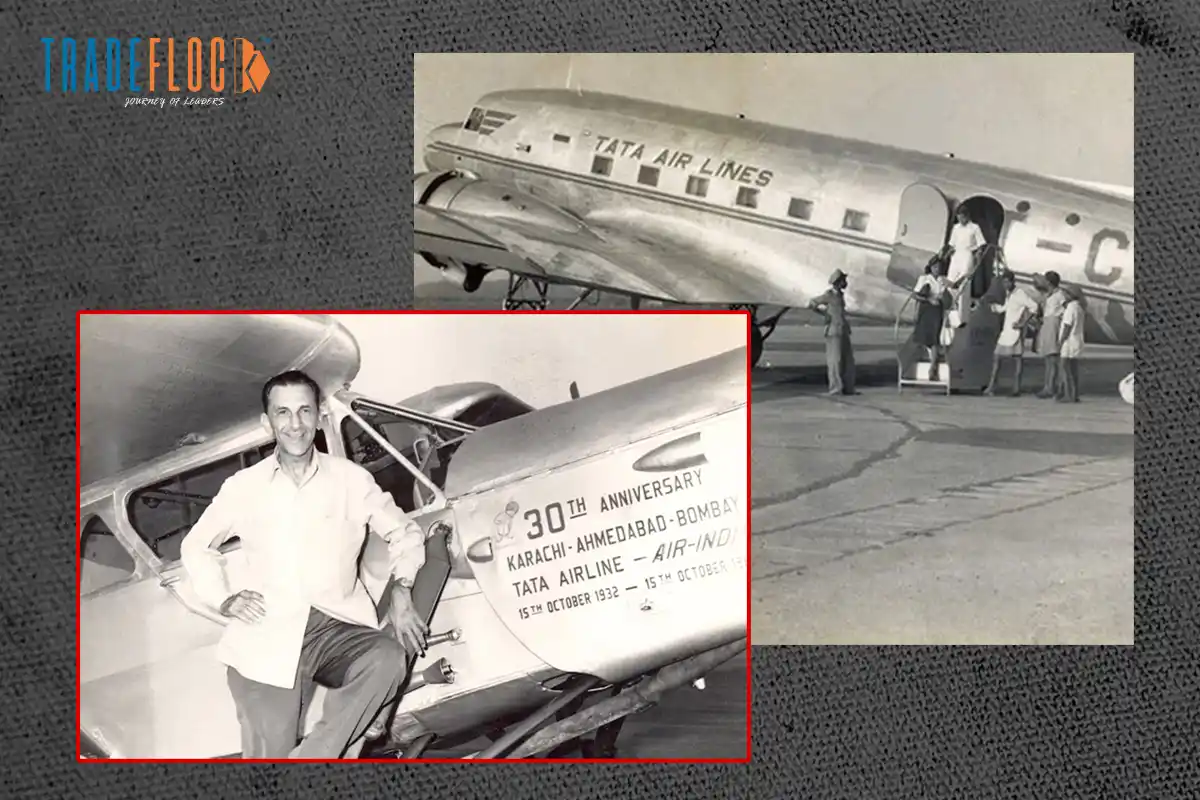
October 15, 1932, marked a subtle yet crucial milestone in India’s move toward modernity. A small Puss Moth aircraft departed from Karachi and arrived in Bombay, signifying more than just mail delivery; it heralded the start of India’s aviation journey. Organised by Tata Sons Limited, this bold step introduced civil aviation to a country still under colonial rule and facing industrial challenges. When flying was a distant aspiration for many, this event signalled a significant shift: Indian businesses were ready not only to engage in progress but to lead it.
Table of Contents
Before the Takeoff: A Vision Born Under Colonial Skies
In the early 1900s, India was primarily an agricultural nation with limited industry and no presence of aviation. Air travel was rare and mainly operated by British and European firms, making an Indian-owned airline seem unattainable. Despite this, Tata Sons became a symbol of industrial aspiration. Established by Jamsetji Tata and directed by J.R.D. Tata, it transformed the steel and energy sectors. Inspired by aviation, J.R.D. envisioned building an Indian airline owned by Indians, even before India experienced its own skies.
The Visionary Behind the Wings: J.R.D. Tata
J.R.D. Tata, born Jehangir Ratanji Dadabhoy Tata, was the pioneer behind India’s first flight. Born in Paris in 1904 and inspired by European innovations, he developed a strong passion for aviation and became India’s first licensed pilot in 1929. His interests extended beyond flying, representing a vision for India’s future. Backed by Tata Sons and authorised by the British government, J.R.D. launched the country’s first air mail service. On October 15, 1932, he personally flew a small single-engine Puss Moth from Karachi to Bombay, carrying mail and symbolising India’s growing aspirations in aviation.
The Transition from Tata Air Services to Air India: A Landmark in Indian Aviation
The airline started as Tata Air Mail and became Tata Airlines by 1938, quickly earning a reputation for punctual service connecting major cities like Bombay, Delhi, Madras, and Lahore. During World War II, it served an important role as a military transport. In 1946, it became a public company and was renamed Air India.
After India’s independence, the government recognised the importance of aviation for progress, leading to the airline’s nationalisation in 1953 and the appointment of J.R.D. Tata as its first chairman.
Even as a government-owned airline, it upheld the high standards and commitment to service set by its founders.
From Ground to Growth: The Socio-Economic Ripple of Aviation
The socio-economic impact of this transformative initiative is undeniable, as it has influenced multiple sectors of human development. It has advanced connectivity in commerce, employment, skill development, and boosted national and technological confidence. So, Tata’s pioneering aviation initiative had a profound influence that went well beyond aviation itself, transforming India’s industrial landscape and social fabric.
Tata Sons’ creation of the country’s first airline launched a new industry, transforming civil aviation from a domain mainly for colonial powers and foreigners into a growing domestic sector. This spurred the development of airports, air traffic control, pilot training, and maintenance centres, laying the groundwork for India’s aviation industry.
Improved connectivity through frequent flights shortened distances both geographically and economically. It facilitated quicker transfer of goods, mail, and people across regions, boosting coordination in business, governance, and administration. Tata’s airmail service revolutionised delivery times, laying the foundation for logistics and express cargo growth in India.
The airline’s expansion also created new career opportunities. For the first time, many Indians started working in aviation roles such as pilots, engineers, technicians, and support staff. The focus on technical training and operational quality contributed to developing a skilled workforce that later supported the growth of India’s aviation and aerospace industries.
Perhaps the most profound impact was psychological. During British rule, creating and operating an Indian airline challenged colonial narratives of dependency and inferiority. It boldly asserted Indian capability, showing that Indians could match global technological progress and lead in innovation. It fostered pride and a sense of possibility that echoed across generations.
Rise, Fall, and Return: The Journey Comes Full Circle
After J.R.D., Air India’s momentum declined following Tata’s exit from leadership in 1978. The airline struggled under government control, bureaucracy, and mismanagement, gradually losing its reputation for quality and reliability.
However, in a historic turn, Air India rejoined the Tata group in 2022. This event was more than a business deal; it signified the revival of a legacy, reinstating the principles of innovation, integrity, and excellence that once characterised the airline.
In Retrospect: A Journey That Redefined a Nation
Tata’s journey is essentially a redefinition of growth, resilience, and the pursuit of dreams. His remarkable path of bringing the nation together has contributed to India’s evolution and transformation. Tata’s inspiring story continues to motivate citizens to dream beyond their boundaries.


